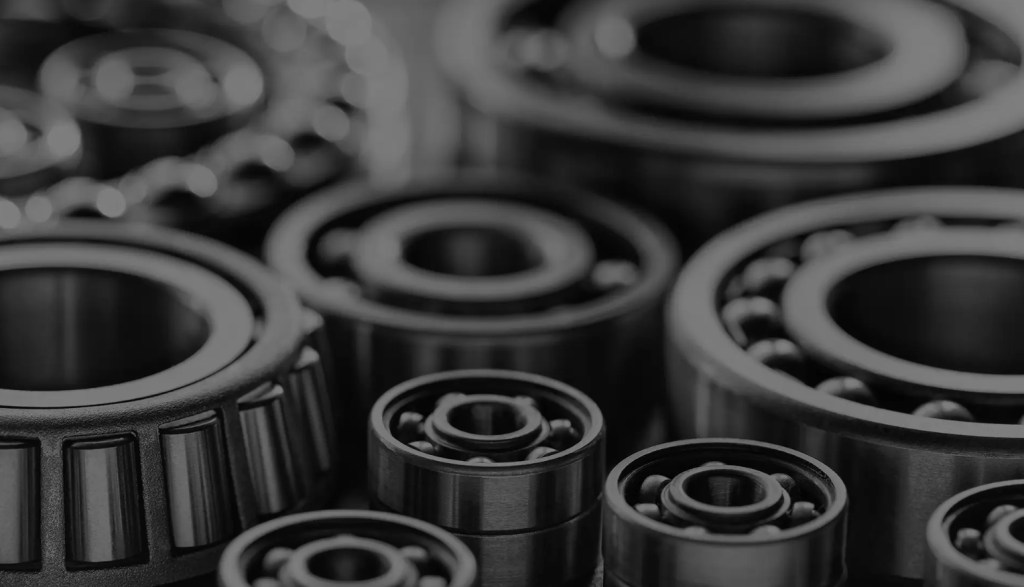
Cylindrical roller bearings are essential components in modern machinery, designed to handle heavy radial loads with high precision and reliability. Unlike ball bearings, their cylindrical rolling elements provide linear contact with the raceways, allowing for smoother operation, reduced friction, and longer service life. These bearings are widely used in industries such as manufacturing, automotive, energy, and aerospace, where efficiency and durability are critical.
With applications ranging from automotive gearboxes and industrial motors to CNC machinery and turbines, cylindrical roller bearings play a vital role in maintaining optimal machine performance. Their high-speed capability, load-bearing efficiency, and versatility make them ideal for both heavy-duty and high-precision operations. Leading manufacturers like Yuwei-bearing produce bearings that meet international standards, ensuring reliable and long-lasting performance for various industrial applications.
Cylindrical Roller Bearings: Overview, Uses, and Design Features
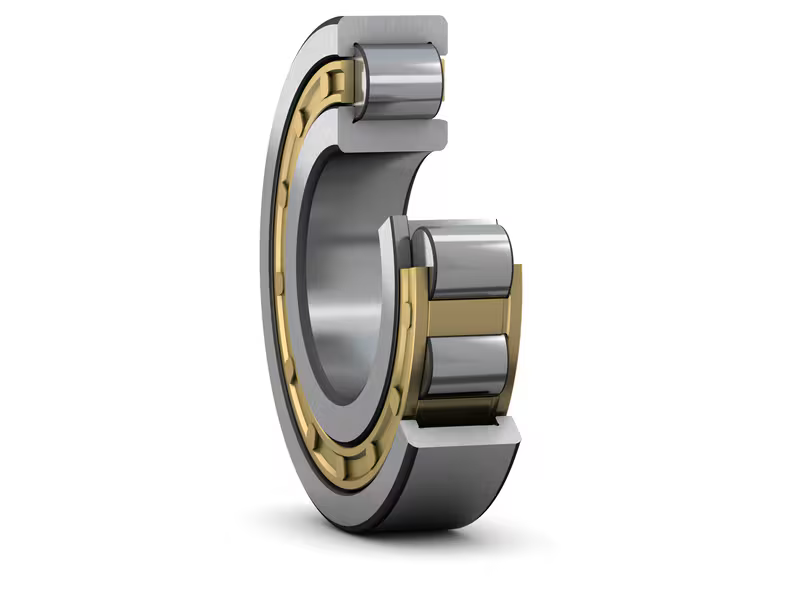
Cylindrical-roller-bearings consist of cylindrical rolling elements placed between inner and outer rings. Unlike ball bearings, the linear contact of the rollers distributes load evenly, allowing them to support high radial forces without deforming. The design typically includes steel or polymer cages that maintain roller alignment and reduce heat generation during operation. Shields or seals prevent contaminants such as dust or metal particles from entering, prolonging service life.
Uses: These bearings are commonly used in heavy machinery, gearboxes, conveyors, motors, and turbines. They are critical in applications where high reliability and efficiency are required, including automotive transmissions, industrial motors, and CNC machinery.
Cylindrical Roller Bearings: Types, Applications, Pros & Cons
Cylindrical-roller-bearings are available in multiple types to suit various operational needs.
Single-Row Bearings (NU, N Series) are ideal for radial loads and allow some axial displacement. These are widely used in machine tools, electric motors, and automotive components. They offer high-speed capability and compact design, but their axial load capacity is limited.
Double-Row Bearings (NJ, NUP Series) can handle combined radial and axial loads, making them suitable for heavy-duty machinery like rolling mills and mining equipment. They provide greater rigidity and stability but are slightly larger and require careful lubrication.
Multi-Row Bearings are designed for extreme radial loads in large machinery such as turbines, compressors, and industrial presses. While they handle extremely heavy loads efficiently, their installation is more complex and they come at a higher cost.
Comparison Table: Bearing Types and Features
| 轴承类型 | 负载能力 | Axial Load Support | 应用 | Pros | Cons |
|---|---|---|---|---|---|
| Single-Row (NU, N) | 高的 | 有限的 | Machine tools, Motors | Compact, High-speed | Limited axial load |
| Double-Row (NJ, NUP) | 非常高 | One or Both Directions | Rolling mills, Mining | Supports combined loads | Larger size |
| Multi-Row | Extremely High | Both Directions | Turbines, Heavy Machinery | Handles extreme loads | Complex installation |
Cylindrical Roller Bearings: Applications and Advantages
Cylindrical-roller-bearings are highly versatile and serve multiple industries. In industrial machinery, they are used in CNC machines, assembly lines, presses, and robotic arms, ensuring smooth and efficient operation even under heavy loads. In automotive applications, they support transmission systems, wheel hubs, and engine components, reducing friction and wear. In the energy sector, turbines, generators, and pumps rely on these bearings for long-lasting, high-load operation.
Advantages include:
-
High Load Capacity: Can handle heavier loads than ball bearings, reducing downtime.
-
耐用性: Designed to withstand harsh operational environments.
-
Low Friction: Improves efficiency and reduces heat generation.
-
多功能性: Suitable for varying speeds, temperatures, and industrial conditions.
Cylindrical Roller Bearings: Selection Guide
Choosing the correct bearing is critical for optimal performance. Factors to consider include load requirements, speed, operating environment, and type of bearing. Engineers calculate radial and axial loads to ensure bearings operate within safe limits. High-speed machinery requires bearings that minimize friction and heat, while dusty or high-temperature environments need sealed or shielded bearings.
Bearing Selection Table: Quick Guide
| 因素 | 考虑 | Tip |
|---|---|---|
| 加载 | Radial and Axial | Calculate L10 life for reliability |
| 速度 | Operating RPM | Use high-speed rated series |
| 环境 | Temperature, Dust | Choose sealed or shielded bearings |
| Type | Single, Double, Multi | Match series to application |
How to Maintain Cylindrical-Roller-Bearings for Longevity?
Proper maintenance is essential to prolong bearing life and maintain efficiency. Bearings require regular lubrication, inspection, cleaning, and alignment. Lubricants such as grease or oil reduce friction and prevent overheating, while inspections detect early signs of wear, vibration, or misalignment. Cleaning removes contaminants that could cause premature failure, and proper shaft and housing alignment ensures even load distribution. For More Information, Visit here!
Maintenance Table: Key Tasks and Frequency
| 任务 | 频率 | Recommended Action |
|---|---|---|
| Inspection | 每月 | Check for noise/vibration |
| 润滑 | 3–6 months | Apply grease or oil |
| Cleaning | As needed | Remove dust & debris |
| 结盟 | Every inspection | Verify shafts and housings |
Q1. What are cylindrical roller bearings and how do they work?
A. Cylindrical-roller-bearings use cylindrical rolling elements to provide linear contact with the raceways, enabling them to handle high radial loads efficiently. Their design reduces friction and distributes load evenly, making them suitable for heavy-duty and high-speed applications.
Q2. What are the main types of cylindrical roller bearings?
A. The main types include single-row, double-row, and multi-row bearings. Single-row bearings handle radial loads, double-row bearings support combined radial and axial loads, and multi-row bearings are designed for extreme radial load applications in large machinery.
Q3. Where are cylindrical-roller-bearings commonly used?
A. These bearings are used in industrial machinery, automotive gearboxes, turbines, conveyor systems, and motors, providing high load capacity, stability, and long service life.
Q4. How do I select the right cylindrical roller bearing?
A. Selection depends on load requirements, operating speed, environmental conditions, and bearing type. Single-row is suitable for radial loads, double-row for combined loads, and multi-row for very high radial loads.
Q5. What maintenance practices ensure long-lasting cylindrical-roller-bearings?
A. Regular lubrication, inspection, cleaning, and alignment are essential. Using the right grease or oil, checking for wear or vibration, and maintaining proper alignment helps extend bearing life and improve machine efficiency.
Q6. How do cylindrical roller bearings differ from ball bearings?
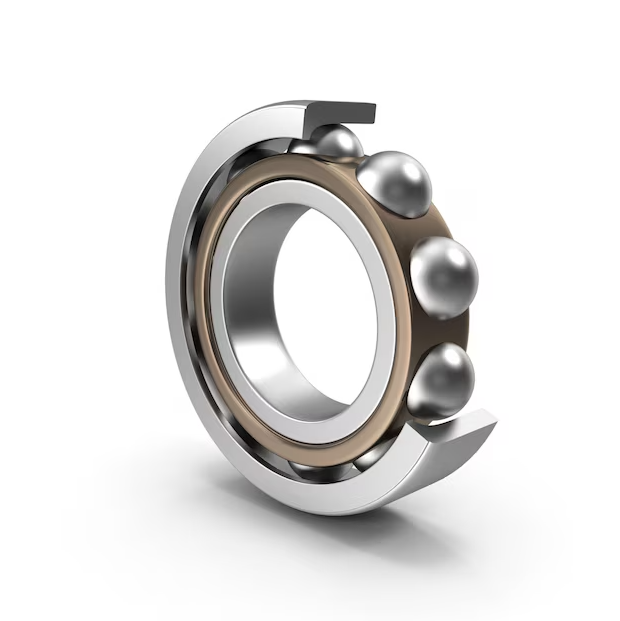
一个. Cylindrical-roller-bearings have cylindrical rolling elements that provide linear contact with the raceways, allowing them to handle higher radial loads than ball bearings. They are ideal for heavy-duty applications, while ball bearings are better suited for lighter loads and combined radial and axial loads.
Cylindrical roller bearings are a critical component in ensuring the efficiency, reliability, and longevity of industrial machinery. Their ability to handle heavy radial loads, reduce friction, and operate at high speeds makes them indispensable across industries such as manufacturing, automotive, energy, and aerospace.
By understanding the types, applications, advantages, selection criteria, and proper maintenance practices, engineers and technicians can choose the right bearing to optimize performance and minimize downtime.
Investing in high-quality cylindrical-roller-bearings, like those from Yuwei-bearing, ensures durable, precise, and reliable operation in any industrial setting. Proper selection and regular maintenance further enhance their lifespan, providing a cost-effective solution for demanding applications.
Ultimately, cylindrical-roller-bearings remain a cornerstone of modern machinery, combining strength, efficiency, and versatility to meet the challenges of industrial operations.