
角接触轴承
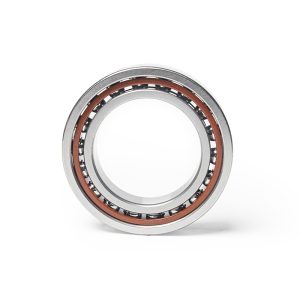
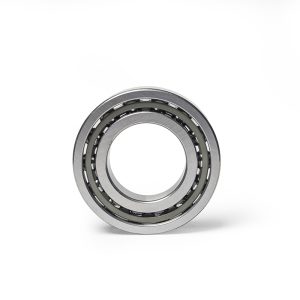
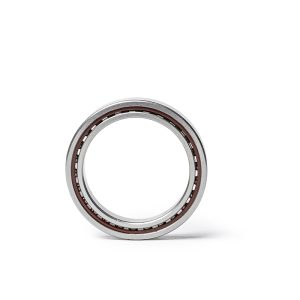
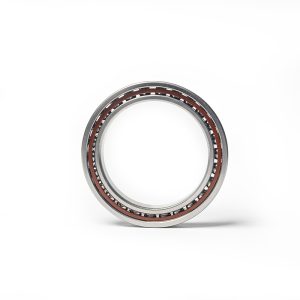
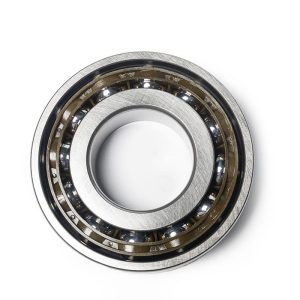
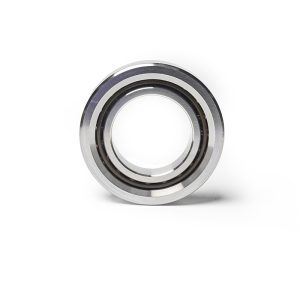
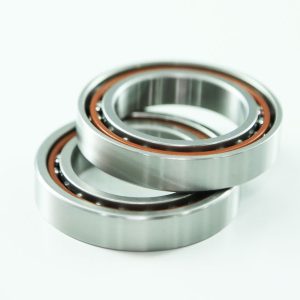
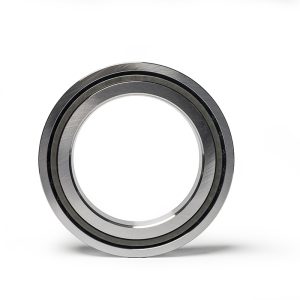
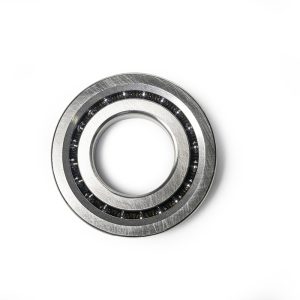
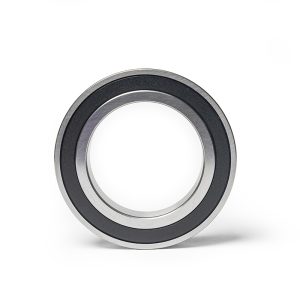
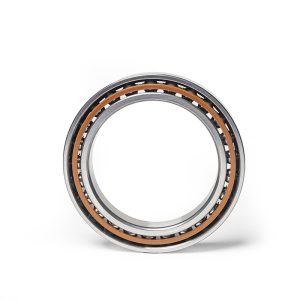
Single row angular contact ball bearings are designed for applications that require high speed, high rigidity, and controlled axial positioning. Unlike standard deep groove bearings, the contact angle enables the bearing to carry combined radial load and axial load in one direction, making it suitable for precision rotating systems.
Load direction and arrangement: A single row bearing supports axial load in one direction. For axial load in both directions or higher stiffness, bearings are commonly used as matched pairs/sets (DB / DF / DT arrangements).
Stiffness and running accuracy: Correct selection of precision grade 和 preload helps achieve stable runout control, low vibration, and repeatable positioning—especially in spindles and high-speed equipment.
Speed and thermal behavior: Cage design, lubrication method, and preload directly influence speed capability, temperature rise, and service life.
Selection by series and size: Common series used in industry include 70 / 72 / 718 / 719 (depending on load, speed, and envelope). Provide your size and operating conditions to match the right series and configuration.
显示所有 11 结果
Contact Us
FAQ
It is a bearing with a defined contact angle that can carry radial load plus axial load in one direction. It is commonly chosen when you need higher axial capacity, higher rigidity, and better positioning control than standard deep groove bearings—often in spindles, servo systems, gearboxes, pumps, and precision machinery.
Not by itself. A single row design typically supports axial load in one direction only. If your system sees axial forces in both directions, buyers usually select a matched pair (or bearing set) to handle bidirectional axial load and improve rigidity.
These are common matching arrangements used with single row bearings:
DB (back-to-back): higher moment stiffness; widely used for spindles.
DF (face-to-face): better misalignment tolerance than DB; lower moment stiffness than DB.
DT (tandem): higher axial load capacity in one direction (often used when axial load is dominant).
Selection depends on load direction, stiffness requirement, and installation constraints.
As a rule of thumb:
Smaller contact angle (commonly 15°): higher speed, lower axial capacity.
Medium (commonly 25°): balanced option for speed and axial load.
Larger (commonly 40°): higher axial capacity and rigidity, typically lower speed capability.
The correct choice depends on axial load, speed, and stiffness/positioning requirements.
Precision grade controls running accuracy parameters such as runout.
For general industrial use, lower grades may be acceptable.
For high-speed, low vibration, or spindle applications, buyers often specify higher precision grades.
If you share speed, target runout/vibration expectations, and application type, the precision grade can be recommended appropriately.
Cage choice influences speed capability, noise, and temperature stability. Common cage types include steel, brass, 和 polymer/phenolic/engineering plastics (depending on design). Buyers typically select cage type based on speed, lubrication method, operating temperature, and vibration conditions.
Grease lubrication: simpler, common for many industrial applications.
Oil or oil-air lubrication: often used when higher speed, better heat removal, and stable temperature control are needed (e.g., spindle systems).
Lubrication choice impacts bearing life, temperature rise, and maintenance interval.
Yes—when the correct series, precision grade, preload, cage, and lubrication are selected. High-speed performance is not only the bearing type; it depends heavily on configuration and operating conditions.