Content Menu
● What Thin Section Bearings Are and Why 2026 Buyers Care
● How We Compared These Manufacturers
● Top 5 Thin Section Bearing Manufacturers Compared
>> 1. Henan Yuwei Industrial Technology Co., Ltd.
>> 2. Kaydon
>> 4. FAG
● 2026 Market Snapshot: Why Demand Is Accelerating
● How to Choose a Thin Section Bearing Manufacturer: A 5-Step Checklist
● Matching Bearings to Robot Joints
● Get Expert Bearing Guidance for Your Next Design
Choosing among the top thin section bearing manufacturers has become a strategic decision, not a routine purchase order. As robots get smaller, faster, and more capable, the bearing sitting inside a joint or rotary table now decides whether a design succeeds or fails.
This guide ranks five manufacturers that consistently show up in robotics, semiconductor, and precision-automation supply chains. It also adds practical buying steps, current market figures, and an engineering case perspective that most comparison lists skip, so procurement and design teams can make a defensible sourcing decision rather than a guess.

What Thin Section Bearings Are and Why 2026 Buyers Care
A thin section bearing has an unusually slim cross-section relative to its bore diameter. Unlike standard bearings, where the ring thickness grows with the bore size, thin section bearings keep the same cross-section across an entire size series.
That geometry matters for three reasons.
– Weight savings. Less steel means lighter joints, arms, and turntables.
– Space efficiency. A slimmer ring frees up room for motors, cables, and sensors packed into the same housing.
– Design flexibility. Engineers can select a heavier cross-section for higher load capacity without changing the shaft diameter.
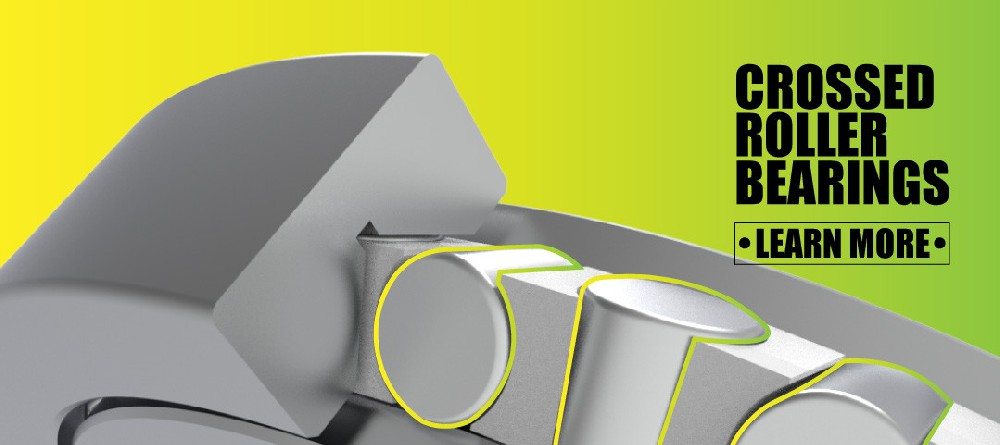
These traits explain why thin section bearings, along with their close cousin the crossed roller bearing, have become default components in robotic joints, harmonic reducers, rotary tables, and radar pedestals rather than a niche industrial part reserved for aerospace programs.
How We Compared These Manufacturers
Rankings here are based on published product catalogs, technical specification sheets, industry application data, and verified customer use cases rather than marketing claims alone. Each manufacturer was assessed against four criteria: precision grade capability, material and heat-treatment control, breadth of series available for robotics and rotary-table use, and track record with export or OEM customers.
Top 5 Thin Section Bearing Manufacturers Compared
| Manufacturer | Headquarters | Core Strength | Typical Precision Grade | Best Suited For |
|---|---|---|---|---|
| Henan Yuwei Industrial Technology Co., Ltd. | Henan, China | Thin-wall crossed roller and angular contact bearings purpose-built for robot joints | P5, P4, P2, VSP | Humanoid, industrial, medical, and special-purpose robots |
| Kaydon (Schaeffler Group) | United States / Germany | Broad thin section catalog, deep aerospace pedigree | ABEC-7 and above | Aerospace, defense, medical imaging |
| Silverthin | United States | Custom thin section and slewing ring designs | ABEC-5 to ABEC-7 | Custom robotics, semiconductor stages |
| FAG (Schaeffler Group) | Germany | Century-long engineering base, angular contact expertise | P4/P5 (ISO) | Automotive, industrial machinery |
| RBC Bearings | United States | Wide ball and roller range, complex assemblies | ABEC-5 to ABEC-9 | Military, aerospace, industrial robotics |
1. Henan Yuwei Industrial Technology Co., Ltd.
Henan Yuwei Industrial Technology Co., Ltd. focuses specifically on precision crossed roller bearings and high-precision angular contact ball bearings, including a dedicated thin-wall crossed roller series engineered for the tight joint spaces found in modern robots.
Product range spans precision crossed cylindrical roller bearings, high-rigidity crossed roller bearings, thin-wall (thin section) crossed roller bearings, double-row crossed roller bearings, high-precision angular contact ball bearings, high-speed angular contact ball bearings, and high-life angular contact ball bearings, manufactured to P5, P4, P2, and VSP accuracy classes.
Research collaboration sets Yuwei apart from most catalog suppliers. The company partners with universities and research institutes on joint development programs, participates in national key science and technology projects, and has signed multiple university-industry cooperation agreements. That work has produced dedicated bearings for special-purpose robots and radar vehicles rather than repurposed standard parts.
Applications covered by Yuwei bearings include:
– Quadruped, service, industrial, collaborative, SCARA, medical, exoskeleton, humanoid, and special-purpose robots
– AGVs and medical devices
– Communication radar and precision measuring instruments
– Printing and dyeing equipment, CNC machine tools
– Industrial rotary tables and hollow rotary platforms
– DD motors, harmonic reducers, and planetary reducers
Market reach now extends across more than 20 Chinese provinces and municipalities and exports to the United States, Germany, Italy, Spain, Norway, Russia, South Korea, Taiwan, India, and South American markets. Customers cite consistent quality control and pricing that stays competitive without cutting corners on tolerance or material grade.

2. Kaydon
Kaydon, now part of the Schaeffler Group, built its reputation over more than 70 years in thin section bearing design. Its radial, angular contact, and crossed roller lines are common in aerospace, defense, and medical equipment, where weight and reliability cannot be compromised.
3. Silverthin
Silverthin, based in the United States, is known for tailoring thin section ball and tapered roller bearings to non-standard geometries. Robotics integrators favor Silverthin when a stock catalog size does not fit the available envelope, and its slewing ring line extends into larger rotary platforms.
4. FAG
FAG, another Schaeffler brand, brings over a century of bearing engineering to thin section and angular contact designs. Automotive and heavy industrial buyers rely on FAG for load capacity and long service life in demanding, high-duty-cycle conditions.
5. RBC Bearings
RBC Bearings supplies a comprehensive range of thin section ball and roller bearings, plus complex assemblies, for aerospace, military, and medical robotics. Its custom-engineering capability makes it a frequent choice for defense-grade automation projects that need documented traceability.
2026 Market Snapshot: Why Demand Is Accelerating
Robotics has turned thin section and crossed roller bearings from a specialty item into a growth category. A few figures put the trend in perspective:
– The global industrial bearings market is projected at roughly USD 59.66 billion in 2026, climbing toward USD 92.77 billion by 2031, a compound annual growth rate above 9 percent.
– Precision bearings for industrial automation are forecast to grow from roughly USD 5.2 billion in 2026 to USD 9.7 billion by 2035, driven in large part by cobots and miniature bearing demand.
– Humanoid robot market estimates vary by research firm, but most place 2026 revenue in the mid-single-digit billions of dollars, with several forecasts projecting the segment to multiply several times over by the early 2030s as production scales at companies building legged and humanoid platforms.
The common thread across these figures is joint density. Every additional degree of freedom in a robot arm, leg, or gimbal typically needs its own compact bearing, and thin section or crossed roller designs are the default answer when radial space is limited. For manufacturers, this means a single humanoid robot program can require dozens of precision bearing positions rather than the handful found in older industrial arms.

How to Choose a Thin Section Bearing Manufacturer: A 5-Step Checklist
Sourcing decisions get easier when broken into a short sequence rather than a single judgment call.
1. Define the load case first. Separate radial, axial, and moment loads for the joint or table in question; thin section and crossed roller bearings handle combined loads differently, and mixing up the load type is the most common specification error.
2. Match the precision grade to the application. Medical robotics and semiconductor stages typically need P4 or P2 (ABEC-7/9) tolerances, while general industrial automation can often use P5.
3. Confirm cross-section availability. Ask whether the supplier can hold a constant cross-section across your required bore range, which simplifies future design changes and part interchangeability.
4. Check heat-treatment and material traceability. Request certificates for steel grade and hardness, particularly for export shipments subject to customs or quality audits.
5. Verify OEM and customization support. Robots rarely use catalog-standard bores; confirm the manufacturer accepts non-standard inner diameters, flange modifications, and sealed variants before committing to a design.
Matching Bearings to Robot Joints
Legged and humanoid robots illustrate why bearing selection has become an engineering decision rather than a purchasing afterthought. A quadruped robot’s hip and knee joints combine high dynamic loads with a need for near-zero backlash, favoring thin-wall crossed roller bearings that provide rigidity in a slim envelope. A collaborative robot’s wrist, by contrast, prioritizes low friction and repeatable positioning, which points toward high-precision angular contact ball bearings run in duplex or triplex sets.
Radar pedestal and hollow rotary platform designs add a third pattern: large bore diameters paired with a thin cross-section, so the bearing does not dominate the structure’s weight budget. This is precisely the segment where manufacturers offering both crossed roller and angular contact lines, built to P4/P2 tolerances, tend to outperform single-product suppliers that only stock one bearing family.
Get Expert Bearing Guidance for Your Next Design
Selecting the wrong bearing series after a design is finalized is expensive to fix. If you are specifying joints for a robot, rotary table, or radar platform, talk to Henan Yuwei Industrial Technology’s engineering team before you lock in bore dimensions. Share your load case, precision requirement, and operating environment, and get a tailored recommendation, a quotation, and, where needed, a non-standard sample.
Frequently Asked Questions
Q1: What is the difference between a thin section bearing and a standard bearing?
A thin section bearing keeps a constant, slim cross-section across a full range of bore sizes, while a standard bearing’s cross-section grows with the bore. This makes thin section types lighter and more compact for a given diameter.
Q2: Are crossed roller bearings a type of thin section bearing?
Crossed roller bearings can be manufactured in thin-wall configurations that meet the same slim cross-section principle as thin section ball bearings, while offering higher rigidity and combined-load capacity, which is why many robot joints use thin-wall crossed roller designs instead of ball types.
Q3: What precision grade do humanoid and industrial robots typically need?
Most industrial and collaborative robot joints use P5 (ABEC-5) tolerances, while medical robotics, semiconductor equipment, and high-end humanoid joints often require P4 or P2 (ABEC-7/9) for tighter runout and repeatability.
Q4: Can Chinese manufacturers match the quality of European or American thin section bearing brands?
Established Chinese manufacturers with ISO 9001 systems, university research partnerships, and P4/P2 production capability, such as Henan Yuwei Industrial Technology, are increasingly used to replace European and American brands in export markets while offering more competitive pricing and OEM flexibility.
Q5: How do I know if I need a custom, non-standard thin section bearing?
If your bore diameter, flange design, or sealing requirement falls outside a manufacturer’s published catalog, or your assembly has unusual space constraints, a non-standard bearing is typically required. Reputable manufacturers accept these requests and can quote a sample before full production.
Q6: What industries rely most heavily on thin section and crossed roller bearings?
Robotics (industrial, collaborative, medical, humanoid, and special-purpose), CNC machine tools, rotary and indexing tables, radar and communication equipment, harmonic and planetary reducers, and precision measuring instruments are the primary users.
References
1. Top 5 Thin Section Bearings Manufacturers You Should Know (original source article) — [lkpbearing.com]
2. Thin Section Bearings: Fueling the Future of Robotics — [vxb.com]
3. 2026 Top 10 Thin-Walled Bearing Manufacturers in China — [b2bdata.baidu.com]
4. Industrial Bearings Market Size, Forecast & Share Analysis 2026-2031 — [MarketsandMarkets]
5. Precision Bearings for Industrial Automation Market Size 2026-2035 — [Global Market Insights]
6. Humanoid Robot Market Size, Forecasts Report 2026-2035 — [Global Market Insights]
7. Single Row Ball vs. Cross Roller Slewing Ring Bearings — [Kaydon]
8. Company product line, applications, and export data — Henan Yuwei Industrial Technology Co., Ltd. [Yuwei Industrial]
Hot Tags: Thin Section Bearings, Crossed Roller Bearings, Angular Contact Ball Bearings, Precision Bearing Manufacturers, Robot Joinxt Bearings, Humanoid Robot Bearings, Thin-Wall Crossed Roller Bearings, Industrial Robot Bearings, High Precision Bearing Suppliers, Rotary Table Bearings