Content Menu
● What Makes a Tapered Roller Bearing Manufacturer Reliable?
>> Essential Evaluation Criteria
● Top 15 Tapered Roller Bearing Manufacturers
>> 1. Henan Yuwei Industrial Technology Co., Ltd.
>> 2. Timken
>> 3. SKF
>> 4. NTN
>> 7. NSK
>> 8. NACHI
>> 9. C&U Group
>> 11. ZKL
>> 12. Wafangdian Bearing Group
● Tapered Roller Bearings vs. Crossed Roller Bearings
● How to Select the Right Bearing Supplier
>> Step 1: Define the Actual Operating Conditions
>> Step 2: Confirm the Bearing Arrangement
>> Step 3: Evaluate Accuracy, Not Just Dimensions
>> Step 4: Review Lifetime and Load Calculations
>> Step 5: Validate Samples Before Mass Production
● Why Application Engineering Matters
● Build a More Reliable Bearing Supply Chain
● FAQ
>> 1. What is the main advantage of a tapered roller bearing?
>> 2. When should I use a crossed roller bearing instead of a tapered roller bearing?
>> 3. Can tapered roller bearings handle axial loads in both directions?
>> 4. What information should I provide when requesting a bearing quotation?
>> 5. How can I reduce premature bearing failure?
>> 6. Are high-precision angular contact ball bearings suitable for high-speed equipment?
>> 7. Can Henan Yuwei provide customized bearing solutions?
Choosing a tapered roller bearing manufacturer is not simply a matter of comparing catalog prices. For OEMs, machinery builders, distributors, and maintenance teams, the right supplier must deliver load capacity, dimensional consistency, traceability, technical support, stable lead times, and application-fit engineering.
Tapered roller bearings are widely used where radial and axial loads act at the same time. They support demanding operating conditions in automotive wheel hubs, gearboxes, machine tools, mining equipment, conveyors, rail systems, agricultural machinery, construction machinery, and industrial reducers. However, product performance depends on more than the bearing’s external dimensions. Raceway geometry, roller profile, steel cleanliness, heat treatment, cage design, lubrication, preload, mounting accuracy, and quality inspection all influence service life.
This guide reviews leading tapered roller bearing manufacturers and explains how professional buyers can evaluate suppliers beyond brand recognition. It also introduces a practical sourcing framework for applications that require higher rigidity, compact layouts, rotational accuracy, or customized bearing solutions.

What Makes a Tapered Roller Bearing Manufacturer Reliable?
A tapered roller bearing uses tapered inner and outer raceways with tapered rolling elements. This geometry allows the bearing to accommodate combined loads, meaning it can carry both radial force and axial thrust.
In a correctly designed assembly, the projected contact lines of the rollers meet at a common point on the bearing axis. This design helps reduce sliding and supports stable load transfer between the rollers and raceways.
When comparing tapered roller bearing manufacturers, buyers should look beyond a supplier’s product list. A serious manufacturer should demonstrate control over material selection, machining, grinding, heat treatment, assembly, measurement, and final inspection.
Essential Evaluation Criteria
| Evaluation Area | Why It Matters | What Buyers Should Ask |
|---|---|---|
| Load capacity | Determines suitability for radial and axial forces | What are the dynamic and static load ratings? |
| Dimensional accuracy | Affects fit, preload, alignment, and vibration | Which tolerance grade is supplied? |
| Material and heat treatment | Influences fatigue resistance and wear life | What bearing steel and heat-treatment process are used? |
| Surface finish | Affects friction, temperature, noise, and lubrication film formation | Are raceway roughness and profile values controlled? |
| Production consistency | Reduces variation between batches | Is there batch traceability and inspection documentation? |
| Customization capability | Helps solve special load, speed, space, and mounting requirements | Can the supplier modify clearance, cage, sealing, or dimensions? |
| Engineering support | Improves bearing selection and installation decisions | Can the supplier review drawings and operating conditions? |
| Delivery reliability | Protects production schedules | What are normal lead times for standard and custom products? |
| Total ownership cost | Better than comparing unit price alone | What is the expected operating life and replacement cost? |
A bearing with a low purchase price can become expensive if it causes premature failure, unplanned shutdowns, repeated maintenance, rejected assemblies, or customer warranty claims.

Top 15 Tapered Roller Bearing Manufacturers
The following companies are widely recognized in global industrial and automotive bearing markets. Their strengths differ by application, distribution coverage, engineering depth, product range, and sourcing model.
1. Henan Yuwei Industrial Technology Co., Ltd.
Henan Yuwei Industrial Technology Co., Ltd. focuses on precision crossed roller bearings and high-precision angular contact ball bearings. Although tapered roller bearings remain essential for many heavy-load systems, not every rotary application is best served by a tapered roller design.
For robotics, precision rotary tables, hollow rotary platforms, radar equipment, medical devices, CNC machine tools, harmonic reducers, and compact automation equipment, engineers often need higher rigidity, smaller installation space, lower runout, and more accurate rotational positioning.
Yuwei’s core product categories include:
– Precision crossed cylindrical roller bearings
– High-rigidity crossed roller bearings
– Thin-section crossed roller bearings
– Double-row crossed roller bearings
– High-precision angular contact ball bearings
– High-speed angular contact ball bearings
– Long-life angular contact ball bearings
– Customized bearings for specialized equipment
The company works with universities and research institutions on technical development and testing projects. Its products are used in quadruped robots, service robots, industrial robots, collaborative robots, SCARA robots, medical robots, exoskeleton robots, humanoid robots, AGVs, radar systems, precision measuring equipment, printing and dyeing machinery, CNC machine tools, industrial turntables, direct-drive motors, harmonic reducers, and planetary reducers.
Best suited for: High-precision rotary applications where compact design, rigidity, positioning accuracy, and customized engineering are critical.
2. Timken
Timken is strongly associated with tapered roller bearing technology and serves demanding sectors such as automotive, heavy equipment, rail, industrial transmission, metals, mining, and aerospace-related applications.
Its product portfolio includes single-row, double-row, and four-row tapered roller bearing configurations. Timken is often specified where high combined loads, long operating life, and application engineering are priorities.
Best suited for: Heavy-duty machinery, wheel-end systems, industrial gearboxes, rail equipment, and high-load drivetrain applications.
3. SKF
SKF has a broad global presence and a large range of rolling bearing products. Its tapered roller bearings are used across automotive, industrial, energy, marine, construction, and process industries.
A key advantage is its global service infrastructure. Buyers operating in multiple markets may value access to local technical support, distribution channels, lubrication knowledge, condition monitoring resources, and replacement availability.
Best suited for: International OEMs, maintenance operations, and projects requiring a broad support network.
4. NTN
NTN offers tapered roller bearings for automotive, construction equipment, agricultural machinery, industrial systems, and transportation applications. The company is known for precision manufacturing and broad product coverage.
Its tapered roller bearing portfolio is often considered for applications that require stable performance under high radial loads, thrust loads, vibration, shock, or variable operating conditions.
Best suited for: Automotive systems, construction machinery, transmissions, and industrial equipment.
5. Koyo / JTEKT
Koyo is a JTEKT brand with a strong reputation in automotive and industrial bearing applications. Its tapered roller bearings are commonly used in transmissions, wheel hubs, differential systems, machine tools, and industrial power transmission equipment.
Koyo products are frequently selected when a buyer needs a combination of high-speed capability, controlled friction, and reliable dimensional consistency.
Best suited for: Automotive components, machine tools, precision industrial systems, and high-volume OEM supply chains.
6. FAG / Schaeffler
FAG, part of the Schaeffler Group, provides bearing products for industrial machinery, automotive systems, wind energy, rail, aerospace, and manufacturing equipment.
The company has significant application engineering experience, especially in complex industrial systems. Its tapered roller bearing offerings include standard and specialized designs for high-load and demanding operating environments.
Best suited for: Industrial machinery, gearboxes, process equipment, wind-related machinery, and engineered motion systems.
7. NSK
NSK manufactures rolling bearings for automotive, industrial, machine tool, railway, robotics, and precision equipment markets. Its tapered roller bearings are designed to support stable operation in systems exposed to load variation, speed changes, vibration, and long-duty cycles.
NSK is often considered by customers who need a mature quality system and a balance between performance, availability, and engineering support.
Best suited for: Automotive drivetrains, rail systems, industrial machinery, and precision mechanical assemblies.
8. NACHI
NACHI provides bearings, hydraulic equipment, machine tools, and industrial components. Its tapered roller bearings are used in automotive, construction, industrial machinery, and manufacturing applications.
The brand is often recognized for offering a practical balance of performance and cost. For buyers with defined specifications and established bearing dimensions, NACHI can be a competitive option.
Best suited for: General industrial equipment, automotive applications, and cost-conscious OEM sourcing.
9. C&U Group
C&U Group is a major bearing manufacturer with a wide product portfolio and significant market presence in Asia. It supplies bearings for automotive, electrical motors, home appliances, industrial equipment, railway, and energy-related sectors.
For buyers looking for large-scale production capability and competitive sourcing options, C&U can be relevant, especially when qualification, quality documentation, and application matching are handled carefully.
Best suited for: Volume procurement, automotive supply chains, electric motors, and general industrial equipment.
10. RBC Bearings
RBC Bearings focuses on highly engineered bearing products for aerospace, defense, industrial, and precision applications. Its product offerings extend beyond standard catalog bearings and may be especially relevant when performance, reliability, and documentation requirements are strict.
Best suited for: Specialized industrial equipment, high-reliability systems, aerospace-related applications, and engineered motion products.
11. ZKL
ZKL is a European bearing manufacturer known for supplying rolling bearings to industrial sectors such as rail, heavy equipment, mining, steel, and energy.
Its products are often considered for applications involving high loads, large dimensions, and difficult environments. Buyers should evaluate the product series, availability, and local support according to their region.
Best suited for: Heavy industry, rail, mining, and large industrial machinery.
12. Wafangdian Bearing Group
Wafangdian Bearing Group is an established Chinese manufacturer with experience in large and heavy-duty bearing production. The company serves sectors including metallurgy, mining, cement, wind power, machine tools, ports, and industrial equipment.
Its product range may be relevant for buyers seeking Chinese supply options for heavy machinery and large-diameter bearing applications.
Best suited for: Heavy equipment, industrial machinery, metallurgy, mining, and large-scale mechanical systems.
13. Fersa Bearings
Fersa Bearings specializes in automotive bearing solutions, particularly wheel-end and transmission-related components. Its tapered roller bearings are designed for the demands of modern passenger vehicles, commercial vehicles, and aftermarket distribution.
Best suited for: Automotive wheel hubs, transmissions, axles, and replacement-parts programs.
14. INA / Schaeffler
INA is also part of the Schaeffler Group and is particularly recognized for needle roller bearings, linear systems, and specialized industrial motion products. While buyers may encounter tapered roller bearing solutions through the wider Schaeffler portfolio, INA can be especially useful when a project involves multiple bearing technologies.
Best suited for: Industrial motion systems requiring integrated bearing, linear, and mechanical components.
15. ZMS Bearing
ZMS Bearing supplies industrial bearing products and promotes tapered roller bearing options for customers seeking sourcing flexibility, competitive pricing, and customized supply.
For standard applications, the value proposition is often centered on cost control, purchasing flexibility, and export-oriented service. Buyers should still request drawings, material information, tolerance data, inspection reports, and sample validation before placing volume orders.
Best suited for: Distributors, aftermarket buyers, general industrial machinery, and import programs with qualified inspection processes.
Tapered Roller Bearings vs. Crossed Roller Bearings
Selecting the correct bearing type matters more than choosing the most famous brand. Tapered roller bearings are excellent for many combined-load applications, but crossed roller bearings can offer substantial advantages in precision rotary systems.
| Feature | Tapered Roller Bearing | Crossed Roller Bearing |
|---|---|---|
| Main strength | Combined radial and axial load capacity | High rigidity and compact multi-directional load support |
| Typical structure | Tapered rollers and tapered raceways | Cylindrical rollers arranged in alternating directions |
| Mounting arrangement | Often used in pairs or sets | Can often support complex loads in a single compact unit |
| Space requirement | Depends on paired arrangement and preload design | Often compact in axial and radial installation space |
| Typical applications | Wheel hubs, gearboxes, conveyors, heavy machinery | Robots, rotary tables, radar, medical devices, reducers |
| Precision focus | Can achieve high performance with proper mounting | Well suited to high rotational accuracy and positioning |
| Axial load direction | Often needs paired arrangement for bidirectional thrust | Supports axial loads in both directions depending on design |
A tapered roller bearing is not automatically inferior or superior to a crossed roller bearing. The correct choice depends on the working conditions.
For example, a construction-equipment gearbox may require robust tapered roller bearings to handle high radial and axial loads. A robot wrist joint or hollow rotary table may require a crossed roller bearing because it needs high stiffness, compact dimensions, and low rotational runout.

How to Select the Right Bearing Supplier
Professional sourcing teams should follow a structured selection process instead of requesting only a price quotation.
Step 1: Define the Actual Operating Conditions
Prepare a clear technical brief before contacting suppliers. At minimum, include:
– Shaft and housing dimensions
– Radial load and axial load
– Speed range
– Operating temperature
– Lubrication method
– Required service life
– Installation space
– Accuracy or runout requirements
– Working environment
– Sealing requirements
– Expected annual quantity
– Drawings or 3D models, if available
Incomplete specifications lead to inaccurate quotations and inappropriate bearing recommendations.
Step 2: Confirm the Bearing Arrangement
Tapered roller bearings are commonly used in single-row, double-row, and four-row configurations. A single-row unit generally supports axial load in one direction, so paired mounting may be required for bidirectional thrust.
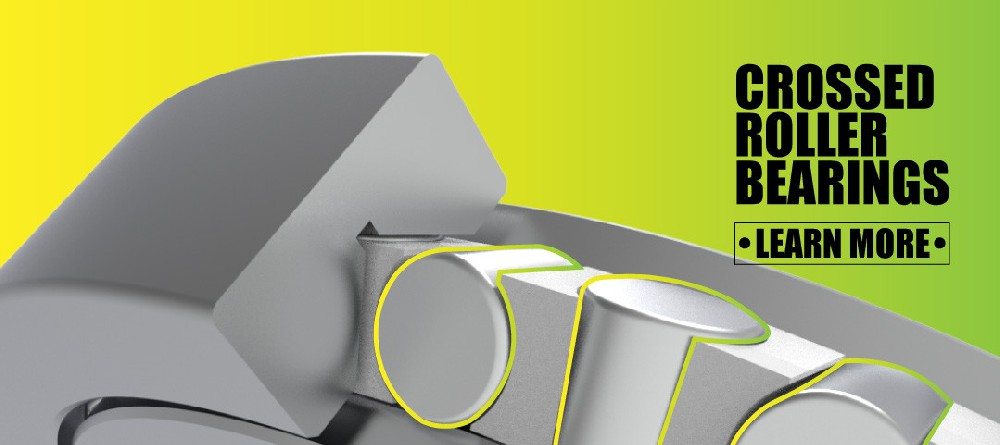
Crossed roller bearings use rollers positioned alternately at right angles. This structure can support radial, axial, and moment loads in a compact arrangement, making it attractive for robotic joints and precision rotating platforms.
Step 3: Evaluate Accuracy, Not Just Dimensions
A bearing may have the correct nominal size but still fail to meet the required running accuracy. For precision applications, ask suppliers about:
– Radial runout
– Axial runout
– Rotational torque
– Clearance or preload
– Raceway profile control
– Surface roughness
– Noise and vibration inspection
– Assembly matching
– Measurement equipment
– Inspection reports
International standards such as ISO 492 define dimensional and geometrical characteristics and tolerance values for radial rolling bearings. Buyers should confirm the relevant tolerance class and agree on acceptance criteria before production begins.
Step 4: Review Lifetime and Load Calculations
Bearing life calculations should be based on the real duty cycle rather than only maximum theoretical loads. Consider shock loads, acceleration, deceleration, moment loads, misalignment, contamination, lubrication condition, temperature, and mounting quality.
ISO 281 provides methods for calculating basic dynamic load ratings and rating life for rolling bearings. However, calculated life is not a guarantee of field performance. Actual service life can change significantly when lubrication, contamination control, mounting precision, or operating conditions differ from the design assumptions.
Step 5: Validate Samples Before Mass Production
Before approving a long-term supplier, request samples and conduct practical validation.
A robust sample-validation plan may include:
1. Dimensional inspection.
2. Material or hardness verification.
3. Rotational torque testing.
4. Noise and vibration testing.
5. Runout measurement.
6. Load testing where practical.
7. Installation trial on the actual equipment.
8. Temperature monitoring during operation.
9. Service-life tracking under representative conditions.
10. Batch traceability review.
This process helps procurement teams move from a price-based decision to a performance-based decision.
Why Application Engineering Matters
In bearing sourcing, the component itself is only one part of the final result. Even a high-quality bearing can fail early when it is incorrectly installed, improperly preloaded, contaminated during assembly, lubricated with the wrong grease, or mounted on an out-of-round shaft or housing.
Common causes of avoidable bearing problems include:
– Excessive or insufficient preload
– Shaft and housing tolerance errors
– Poor alignment
– Inadequate lubrication
– Incorrect grease compatibility
– Water or particle contamination
– Improper handling during installation
– Hammer impact on rings or rolling elements
– Uncontrolled mounting force
– Operating loads beyond the original design condition
For critical precision equipment, buyers should involve the bearing manufacturer early in the design stage. This allows engineers to optimize mounting dimensions, preload, lubrication, sealing, tolerances, and service-life expectations before the product enters volume production.
Build a More Reliable Bearing Supply Chain
The strongest bearing sourcing strategy combines technical evaluation with commercial discipline. A global brand may be the right choice for an application requiring local availability and established qualification. A specialist manufacturer may be a better fit when the project requires custom dimensions, rapid engineering communication, compact precision designs, or cost-effective production.
Henan Yuwei Industrial Technology Co., Ltd. supports customers looking for precision crossed roller bearings and high-precision angular contact ball bearings for robotics, automation, medical equipment, precision measurement, radar systems, reducers, CNC equipment, and rotary motion platforms.
If your project requires a compact, high-rigidity, high-accuracy bearing solution, provide your drawing, load conditions, speed, installation dimensions, accuracy target, and expected quantity. A technical review can help identify the most suitable bearing structure before tooling, assembly, or mass production begins.
FAQ
1. What is the main advantage of a tapered roller bearing?
A tapered roller bearing can support both radial loads and axial loads. It is commonly used in wheel hubs, gearboxes, transmissions, heavy machinery, conveyors, and industrial equipment where combined loading is present.
2. When should I use a crossed roller bearing instead of a tapered roller bearing?
Use a crossed roller bearing when the application requires high rigidity, compact installation space, accurate rotation, low runout, or support for radial, axial, and moment loads in a single rotary bearing arrangement. Typical examples include robot joints, rotary tables, radar systems, medical equipment, and harmonic reducers.
3. Can tapered roller bearings handle axial loads in both directions?
A single-row tapered roller bearing normally supports axial load primarily in one direction. For bidirectional axial loads, engineers often use two bearings in an opposed arrangement, such as back-to-back or face-to-face mounting, or select a double-row design.
4. What information should I provide when requesting a bearing quotation?
Provide the bearing model or drawing, shaft and housing dimensions, radial and axial loads, speed, temperature, lubrication method, accuracy requirements, working environment, expected service life, and purchase quantity. This information enables a supplier to recommend a more appropriate solution.
5. How can I reduce premature bearing failure?
Use the correct bearing type, maintain accurate shaft and housing tolerances, apply the correct preload or clearance, use suitable lubrication, prevent contamination, follow proper installation methods, and avoid exceeding rated load or speed limits.
6. Are high-precision angular contact ball bearings suitable for high-speed equipment?
Yes. High-precision angular contact ball bearings are widely used in machine tool spindles, high-speed motors, precision instruments, and other systems requiring high rotational speed and accuracy. The final selection should consider contact angle, preload, lubrication, cage type, temperature, and speed limit.
7. Can Henan Yuwei provide customized bearing solutions?
Henan Yuwei can support specialized bearing requirements for applications involving robotics, automation, precision motion, medical equipment, radar systems, reducers, machine tools, and rotary platforms. Customers should provide drawings, load data, rotational speed, installation space, required accuracy, and annual demand for evaluation.
References
1. [ZMS Bearing — The Top 15 Tapered Roller Bearing Manufacturers in the World]
2. [ISO — ISO 281:2007 Rolling Bearings: Dynamic Load Ratings and Rating Life]
3. [ISO — ISO 492:2023 Rolling Bearings: Geometrical Product Specifications and Tolerance Values]
4. [Schaeffler — Crossed Roller Bearings]
5. [Schaeffler Medias — Load Carrying Capacity and Life]
6. [CCTY — Robotic Bearings for Humanoid, Industrial and Collaborative Robots]