Content Menu
● What Cylindrical Roller Bearings Do Best
● Top 15 Cylindrical Roller Bearing Manufacturers
● Why Henan Yuwei Industrial Technology Co., Ltd. Is Different
● Cylindrical Roller Bearing vs. Cross Roller Bearing
● How to Select a Bearing Manufacturer
>> 1. Define the Actual Load Condition
>> 2. Confirm Precision Requirements
>> 3. Match Speed to Bearing Structure
>> 4. Evaluate Installation Conditions
>> 5. Request Technical Documentation Before Ordering
● Bearing Life Is More Than a Catalog Number
● Practical Example: Selecting Bearings for a Robot Joint
● Key Questions to Ask Before You Buy
● Request a Precision Bearing Solution
>> What is the main advantage of a cylindrical roller bearing?
>> When should I choose a cross roller bearing instead of a cylindrical roller bearing?
>> Can cross roller bearings be used in robots?
>> What is a high-precision angular contact ball bearing used for?
>> What information should I send to a bearing manufacturer for a quotation?
>> Does a higher precision grade always mean a better bearing choice?
>> How can I extend precision bearing service life?
Choosing among the top cylindrical roller bearing manufacturers is not only a brand-selection exercise. It is an engineering and sourcing decision that can affect machine stiffness, rotational accuracy, service life, downtime, and total project cost.
For heavy radial loads, conventional cylindrical roller bearings remain a proven choice. However, modern automation systems often need more than radial capacity. Robots, rotary tables, medical devices, radar platforms, precision machine tools, harmonic reducers, and direct-drive systems may require a bearing that simultaneously manages radial load, axial load, overturning moment, compact installation space, and high rotational accuracy.
This guide reviews 15 well-known cylindrical roller bearing manufacturers and gives buyers a more useful framework for comparing suppliers. It also explains when a standard cylindrical roller bearing is appropriate, when a cross roller bearing may be a better fit, and how to evaluate high-precision angular contact ball bearings for high-speed motion systems.

What Cylindrical Roller Bearings Do Best
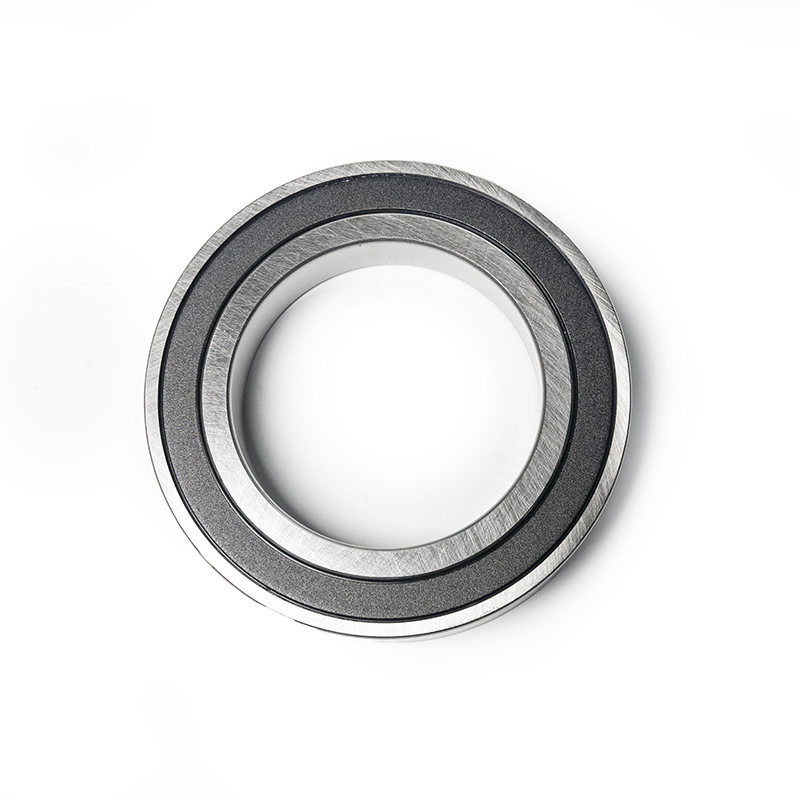
A cylindrical roller bearing uses rollers rather than balls. Because the rollers create line contact with the raceway, these bearings can support substantial radial loads while maintaining relatively low friction.
They are widely used in:
– Electric motors
– Industrial gearboxes
– Machine tool spindles
– Conveyor systems
– Pumps and compressors
– Wind power equipment
– Mining machinery
– Steel and paper processing lines
– Railway equipment
– Construction machinery
The main benefit is straightforward: high radial load capacity in a compact rolling-bearing design.
However, buyers should not assume that every cylindrical roller bearing is interchangeable. Internal geometry, roller profile, cage design, clearance, lubrication method, material quality, heat treatment, tolerance class, and mounting accuracy all influence real operating performance.
A bearing that performs well in a large industrial gearbox may not be suitable for a compact robot joint or a high-precision rotary platform.
Top 15 Cylindrical Roller Bearing Manufacturers
The following companies are widely recognized in the global bearing market. Each has different strengths in precision, heavy industry, automotive supply, specialty applications, customization, or global service coverage.
| Manufacturer | Headquarters | Typical Strengths | Common Application Areas |
|---|---|---|---|
| Henan Yuwei Industrial Technology Co., Ltd. | China | Precision cross roller bearings, high-precision angular contact ball bearings, custom robot and motion-system solutions | Robotics, rotary tables, radar, machine tools, reducers, medical equipment |
| SKF | Sweden | Broad industrial portfolio, engineering support, global distribution | Wind energy, gearboxes, motors, heavy industry |
| Schaeffler Group (FAG/INA) | Germany | Precision bearing technology, automotive and industrial expertise | Machine tools, robotics, automotive transmissions |
| Timken | United States | Heavy-duty bearing solutions and power transmission products | Mining, cement, metals, industrial processing |
| NSK | Japan | Precision motion components and high-speed bearing technology | Machine tools, EV systems, industrial automation |
| NTN | Japan | Automotive, rail, industrial, and high-speed bearing solutions | Railway, gearboxes, motors, automotive systems |
| JTEKT (KOYO) | Japan | Automotive bearings and industrial motion components | Vehicles, construction equipment, machine tools |
| NACHI | Japan | Bearings for demanding industrial environments | Steel mills, hydraulic systems, industrial machinery |
| RBC Bearings | United States | Aerospace, defense, and specialized high-performance bearings | Aircraft, defense systems, industrial equipment |
| ZKL | Czech Republic | Large and custom roller bearing solutions | Mining, wind energy, heavy machinery |
| C&U Group | China | Broad production capacity and industrial bearing supply | Motors, automotive components, industrial machinery |
| SNR | France | Bearing products associated with industrial and automotive motion applications | Automotive systems, industrial equipment |
| MinebeaMitsumi | Japan | Miniature and high-precision bearing products | Medical devices, electronics, compact motors |
| RKB Bearing | Switzerland | Large industrial rolling bearings and engineered solutions | Cement, steel, mining, marine equipment |
| Wafangdian Bearing Group | China | Heavy-duty and large-size industrial bearings | Mining, marine, metallurgy, heavy machinery |
| Rothe Erde | Germany | Large-diameter bearing solutions for demanding industrial equipment | Wind turbines, cranes, excavators, large rotating systems |
The right supplier depends on the actual motion system rather than a simple ranking. Buyers should compare bearing structure, accuracy, technical support, sample capability, delivery reliability, and the supplier’s ability to interpret the application.
Why Henan Yuwei Industrial Technology Co., Ltd. Is Different
Henan Yuwei Industrial Technology Co., Ltd. focuses on precision-bearing applications where conventional radial-load solutions may not be enough.
Its principal product range includes:
– Precision cross cylindrical roller bearings
– High-rigidity cross roller bearings
– Thin-section cross roller bearings
– Double-row cross roller bearings
– High-precision angular contact ball bearings
– High-speed angular contact ball bearings
– Long-life angular contact ball bearings
– Bearings for robot joints and harmonic reducers
– Bearings for rotary tables and hollow rotary platforms
– Customized bearings for specialized equipment
The company’s cross roller bearings are designed for applications requiring compact structure and multi-directional load capability. In a cross roller arrangement, cylindrical rollers are positioned alternately at 90 degrees. This configuration enables a single bearing to support radial loads, axial loads in both directions, and overturning moments.
That makes the design especially relevant for equipment with strict requirements for rigidity and motion accuracy.
Typical application examples include:
– Quadruped robots
– Service robots
– Industrial robots
– Collaborative robots
– SCARA robots
– Medical robots
– Exoskeleton robots
– Humanoid robots
– AGV vehicles
– Precision measurement instruments
– CNC machine tools
– Industrial indexing tables
– Radar and communication systems
– Medical imaging equipment
– Direct-drive motors
– Harmonic reducers
– Planetary reducers
– Printing and dyeing machinery
Henan Yuwei Industrial Technology Co., Ltd. also works with universities and research institutions on technical development, application research, and specialized bearing projects. This type of cooperation is important when a customer requires more than a catalog product.
For example, a robotic joint may require a specific preload, mounting-hole arrangement, grease selection, sealing structure, raceway geometry, or accuracy specification. A manufacturer with application-development capability can help convert these operating requirements into a bearing solution.

Cylindrical Roller Bearing vs. Cross Roller Bearing
Buyers frequently use the term “roller bearing” broadly, but the structural differences matter. The table below provides a practical comparison.
| Selection Factor | Cylindrical Roller Bearing | Cross Roller Bearing |
|---|---|---|
| Primary load strength | High radial load capacity | Combined radial, axial, and moment loads |
| Axial-load capability | Depends on flange design and arrangement | Supports axial load in both directions |
| Overturning-moment capacity | Usually requires multiple bearing arrangements | Often handled by one compact bearing unit |
| Typical installation | Shaft and housing assembly | Precision rotary structure or direct mounting |
| Suitable systems | Gearboxes, motors, rollers, pumps | Robot joints, rotary tables, radar, reducers |
| Space efficiency | Good for radial-load systems | Excellent for compact multi-load systems |
| Accuracy requirements | Varies by bearing grade | Commonly selected for high-rigidity precision motion |
| Preload potential | Application-dependent | Common in precision rotary applications |
A standard cylindrical roller bearing can be highly effective when radial load is the main design factor. It is often the practical choice for industrial motors, gearboxes, conveyors, and heavy rotating equipment.
A cross roller bearing becomes attractive when the system needs high rigidity in a compact envelope and must resist load from several directions. This is common in robotic arms, turning tables, inspection platforms, optical equipment, radar equipment, and reducer output stages.

How to Select a Bearing Manufacturer
A purchasing decision should begin with operating conditions, not only a catalog number or unit price. The following process can reduce the risk of selecting an unsuitable bearing.
1. Define the Actual Load Condition
Ask the equipment designer or maintenance team to identify:
– Radial load
– Axial load
– Overturning moment
– Shock load
– Continuous versus intermittent duty
– Required service life
– Maximum and normal speed
– Direction of rotation
– Mounting orientation
A bearing may handle a high radial load but still fail early if axial force, moment load, contamination, or mounting misalignment is ignored.
2. Confirm Precision Requirements
Precision bearings should be evaluated beyond bore diameter and outside diameter. Important parameters may include:
– Radial runout
– Axial runout
– Rotational accuracy
– Parallelism
– Perpendicularity
– Internal clearance
– Preload
– Torque consistency
– Cage stability at operating speed
Tolerance classes matter because a small error can become significant at the end of a long robot arm, on a precision turntable, or in a high-speed spindle.
Standardized bearing tolerance systems distinguish multiple accuracy classes, with higher classes generally controlling dimensional and running accuracy more tightly. Buyers should specify the required accuracy based on the complete mechanism, not simply choose the highest available grade.
3. Match Speed to Bearing Structure
High speed creates challenges involving heat, lubricant shear, cage dynamics, centrifugal force, and preload change.
For high-speed angular contact ball bearings, buyers should review:
– Contact angle
– Ball material and grade
– Cage material
– Grease or oil-air lubrication method
– Preload level
– Maximum operating speed
– Thermal expansion of shaft and housing
– Pairing configuration
A high-speed bearing is not automatically a better bearing. It must be compatible with the machine’s lubrication, stiffness, temperature control, and assembly quality.
4. Evaluate Installation Conditions
Even a premium bearing can perform poorly if the mounting surfaces are not sufficiently flat, rigid, clean, and accurately machined.
Before installation, verify:
1. Shaft and housing dimensions.
2. Surface finish and seating condition.
3. Mounting-face flatness.
4. Bolt tightening sequence and torque.
5. Cleanliness of the assembly area.
6. Lubricant compatibility.
7. Alignment of adjacent components.
8. Operating temperature after commissioning.
For cross roller bearings, improper mounting-bolt tightening can affect rotation torque, accuracy, and service life. The bearing should be installed according to the supplier’s technical instructions rather than treated as a generic mechanical component.
5. Request Technical Documentation Before Ordering
A reliable precision-bearing supplier should be able to provide relevant technical data, such as:
– Dimensional drawing
– Load rating data
– Accuracy grade
– Material information
– Heat-treatment information where applicable
– Recommended preload or clearance
– Lubrication recommendation
– Installation guidance
– Inspection report or quality documentation
– Customization feasibility
– Lead time and packaging method
For projects involving robotics, medical equipment, radar, or high-value machine tools, buyers should also request prototype samples or perform validation testing before volume purchasing.
Bearing Life Is More Than a Catalog Number
Bearing life calculations are useful, but they are not a guarantee of field performance. International life-rating methods consider dynamic load rating and operating load, while modified calculations can account for lubrication condition, contamination, reliability, and fatigue load limits.
In practice, premature failure often comes from conditions outside the basic load calculation.
Common causes include:
– Inadequate lubrication
– Lubricant contamination
– Poor sealing
– Incorrect preload
– Excessive interference fit
– Misalignment
– Improper handling during installation
– Electrical erosion
– Corrosion
– Overheating
– Insufficient housing rigidity
– Unexpected vibration or impact loading
For this reason, a supplier should ask application questions before recommending a bearing. A quotation based only on part number and dimensions may be sufficient for routine replacement, but it is not always sufficient for a new precision-motion project.
Practical Example: Selecting Bearings for a Robot Joint
Consider a robot joint that must carry arm weight, payload, acceleration force, and occasional impact loading. The joint also requires compact installation and low positional error.
A conventional cylindrical roller bearing may provide radial capacity, but the system could require additional bearings or structural components to manage axial force and overturning moment.
A precision cross roller bearing can simplify the architecture because one bearing can support multiple load directions while providing high rigidity. If the joint operates at high rotational speed, the engineer may instead consider a carefully configured angular contact ball bearing arrangement.
The final decision should consider:
– Joint diameter
– Payload
– Arm length
– Required torque
– Acceleration and deceleration profile
– Positional repeatability
– Allowable deflection
– Lubrication interval
– Reducer type
– Assembly method
– Target cost
Henan Yuwei Industrial Technology Co., Ltd. can be a relevant partner for this type of project because its product portfolio includes cross roller bearings, robot bearings, harmonic reducer bearings, and high-precision angular contact ball bearings for demanding motion systems.
Key Questions to Ask Before You Buy
Before choosing among cylindrical roller bearing manufacturers, ask these questions:
– Does the application primarily need radial capacity, or does it need combined-load capability?
– Is high rigidity more important than the lowest initial purchase price?
– What accuracy level is required at the final output point?
– Will the bearing experience axial force or overturning moment?
– What are the normal and maximum operating speeds?
– Is the environment dusty, humid, corrosive, or subject to vibration?
– Does the equipment need preload or controlled internal clearance?
– Can the supplier provide technical support for installation and testing?
– Is customization required for mounting holes, seals, preload, lubrication, or dimensions?
– What is the expected lifecycle cost, including maintenance and downtime?
The best bearing supplier is the one that can provide a technically suitable product, repeatable quality, clear documentation, responsive engineering communication, and dependable delivery.
Request a Precision Bearing Solution
If you are developing a robot, precision rotary table, machine tool, radar platform, medical device, reducer, or automated production system, do not select a bearing only by outside diameter and price.
Share your load data, speed, installation drawing, operating environment, accuracy target, and expected service life with Henan Yuwei Industrial Technology Co., Ltd. The engineering team can help evaluate whether a precision cross roller bearing, high-rigidity cross roller bearing, thin-section bearing, double-row cross roller bearing, or high-precision angular contact ball bearing is the most appropriate solution.
Contact Henan Yuwei Industrial Technology Co., Ltd. to discuss your precision bearing requirements and request a customized technical recommendation.
Frequently Asked Questions
What is the main advantage of a cylindrical roller bearing?
A cylindrical roller bearing offers high radial load capacity because its rollers create line contact with the raceway. It is commonly used in motors, gearboxes, machine tools, conveyors, and heavy industrial machinery.
When should I choose a cross roller bearing instead of a cylindrical roller bearing?
Choose a cross roller bearing when the system must support radial loads, axial loads in both directions, and overturning moments in a compact structure. It is especially suitable for robot joints, rotary tables, radar systems, reducers, and precision positioning equipment.
Can cross roller bearings be used in robots?
Yes. Cross roller bearings are commonly selected for robot joints because they provide high rigidity, compact installation, and combined-load capacity. They can help reduce structural complexity in robotic arms and rotary mechanisms.
What is a high-precision angular contact ball bearing used for?
High-precision angular contact ball bearings are used in high-speed and high-accuracy systems, including machine tool spindles, precision motors, medical devices, robotics, and other motion systems that experience combined radial and axial loads.
What information should I send to a bearing manufacturer for a quotation?
Provide the bearing drawing or dimensions, load condition, rotational speed, operating temperature, installation method, required accuracy grade, lubrication method, application environment, quantity, and any required customization.
Does a higher precision grade always mean a better bearing choice?
Not necessarily. A higher precision grade can improve rotational accuracy, but it may also increase cost and require more accurate mounting surfaces and assembly control. Select the grade that matches the actual performance requirement of the equipment.
How can I extend precision bearing service life?
Use the correct lubricant, maintain cleanliness, protect against contamination and corrosion, install the bearing with proper alignment and torque, avoid excessive preload, and monitor temperature, vibration, and noise during operation.
References
1. [Henan Yuwei Industrial Technology Co., Ltd. — Precision Bearing Manufacturer]
2. [Yuwei Bearing Product Center — Cross Roller and Angular Contact Ball Bearings]
3. [ISO 281:2007 — Rolling Bearings: Dynamic Load Ratings and Rating Life]
4. [JTEKT Bearing Knowledge — Tolerances and Tolerance Classes for Bearings]
5. [NHBB Engineering Reference — Bearing Tolerances]
6. [Original Industry List: Top 15 Cylindrical Roller Bearing Manufacturers]
Hot Tags: Cylindrical Roller Bearing Manufacturers, Cross Roller Bearing Manufacturer, Precision Cross Roller Bearings, High Precision Angular Contact Ball Bearings, Robot Joint Bearings, Industrial Robot Bearings, CNC Machine Tool Bearings, Rotary Table Bearings, Harmonic Reducer Bearings, Custom Precision Bearings