Content Menu
● What Makes Thin Section Bearings Different?
● Top 10 Thin Section Bearing Suppliers
>> Henan Yuwei Industrial Technology Co., Ltd.
>> RBC Bearings
>> NSK
>> NHBB
>> NTN
● Thin Section vs. Crossed Roller Bearings
● How to Choose the Right Bearing Supplier
>> Step 1: Define the Real Load Condition
>> Step 2: Match Bearing Structure to Motion
>> Step 3: Review Precision and Rigidity Together
>> Step 4: Evaluate Customization Capability
>> Step 5: Compare Total Cost, Not Only Unit Price
● Why Application Support Matters
● Request a Bearing Selection Review
● FAQ
>> What is the difference between a thin section bearing and a normal bearing?
>> Which thin section bearing is best for robot joints?
>> When should I use a crossed roller bearing?
>> Can angular contact ball bearings operate at high speed?
>> What information should I provide when requesting a bearing quotation?
>> How do I prevent premature bearing failure?
Selecting a thin section bearing supplier is not simply a catalog comparison. For robot joints, medical imaging systems, radar platforms, rotary tables, precision instruments, and compact automation equipment, the bearing directly affects stiffness, positioning accuracy, torque, service life, installation space, and total project risk.
This guide reviews 10 established thin section bearing suppliers and explains how engineers and purchasing teams can choose between thin section ball bearings, crossed roller bearings, and high-precision angular contact ball bearings. It also provides a practical sourcing framework for OEMs seeking reliable performance, customization, and competitive manufacturing support.

What Makes Thin Section Bearings Different?
A thin section bearing, sometimes called a slim bearing or thin-wall bearing, has a small and often constant cross-section relative to its bore diameter. Unlike conventional bearings, its radial section does not necessarily increase as the bore becomes larger.
This geometry gives designers a major advantage: a large hollow center can be retained while reducing the bearing’s envelope, mass, and rotating inertia. In equipment where every millimeter matters, that can simplify the whole machine structure.
Typical advantages include:
– Compact installation dimensions for space-constrained assemblies
– Lower rotating mass for faster response and energy efficiency
– Large bore capability for cable routing, shafts, optical paths, or pneumatic lines
– Low friction torque for smooth rotation
– Multiple load options including radial, axial, and overturning moment loads
– Design flexibility through open, sealed, stainless, hybrid, and customized versions
Thin section bearing configurations are generally grouped into three major types:
| Bearing type | Typical load capability | Common applications |
|---|---|---|
| Radial contact thin section bearing | Mainly radial load; limited axial load | Light industrial equipment, instruments, encoders |
| Angular contact thin section bearing | Combined radial and one-direction axial load | Spindles, precision rotary assemblies, paired bearing arrangements |
| Four-point contact thin section bearing | Radial, axial, and moment load in both axial directions | Robot wrists, turntables, antenna systems, medical equipment |
A four-point contact thin section bearing can often manage combined radial, thrust, and overturning-moment loads in a single compact component, potentially reducing the number of bearings and simplifying a rotating structure.
Top 10 Thin Section Bearing Suppliers
The following companies are included because of their established bearing capabilities, engineering depth, product range, application coverage, and market presence. The right choice depends on the required precision, loading condition, order quantity, qualification needs, delivery expectations, and customization level.
Henan Yuwei Industrial Technology Co., Ltd.
Henan Yuwei Industrial Technology Co., Ltd. develops and manufactures precision crossed roller bearings and high-precision angular contact ball bearings for demanding rotary-motion applications.
Rather than limiting its focus to conventional slim ball-bearing applications, Yuwei supports projects that require higher rigidity, compact structure, rotational accuracy, and combined-load capacity. Its main product range includes:
– Precision crossed cylindrical roller bearings
– High-rigidity crossed roller bearings
– Thin-wall crossed roller bearings
– Double-row crossed roller bearings
– High-precision angular contact ball bearings
– High-speed angular contact ball bearings
– Long-life angular contact ball bearings
Yuwei’s bearings are designed for advanced equipment such as quadruped robots, service robots, industrial robots, collaborative robots, SCARA robots, surgical and medical robots, exoskeleton robots, humanoid robots, AGVs, communication radar, precision measuring instruments, CNC machine tools, industrial turntables, hollow rotary platforms, DD motors, harmonic reducers, and planetary reducers.
Crossed roller bearing structures are highly relevant when a machine must resist radial, axial, and moment loads while maintaining compact dimensions and high rigidity. Schaeffler describes crossed roller bearings as compact locating bearings with high axial rigidity for high-precision applications.
Best suited for:
– Humanoid robot joint modules
– Harmonic reducer support bearings
– Industrial robot wrists and arms
– High-rigidity rotary tables
– Radar and communication positioning systems
– Medical rotary mechanisms
– Hollow rotary platforms and DD motors
– Customized precision-bearing programs
With long-term technical cooperation involving universities and research institutions, Yuwei also supports specialized bearing development for robotics, radar vehicles, and other advanced equipment programs. For international buyers, the company’s value proposition is the combination of targeted product development, direct factory communication, competitive pricing, and application-focused customization.
Kaydon Bearings
Kaydon is widely recognized for its Reali-Slim® product family and is one of the most familiar names in thin section bearings. Its range includes radial, angular contact, and four-point contact configurations, supported by standard catalogs and application engineering resources.
Kaydon’s thin section products are frequently considered for aerospace, robotics, medical systems, semiconductor machinery, optical equipment, and precision industrial assemblies. The company also offers custom engineering support for bearing applications.
Best suited for:
– High-end robotics and automation
– Aerospace and defense programs
– Semiconductor and clean manufacturing equipment
– Medical systems requiring proven compact-bearing designs
– Projects that need broad standard-series availability
Potential consideration: Premium supplier selection may involve longer qualification cycles, higher acquisition cost, or application-specific lead-time planning.
Silverthin Bearings
Silverthin Bearings is a U.S.-based supplier specializing in thin section bearings and slewing ring solutions. It serves applications where engineering collaboration, domestic sourcing, and project-specific configurations are important.
Its offering includes thin section bearing designs in common radial, angular contact, and four-point contact styles. For OEM projects with lower-to-medium production volumes, prototype requirements, or specialized performance expectations, a flexible engineering approach can be particularly valuable.
Best suited for:
– Aerospace and defense assemblies
– U.S.-based equipment builders
– Robotics and automation systems
– Custom or prototype-oriented projects
– Applications requiring compact slewing or rotary support
RBC Bearings
RBC Bearings has a strong reputation in aerospace, defense, industrial machinery, and engineered bearing solutions. Its thin section offerings are relevant where combined-load performance, durability, qualification support, and customized bearing geometry are central requirements.
For critical rotary mechanisms, the ability to combine radial, axial, and moment-load capability into a compact bearing arrangement can reduce system complexity. This is particularly relevant in stabilized platforms, robotic joints, optical positioning devices, and aerospace mechanisms.
Best suited for:
– High-reliability industrial equipment
– Aerospace and defense applications
– Semiconductor and vacuum-related equipment
– High-stiffness robotic joints
– Complex combined-load designs
Schaeffler INA/FAG
Schaeffler provides bearing solutions under the INA and FAG brands and serves a broad global market. Its portfolio covers precision motion, automation, machine tools, industrial systems, and mobility-related equipment.
For buyers operating in Europe, Asia, or global OEM supply chains, Schaeffler can be attractive because it combines established engineering capability with broad distribution and technical resources. Its products are often selected for equipment that requires controlled noise, vibration, stiffness, and long-term reliability.
Best suited for:
– Industrial automation
– Medical equipment
– Precision machine tools
– Automotive production systems
– Globally sourced OEM projects
NSK
NSK is known for high-precision Japanese bearing engineering and is frequently associated with smooth running, low torque, controlled noise, and high-speed performance. Its angular contact bearing technologies are particularly relevant to precision rotary equipment.
NSK notes that angular contact ball bearings are offered with different contact angles, including 15°, 25°, 30°, and 40°. Contact-angle selection influences the bearing’s axial load capability, stiffness behavior, speed suitability, and arrangement design.
Best suited for:
– High-speed rotary systems
– Precision machine tools
– Semiconductor equipment
– Medical imaging devices
– Compact robots and automation modules
The Timken Company
Timken is a globally recognized bearing manufacturer with a broad industrial footprint. Its precision bearing capabilities are relevant to machinery builders that require dependable supply, established quality systems, and application support.
Timken can be a practical candidate for organizations that need a familiar global supplier for industrial, medical, automation, aerospace, or general precision-motion applications.
Best suited for:
– Industrial equipment manufacturers
– Medical and laboratory devices
– Robotics and handling systems
– Precision machinery
– Programs requiring international supply support
NHBB
New Hampshire Ball Bearings, part of MinebeaMitsumi, has extensive experience in high-performance miniature and precision bearing applications. Its products are often relevant to severe environments and mission-critical systems.
For aerospace, defense, or specialized medical equipment, material selection may be as important as basic dimensions. Corrosion resistance, vacuum compatibility, lubrication requirements, temperature range, and contamination control should be reviewed before final supplier approval.
Best suited for:
– Aerospace mechanisms
– Defense systems
– Precision medical equipment
– Extreme-environment applications
– High-value, lower-volume engineering projects
NTN
NTN offers a broad bearing portfolio and is a well-known option for compact machinery, automation, robotics, and precision equipment. Its thin section product range supports applications where a balance of performance, availability, and cost is needed.
For many equipment manufacturers, NTN represents a practical source when the project requires recognized manufacturing capability but does not necessarily demand a highly customized aerospace-grade program.
Best suited for:
– Industrial robots
– Automation equipment
– Medical devices
– General precision machinery
– Cost-sensitive OEM applications
Koyo Bearings / JTEKT
Koyo, part of JTEKT, provides thin section and precision bearing solutions for industrial applications. Its products are used in automation, motion control, machine tools, and equipment that benefits from smooth running and compact dimensions.
Koyo is especially relevant for manufacturers seeking Japanese engineering capability alongside broad use in industrial and automation supply chains.
Best suited for:
– Robot and automation equipment
– Precision assemblies
– Semiconductor-related machinery
– Machine tools
– Asian and international OEM supply programs
Thin Section vs. Crossed Roller Bearings
These two bearing categories are sometimes considered together because both can help reduce machine size. However, they solve different engineering problems.
| Selection factor | Thin section ball bearing | Crossed roller bearing |
|---|---|---|
| Main design advantage | Small cross-section and lightweight layout | High rigidity in a compact rotary structure |
| Rolling elements | Balls | Cylindrical rollers arranged alternately |
| Typical speed suitability | Often suitable for relatively higher speeds | Commonly used in moderate-speed precision rotation |
| Moment-load resistance | Strongest with four-point contact designs | Typically excellent due to crossed roller geometry |
| Typical applications | Medical devices, optics, robot joints, instrumentation | Robot joints, reducers, rotary tables, radar, machine tools |
| Installation approach | Often mounted as a bearing pair or individual unit depending on design | Often replaces a more complex multi-bearing arrangement |
| Selection priority | Space saving and smooth, low-torque rotation | Rigidity, positioning stability, and combined-load resistance |
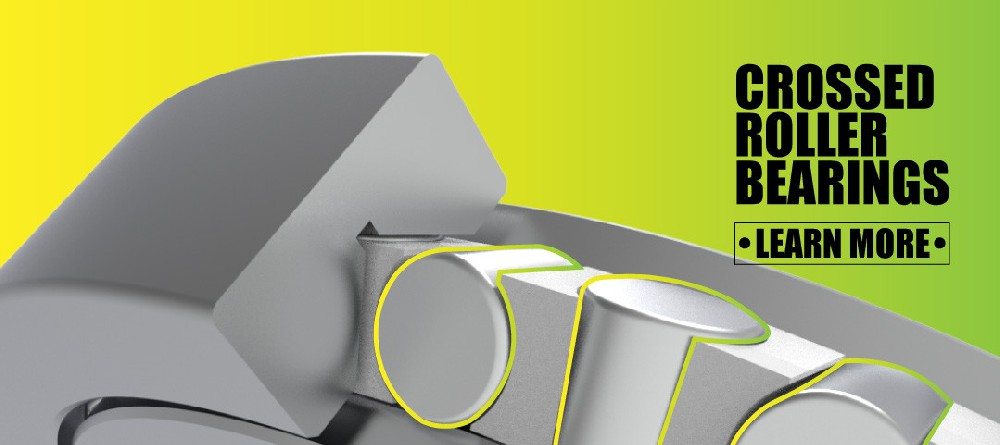
A crossed roller bearing uses rollers positioned alternately at right angles, enabling it to carry radial, axial, and moment loads simultaneously. This structure is especially useful in industrial robots, machine tools, and precision rotary mechanisms operating at moderate speeds.

How to Choose the Right Bearing Supplier
A supplier list is only a starting point. A correct bearing decision should be based on the full operating condition rather than outside diameter, bore size, or unit price alone.
Step 1: Define the Real Load Condition
Ask the engineering team for the complete load profile:
– Maximum radial load
– Axial load in both directions
– Overturning moment
– Shock and vibration condition
– Duty cycle
– Start-stop frequency
– Required service life
– Required rotational speed
Do not select solely from a static load rating. A robot wrist, for example, may experience a relatively modest vertical load but a large overturning moment caused by a long arm, off-center gripper, rapid acceleration, or payload change.
Step 2: Match Bearing Structure to Motion
Choose the structure according to the primary performance requirement.
– Use radial thin section bearings for light radial loading and compact rotating assemblies.
– Use angular contact ball bearings when axial positioning, speed, or paired mounting is important.
– Use four-point contact bearings when bidirectional axial and moment loads must be handled in a compact package.
– Use crossed roller bearings when high rigidity, rotational accuracy, and simultaneous multi-direction load capacity are essential.
For angular contact bearings, preload requires an opposing bearing arrangement; the preload value depends on bearing series, contact angle, internal geometry, and size. This is why the bearing arrangement must be designed as a system, not as an isolated part number.
Step 3: Review Precision and Rigidity Together
High rotational accuracy is valuable, but it is not the only requirement. A bearing can have excellent dimensional accuracy while the final assembly still performs poorly because of weak housing stiffness, shaft deflection, insufficient preload control, mounting errors, or contamination.
Request and confirm:
– Radial and axial runout requirements
– Rotational torque limits
– Axial and radial stiffness
– Raceway hardness and surface finishing
– Internal clearance or preload requirement
– Mounting tolerance recommendations
– Lubrication specification
– Operating-temperature range
Step 4: Evaluate Customization Capability
For a standard machine, a catalog bearing may be sufficient. For high-value equipment, customization can improve the assembly and reduce downstream cost.
Useful customization options include:
– Special bore, outside diameter, or width
– Mounting-hole patterns
– Integrated seals
– Corrosion-resistant materials
– Stainless steel construction
– Special grease or vacuum lubrication
– Higher precision grades
– Special preload or clearance
– Customized cages
– Marking, packaging, and traceability requirements
Step 5: Compare Total Cost, Not Only Unit Price
A lower purchase price does not always reduce total cost. A supplier should be assessed across the full project cycle.
| Evaluation point | Why it matters |
|---|---|
| Technical response speed | Reduces design and validation delays |
| Drawing confirmation | Prevents incorrect interfaces and installation problems |
| Sample consistency | Helps avoid variation between prototype and production |
| Inspection documentation | Supports incoming quality control and traceability |
| Lead-time reliability | Protects manufacturing schedules |
| Customization support | Reduces redesign and assembly complexity |
| Packaging and export experience | Lowers logistics and damage risk |
| After-sales communication | Helps resolve field issues quickly |
Common Selection Mistakes
The most expensive bearing problems are often created before the purchase order is issued.
– Selecting only by dimensions instead of real load and moment calculations
– Using a ball bearing where crossed roller rigidity is required
– Ignoring housing and shaft tolerances
– Applying excessive preload to pursue stiffness
– Choosing grease without reviewing speed, temperature, and environment
– Forgetting contamination, corrosion, or sealing requirements
– Treating a prototype sample as proof of mass-production consistency
– Comparing suppliers only by quoted unit price
For example, a hollow rotary platform for a collaborative robot may require cable routing through a large center hole, low starting torque, repeatable positioning, compact installation, and resistance to moment loads generated by the moving arm. A standard bearing with the correct diameter may fit physically but still fail to provide the necessary stiffness or positioning stability. A properly selected crossed roller bearing or four-point contact thin section bearing may create a more reliable solution.
Why Application Support Matters
Bearing selection is an engineering decision with direct consequences for machine reliability. The best supplier is not always the company with the biggest catalog. It is the supplier that can understand the application, confirm the interface, recommend the appropriate structure, control production quality, and support the program from prototype through volume production.
For robot manufacturers, reducer producers, precision-equipment builders, and automation OEMs, direct access to a manufacturer can also shorten communication loops. It can make it easier to adjust tolerances, sealing, preload, materials, and mounting features before a design reaches production.

Request a Bearing Selection Review
If you are developing a robot joint, harmonic reducer, rotary table, radar platform, medical device, DD motor, or hollow rotary system, work with a supplier that can evaluate the actual application rather than simply quote a standard part number.
Henan Yuwei Industrial Technology Co., Ltd. can support customized solutions for precision crossed roller bearings and high-precision angular contact ball bearings. Share your drawing, installation dimensions, load condition, speed, accuracy target, working environment, and annual demand so the engineering team can recommend a suitable bearing structure and manufacturing solution.
FAQ
What is the difference between a thin section bearing and a normal bearing?
A thin section bearing uses a smaller cross-section relative to its bore diameter. It is designed to save radial space and weight while retaining a relatively large center opening. A normal bearing generally has a thicker ring section and may occupy more installation space for the same bore size.
Which thin section bearing is best for robot joints?
The best type depends on the robot’s load, speed, stiffness, and accuracy requirements. Four-point contact thin section bearings can work well for compact combined-load designs, while crossed roller bearings are often preferred for robot joints that require high rigidity and strong moment-load resistance.
When should I use a crossed roller bearing?
Use a crossed roller bearing when the application requires high rotational accuracy, high rigidity, compact structure, and the ability to carry radial, axial, and overturning-moment loads at the same time. Common examples include robot joints, rotary tables, radar systems, machine tools, and harmonic reducer supports.
Can angular contact ball bearings operate at high speed?
Yes. Angular contact ball bearings are commonly used in high-speed precision applications. The appropriate contact angle, preload, lubrication, cage design, bearing arrangement, and heat-management strategy must be selected according to the specific operating condition.
What information should I provide when requesting a bearing quotation?
Provide the bearing drawing or part number, bore and outside diameter, width, load condition, rotational speed, required precision, installation method, operating environment, lubrication requirement, quantity, and annual demand. If the application is a robot or reducer, include the expected moment load and duty cycle.
How do I prevent premature bearing failure?
Confirm proper bearing selection, mounting tolerances, lubrication, preload or clearance, sealing, shaft and housing rigidity, cleanliness, and operating temperature. Most early failures are related to application mismatch, installation error, contamination, or lubrication issues rather than the bearing alone.
References
– [Kaydon Bearings — Thin Section Bearings and Custom Engineering]
– [Kaydon Reali-Slim Thin Section Bearing Catalog Overview]
– [Schaeffler — Cross Roller Bearings]
– [SKF — Preload, Clearance and Stiffness in Super-Precision Angular Contact Bearings]
– [SKF — Super-Precision Angular Contact Ball Bearings]
– [NSK — Angular Contact Ball Bearings]
– [IKONT — Crossed Roller Bearings and Rigidity]
– [NB Corporation — Crossed Roller Bearing Basics]
Hot Tags: Thin Section Bearings, Thin Section Bearing Suppliers, Crossed Roller Bearings, Precision Crossed Roller Bearings, Angular Contact Ball Bearings, Robot Joint Bearings, High Precision Bearings, Industrial Robot Bearings, Custom Bearing Manufacturer, Rotary Table Bearings