Content Menu
● Why China Is a Key Sourcing Market
>> Technical standards that matter
>> 1. Henan Yuwei Industrial Technology Co., Ltd.
>> 2. Luoyang Bearing Group Co., Ltd. (LYC)
>> 3. Luoyang Bearing Science & Technology Co., Ltd. (ZYS)
>> 4. Wuzhou Xinchun Group Co., Ltd.
>> 5. Luoyang Hongyuan Bearing Technology Co., Ltd.
>> 6. C&U Group
>> 7. Wafangdian Bearing Group Co., Ltd. (ZWZ)
>> 8. Zhejiang Tianma Bearing Group Co., Ltd. (TMB)
>> 9. Luoyang Boying Bearing Co., Ltd. (BY Bearings)
>> 10. Luoyang Huigong Bearing Technology Co., Ltd. (CHG Bearing)
● Manufacturer Comparison Table
● Buyer’s Guide: How to Source Robot Arm Bearings Safely
>> 1. Do not buy from a catalog image alone
>> 2. Send a complete RFQ package
>> 3. Verify the actual factory
>> 4. Verify ISO certificates properly
>> 5. Approve samples from more than one batch
>> 6. Watch for material substitution
>> 7. Check preload, not only clearance
>> 8. Confirm logistics and preservation
>> 1. What bearing type is most common for robot arm joints?
>> 2. How can I verify whether a bearing factory’s ISO 9001 certificate is still valid?
>> 3. What data should I request before approving a cross roller bearing sample?
>> 4. Why can two bearings with the same dimensions perform differently in a robot arm?
>> 5. What is a realistic sample-testing process for a new Chinese supplier?
China has become an important sourcing market for Robot Arm Bearing solutions, particularly for industrial robots, collaborative robots, humanoid robots, SCARA robots, AGVs, medical robots, harmonic reducers, RV reducers, and precision rotary platforms.
For international buyers, China offers more than low-cost standard bearings. The country now includes specialized manufacturers capable of producing crossed roller bearings, thin-section bearings, angular contact ball bearings, harmonic reducer bearings, and high-rigidity rotary bearings for demanding motion-control applications.
However, robot-bearing procurement requires more technical verification than ordinary industrial bearing sourcing. A bearing that appears similar in catalog dimensions may differ greatly in material cleanliness, raceway hardness, preload consistency, runout, friction torque, lubrication, and service life.
This article identifies 10 Chinese manufacturers worth evaluating for Robot Arm Bearing projects. The list is intended as a practical starting point for professional purchasing managers, robot manufacturers, automation integrators, reducer suppliers, and distributors looking for long-term supply partners.
China’s robot industry has expanded rapidly. Industrial-robot output reportedly reached approximately 773,000 units in 2025, compared with about 556,000 units in 2024, increasing demand for high-precision motion components across robot joints, reducers, actuators, servo systems, and rotary modules.

Why China Is a Key Sourcing Market
China’s bearing industry is supported by several established manufacturing clusters, each with different strengths.
– Luoyang, Henan: Known for large-size bearings, precision bearings, crossed roller bearings, slewing bearings, rotary-table bearings, aerospace-related bearing technology, and heavy-duty industrial applications.
– Wafangdian, Liaoning: A long-established center for heavy-duty bearings, wind-power bearings, railway bearings, and large industrial bearing production.
– Zhejiang: Strong in automotive bearings, miniature bearings, bearing rings, precision machining, electric-motor components, and export-oriented mass production.
– Shandong: A major production and trading region for standard and industrial bearings, with a broad network of machining and distribution suppliers.
– Shenzhen and the Pearl River Delta: Important downstream markets for electronics, automation, service robotics, collaborative robotics, motors, sensors, and smart-equipment integration.
For Robot Arm Bearing buyers, the most relevant cluster is often Luoyang and the wider Henan precision-bearing supply chain, because it combines experience in crossed roller bearings, high-load rotary bearings, CNC-machine-tool bearings, reducer-related bearings, and customized motion components.
China’s robotics market is also increasing pressure on the bearing supply chain. Buyers are looking for localized alternatives to Japanese, European, and Korean precision-bearing brands, particularly for cross roller bearing structures, thin-wall bearing configurations, high-stiffness robot-joint bearings, and harmonic reducer applications.
How We Selected Suppliers
A Robot Arm Bearing supplier should not be assessed only by catalog size, factory photos, or quoted unit price. The manufacturers in this guide were selected based on visible market relevance, product specialization, manufacturing background, application coverage, customization potential, and export-readiness indicators.
Selection factors
| Evaluation Area | What Professional Buyers Should Check |
|---|---|
| Product relevance | Crossed roller bearings, angular contact bearings, harmonic reducer bearings, thin-wall bearings, rotary-table bearings, or robot-joint bearing designs |
| Engineering capability | Drawing review, load calculation support, preload selection, material recommendations, tolerance control, and application-specific design |
| Manufacturing maturity | Grinding capability, heat treatment control, assembly conditions, inspection systems, lot traceability, and stable production processes |
| Quality documentation | ISO 9001, material certificates, dimensional reports, hardness reports, runout inspection records, noise/vibration testing, and batch records |
| Customization support | OEM marking, special dimensions, special preload, coating, sealing, lubrication, packaging, and low-to-mid-volume development support |
| Delivery stability | Raw-material planning, production lead times, sample scheduling, stock availability, export packaging, and shipment coordination |
| International trade support | English communication, drawing confirmation, Incoterms, customs documents, export packing, and response speed |
| Long-term suitability | Consistent sample-to-batch performance, technical response, complaint handling, and repeat-order reliability |
Technical standards that matter
For robot arm applications, buyers should define the bearing requirements in measurable terms rather than simply asking for a “robot bearing.”
A proper technical inquiry should include:
– Bearing type and drawing number
– Bore diameter, outer diameter, width, and mounting-hole layout
– Radial load, axial load, and overturning moment
– Dynamic and static load conditions
– Maximum and normal operating speed
– Required positioning repeatability
– Radial and axial runout targets
– Rotational torque limits
– Preload or internal-clearance requirements
– Operating temperature range
– Lubrication type and replenishment method
– Environmental conditions, including dust, moisture, corrosion, vacuum, or cleanroom requirements
– Installation structure, bolt grade, tightening torque, shaft tolerance, and housing tolerance
For most precision robot bearings, buyers should ask about bearing steel grade, heat-treatment process, hardness range, raceway grinding capability, roller or ball grade, surface roughness, and traceability controls.
Typical material options may include high-carbon chromium bearing steel such as GCr15 / 100Cr6 / SAE 52100, while corrosion-resistant or special-environment designs may require stainless steel, coatings, special grease, or alternative material combinations. Material designation alone is not enough: the consistency of heat treatment, grinding, cleanliness, assembly, and preload control has a major effect on performance.
For markets that require environmental and product-compliance documentation, buyers may also request CE-related declarations where applicable, RoHS compliance information, REACH-related declarations, packaging compliance records, and country-specific import documentation. Note that CE marking generally applies to complete machinery or regulated products rather than every standalone bearing; buyers should confirm which declaration is legally relevant to their finished equipment.

Top 10 Manufacturers
1. Henan Yuwei Industrial Technology Co., Ltd.
Location: Zhengzhou, Henan, China
Core products: Precision crossed roller bearings, high-rigidity crossed roller bearings, thin-wall crossed roller bearings, double-row crossed roller bearings, high-precision angular contact ball bearings, high-speed angular contact ball bearings, long-life angular contact ball bearings
Main applications: Industrial robots, collaborative robots, humanoid robots, quadruped robots, SCARA robots, medical robots, AGVs, radar equipment, DD motors, harmonic reducers, planetary reducers, industrial turntables, CNC machine tools, and precision measurement equipment
Best suited for: Small-to-medium robot brands, automation equipment manufacturers, custom-motion-platform developers, reducer manufacturers, and buyers needing responsive engineering communication and flexible OEM support
Henan Yuwei Industrial Technology Co., Ltd. is a precision-bearing manufacturer in Zhengzhou, Henan. Its product range focuses on crossed roller bearings and angular contact ball bearings for applications requiring high rigidity, compact installation dimensions, controlled runout, and combined-load capability.
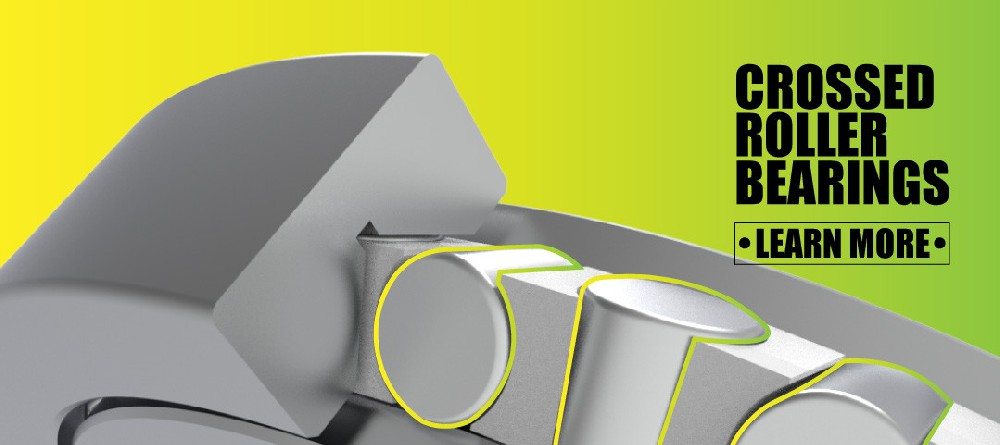
The company’s crossed roller bearing portfolio includes cross cylindrical roller bearings, high-stiffness structures, thin-wall series, and double-row arrangements. These structures are particularly relevant to robot joints, harmonic reducers, rotary platforms, and compact actuator systems because they can support radial loads, axial loads, and overturning moments within a single bearing arrangement.
Yuwei also develops high-precision angular contact ball bearing solutions for high-speed, long-life, and precision-rotation applications. These products are relevant where robot equipment requires high rotational speed, controlled axial location, low vibration, or paired-bearing arrangements.
A key reason to consider Yuwei is its positioning between large-volume industrial bearing groups and small trading companies. It can be a practical option for buyers that need more flexibility than a large state-scale manufacturer may offer, particularly for custom dimensions, drawing-based production, special preload requirements, private labeling, packaging requirements, and prototype-to-production support.
The company describes technical cooperation with universities and research institutes and involvement in research and experimental programs related to specialized robots, radar vehicles, and advanced bearing applications. Its bearings are used across robotics, medical equipment, radar, CNC machinery, rotating platforms, DD motors, harmonic reducers, and planetary reducers.
For buyers that cannot immediately commit to very large annual volumes, Yuwei may be worth evaluating for:
– Cross roller bearing alternatives for common imported series
– OEM and ODM bearing projects
– Robot-joint bearing prototypes
– Custom mounting-hole structures
– Controlled preload configurations
– Replacement bearings for established international product series
– Private-label industrial bearing programs
– Faster technical communication for smaller and mid-sized programs
Its published product information indicates compatibility or replacement potential for selected common cross roller bearing series associated with IKO, THK, HIWIN, INA, NSK, and WON, subject to complete drawing, tolerance, load, installation, and performance verification.
Recommended buyer action: Request the full technical drawing, dimensional tolerances, material specification, hardness report, radial runout data, axial runout data, friction torque range, preload specification, and sample inspection record before confirming interchangeability with an existing imported bearing.
2. Luoyang Bearing Group Co., Ltd. (LYC)
Location: Luoyang, Henan, China
Established: 1950
Core products: Precision bearings, large-size bearings, industrial bearings, aerospace bearings, railway bearings, machine-tool bearings, and specialized bearing solutions
Main markets: China, industrial export markets, transportation, aerospace, energy, heavy machinery, automation, and robotics
Best suited for: Large OEMs, high-volume projects, strategic industrial procurement, and buyers requiring broad engineering resources
LYC Bearing is one of China’s most established bearing manufacturers and has a long history in precision-bearing development. The company is based in Luoyang, a major bearing-production center in Henan Province.
LYC is relevant to robot-arm procurement because robotic systems increasingly require high-precision bearing solutions that combine stiffness, durability, load capacity, and traceable manufacturing processes. While buyers should confirm the exact robot-bearing series and performance scope directly with the manufacturer, LYC’s strength lies in its scale, technical resources, and experience serving demanding industrial sectors.
Public reporting indicates that LYC has research infrastructure associated with aviation precision-bearing development, enterprise-level technical capabilities, CNAS-related laboratory resources, and regional engineering platforms.
For a large robotic-equipment manufacturer, LYC may be a suitable supplier to evaluate when the project involves:
– High annual consumption
– Industrial qualification requirements
– Extensive technical documentation
– Large bearing diameters
– Long-term supply agreements
– Advanced testing requirements
– Strategic sourcing diversification
– Aerospace, rail, energy, or high-reliability industrial overlap
Buyers should expect that highly specialized products, formal qualification procedures, and larger-volume commercial terms may require a longer approval process than purchasing from a smaller precision-bearing factory.
3. Luoyang Bearing Science & Technology Co., Ltd. (ZYS)
Location: Luoyang, Henan, China
Established: 1958
Core products: High-precision bearings, aerospace bearings, high-speed bearings, machine-tool bearings, precision measuring and testing technology
Main markets: Aerospace, aviation, machine tools, advanced equipment, scientific research, and industrial automation
Best suited for: High-precision applications, research projects, specialized machinery, and buyers prioritizing technical depth
ZYS, commonly associated with Luoyang Bearing Science & Technology, is an important name for buyers looking beyond standard industrial bearings. The company is widely linked with high-precision bearing development, aerospace applications, high-speed machine-tool bearings, and advanced research capability.
For Robot Arm Bearing projects, ZYS may be relevant when the buyer’s requirement is especially sensitive to:
– Rotational accuracy
– Low vibration
– High-speed performance
– Thermal stability
– Life prediction
– Advanced test validation
– Precision measurement
– Scientific or aerospace-adjacent applications
A robot arm bearing does not always require aerospace-level specification. However, high-end robot joints, medical robotic systems, precision inspection systems, radar-positioning equipment, and advanced CNC automation may require a more rigorous technical approach than general industrial equipment.
Buyers should prepare detailed load spectra, duty cycles, acceleration profiles, and installation drawings when approaching technically oriented suppliers. A short inquiry such as “Need cross roller bearing for robot arm” is usually insufficient for meaningful engineering evaluation.
4. Wuzhou Xinchun Group Co., Ltd.
Location: Zhejiang, China
Established: Publicly listed company with a long industrial manufacturing background
Core products: Bearing rings, precision bearings, automotive components, wind-power components, robot-related bearings, harmonic reducer bearing products
Main markets: Automotive, industrial equipment, wind power, robotics, export markets
Best suited for: Buyers seeking scale, bearing-ring integration, reducer-related bearings, and industrialized volume production
Wuzhou Xinchun is a Zhejiang-based bearing and component manufacturer with growing relevance in the robot-bearing market. Public industry reporting identifies the company as active in robot-bearing categories including harmonic reducer bearings, RV reducer bearings, thin-wall bearings, cross roller bearings, four-point contact bearings, and related precision products.
The company may be particularly relevant for buyers involved in:
– Harmonic reducer supply chains
– Robot-joint actuators
– Humanoid robot component development
– Large-scale industrial automation
– Bearing ring sourcing
– High-volume precision component programs
Its advantage is not simply its finished-bearing product range. Vertical integration in forging and bearing-ring production can matter for larger buyers because bearing ring quality, material preparation, forging consistency, and machining stability influence final bearing performance.
However, high-volume suppliers may not always be the most flexible option for low-MOQ custom development. Buyers with smaller projects should clarify prototype quantities, engineering charges, tooling costs, drawing ownership, and production thresholds early in the inquiry process.
5. Luoyang Hongyuan Bearing Technology Co., Ltd.
Location: Luoyang, Henan, China
Established: 2005
Core products: Crossed roller bearings, turntable bearings, robot-joint bearings, precision rotary bearings
Main markets: Domestic robotics, automation, robot-joint applications, precision machinery
Best suited for: Humanoid robot programs, robot-joint modules, crossed roller bearing applications, and compact precision-rotation systems
Luoyang Hongyuan Bearing, often associated with the HONB brand, is a specialized Luoyang manufacturer focused on precision bearing applications. Industry reporting has linked the company with crossed roller and turntable bearing supply for Chinese humanoid robot programs, although buyers should independently verify individual customer, project, and volume claims during supplier due diligence.
The company’s potential relevance lies in its specialization. Unlike broad product-line bearing groups, specialized cross roller bearing manufacturers may understand the practical challenges of robot-joint applications:
– Compact structure requirements
– High overturning moments
– Combined radial and axial loads
– Installation-hole design
– Preload selection
– Rotational resistance
– Moment stiffness
– Backlash-sensitive positioning
– Reducer integration
For applications such as humanoid hips, knees, elbows, wrists, robotic waist joints, camera platforms, and compact rotary modules, crossed roller bearing selection often determines more than load capacity. It can affect repeatability, vibration, actuator sizing, motor heat, control stability, and overall robot feel.
Buyers should ask whether the supplier can provide torque data at the intended preload and whether values are measured after final assembly. A bearing with excellent runout but unstable torque can still create problems in a servo-controlled joint.
6. C&U Group
Location: Zhejiang, China
Established: Long-established bearing manufacturer
Core products: Ball bearings, miniature bearings, automotive bearings, electric motor bearings, thin-wall and precision bearing products
Main markets: Automotive, household appliances, motors, industrial equipment, automation, export markets
Best suited for: High-volume compact bearings, electric motor applications, actuator systems, and supply-chain scale
C&U is one of China’s larger bearing manufacturers and is particularly relevant for buyers needing compact bearing solutions, motor-support bearings, thin-section bearing products, and industrialized supply capacity.
Robot systems use many bearings beyond the main robot-joint bearing. These include bearings in:
– Servo motors
– Gearboxes
– End effectors
– Grippers
– Linear modules
– Wheels and drive systems
– Camera modules
– Sensor assemblies
– Fans and cooling systems
– AGV drive units
For these applications, a large manufacturer with broad standard-bearing capability can be a strong candidate, especially when procurement requires repeatable volume supply and multi-product consolidation.
C&U has been identified in industry coverage as a relevant supplier for miniature and thin-wall bearing applications in the robotics ecosystem. Buyers should nonetheless confirm whether the required product is manufactured internally, sourced from a group facility, or supplied through an affiliated channel.
7. Wafangdian Bearing Group Co., Ltd. (ZWZ)
Location: Wafangdian, Liaoning, China
Established: 1938
Core products: Industrial bearings, large-size bearings, wind-power bearings, railway bearings, heavy-duty bearings, specialized bearing solutions
Main markets: Heavy machinery, wind energy, rail transport, mining, marine, industrial equipment, and advanced manufacturing
Best suited for: Large industrial robot systems, heavy payload equipment, high-load rotary applications, and strategic sourcing
ZWZ is one of China’s oldest and largest bearing manufacturers, founded in 1938. It has broad manufacturing capability covering ball bearings, roller bearings, large-size bearings, and industrial bearing products.
ZWZ may be more relevant to heavy-duty robotic and automation projects than compact collaborative robot joints. Possible applications include:
– Heavy-payload industrial robots
– Welding-positioning systems
– Large rotary manipulators
– Robot tracks and transfer systems
– Industrial turntables
– Automated material-handling equipment
– Mining or construction robotics
– Large-scale motion platforms
Industry reporting has also referenced ZWZ’s involvement in impact-resistant bearing development for robotic applications. These claims should be treated as an initial lead rather than a final qualification basis; buyers should verify product specifications, test data, and supply status through direct technical communication.
8. Zhejiang Tianma Bearing Group Co., Ltd. (TMB)
Location: Zhejiang, China
Established: 1987
Core products: Deep groove ball bearings, tapered roller bearings, industrial bearings, large-scale bearing production
Main markets: Industrial equipment, machinery, automotive-related supply, export markets
Best suited for: Standardized industrial bearing procurement, broad product coverage, and cost-controlled volume sourcing
Zhejiang Tianma Bearing Group, commonly known as TMB, has a broad bearing product portfolio and is associated with industrial-scale manufacturing in Zhejiang. Public market summaries identify products including deep groove ball bearings and tapered roller bearings.
TMB is not necessarily the first choice for a highly specialized crossed roller bearing requirement. However, it may be relevant to robot manufacturers and system integrators that need a wider basket of bearing products for supporting equipment, motors, conveyors, AGVs, gearboxes, and automation cells.
For a sourcing manager, this can be valuable because robot production rarely involves only one bearing type. A qualified large supplier may reduce the number of vendors needed for auxiliary bearing components, provided that each product category is independently approved.
9. Luoyang Boying Bearing Co., Ltd. (BY Bearings)
Location: Luoyang, Henan, China
Core products: High-precision crossed roller bearings, RB/RE/RU/RA/CRBH series, YRT rotary-table bearings
Main markets: Robotics, CNC machine tools, industrial automation, rotating equipment
Best suited for: Crossed roller bearing replacement projects, compact robot joints, rotary platforms, CNC equipment, and standard-series sourcing
Luoyang Boying Bearing is a specialized precision-bearing manufacturer focused on crossed roller bearings and rotary-table bearing products. Its published product range includes RB, RE, RU, RA, and CRBH-style crossed roller bearing series as well as YRT rotary-table bearings for CNC machine tools, robotics, and industrial automation.
For buyers needing standard-series alternatives or replacement bearings, specialist manufacturers like BY Bearings can be useful because they tend to maintain familiarity with common industry envelope dimensions and mounting arrangements.
The most important buyer question is not whether a bearing shares the same basic dimensions as an imported reference part. It is whether the replacement meets the required:
– Accuracy grade
– Raceway hardness
– Roller grade
– Preload
– Friction torque
– Rotational smoothness
– Mounting tolerances
– Load rating
– Lifetime expectation
– Lubrication compatibility
BY Bearings publishes certification references including CE, RoHS, TUV, and EC REP-related documentation. Buyers should request the actual certificate copies, issuing body information, legal entity name, scope, expiry date, and product applicability rather than relying on certification logos alone.
10. Luoyang Huigong Bearing Technology Co., Ltd. (CHG Bearing)
Location: Luoyang, Henan, China
Core products: Large-size bearings, slewing bearings, thin-section bearings, industrial bearings, customized bearing solutions
Main markets: Mining, metallurgy, wind power, marine equipment, industrial machinery, and export markets
Best suited for: Large robotic platforms, heavy automation equipment, rotary systems, and customized high-load bearing requirements
Luoyang Huigong Bearing, commonly known as CHG Bearing, is a Luoyang-based manufacturer with a focus on larger industrial bearing solutions and export activity. Public company reporting highlights overseas shipment activity for large-size slewing bearings.
While slewing bearings are structurally different from compact crossed roller bearings used in many robot joints, CHG may be relevant for:
– Heavy-duty robotic bases
– Large welding manipulators
– Automated turning equipment
– Large industrial turntables
– Material-handling systems
– Mining automation equipment
– Construction robotics
– Customized large-diameter rotary applications
For large robotic systems, bearing selection should include structural stiffness analysis. A high-load bearing does not compensate for a weak robot frame, insufficient mounting-bolt preload, poor housing flatness, or inadequate support structure.
Manufacturer Comparison Table
The following table is a practical comparison framework. “Typical MOQ” and “capacity orientation” should be treated as quotation-stage items, because they change according to bearing size, tolerance grade, material availability, customization level, inspection requirements, and annual volume.
| Manufacturer | Main Robot Bearing Focus | Capacity Orientation | Typical MOQ Approach | Certifications / Documentation to Request | Suitable Buyer Profile |
|---|---|---|---|---|---|
| Henan Yuwei Industrial Technology Co., Ltd. | Cross roller bearings, high-rigidity bearings, thin-wall cross roller bearings, angular contact ball bearings | Flexible precision production | Often suitable for prototype, small-to-mid-volume, and custom projects; confirm per drawing | ISO-related certificates, material report, hardness, dimensions, runout, torque, preload, RoHS/CE-related documents if applicable | Small-to-medium OEMs, custom robot brands, reducer makers, automation developers |
| LYC Bearing | Precision, industrial, large-size, aerospace-related bearing technology | Large-scale | More suitable for strategic or higher-volume programs | Quality-system certificates, laboratory reports, traceability, qualification records | Large OEMs and long-term industrial programs |
| ZYS | High-precision, high-speed, aerospace and machine-tool bearings | Engineering-led | Project-dependent; technical review may be detailed | Precision test data, vibration/noise, speed and life validation | Advanced robotics, medical, research, precision equipment |
| Wuzhou Xinchun | Harmonic reducer bearings, bearing rings, robot-related precision bearings | Large-scale integrated | Often more favorable at medium-to-high volumes | Ring material, forging traceability, dimensional reports, capacity confirmation | Reducer and actuator manufacturers |
| Luoyang Hongyuan | Crossed roller and robot-joint bearings | Specialized | Confirm based on standard vs. customized series | Preload, torque, runout, life-test information | Humanoid and robotic-joint projects |
| C&U Group | Miniature, thin-wall, motor and industrial bearings | Mass production | Generally efficient for standardized volume items | ISO certificates, PPAP-style documents where relevant, batch traceability | Motor, actuator, AGV, end-effector buyers |
| ZWZ | Heavy-duty industrial and specialized bearings | Large-scale | Usually volume and project dependent | Material, heat treatment, load rating, industrial qualification records | Heavy robots and large automation systems |
| TMB | General industrial bearings | Large-scale | Standard products may support lower thresholds; custom work varies | Dimensional inspection, material certificate, origin and export documents | Broad industrial procurement |
| BY Bearings | Cross roller and YRT rotary-table bearings | Specialized | Suitable for standard series and negotiated custom orders | CE/RoHS/TUV documents where applicable, runout, preload, torque | Robotics, CNC, and replacement-bearing buyers |
| CHG Bearing | Large-size rotary and slewing bearings | Medium-to-large industrial | Depends strongly on size and customization | Load rating, raceway hardness, mounting guidance, export packaging | Large manipulators and rotary platforms |
Buyer’s Guide: How to Source Robot Arm Bearings Safely
1. Do not buy from a catalog image alone
A robot bearing must be selected based on actual load conditions. Many purchasing mistakes begin with an incomplete inquiry.
For example, a buyer may ask for a bearing based only on a robot-joint diameter. The bearing supplier then selects a part with the correct dimensions but without evaluating the changing overturning moment generated by arm extension, acceleration, braking, payload changes, and end-effector orientation.
A robot arm does not apply one constant load. It creates a changing load spectrum.
For a six-axis robot, the wrist bearing may experience high speed and low moment load, while the shoulder or waist joint may experience relatively low rotational speed but much higher overturning moment. These locations usually need different bearing structures, preload settings, lubrication approaches, and life calculations.
2. Send a complete RFQ package
A professional RFQ should include:
– 2D drawing in PDF format
– 3D model in STEP, IGES, or Parasolid format where necessary
– Bearing reference number, if replacing an existing part
– Required bearing quantity for prototype, pilot batch, and annual production
– Accuracy grade and allowable runout
– Dynamic and static load data
– Maximum speed and duty cycle
– Required preload or stiffness target
– Environmental conditions
– Required product certificates
– Packaging and labeling requirements
– Desired Incoterm, such as EXW, FOB, CIF, DAP, or DDP
– Target delivery date
– Whether the buyer requires OEM logo marking or neutral packaging
3. Verify the actual factory
A supplier website, online marketplace profile, or PDF catalog is not sufficient verification for a long-term robot-bearing program.
Ask for:
– Business registration information
– Factory address
– Production-floor video showing relevant grinding, assembly, and inspection equipment
– Equipment list
– Quality-system certificate
– Certificate number, issuing organization, scope, legal entity, and expiry date
– Recent inspection report from a similar bearing type
– Material certificate from the steel supplier
– Heat-treatment records
– Dimensional inspection report
– Radial and axial runout report
– Friction torque and preload report where relevant
– Export packing photos
– Reference product photos with traceability markings
If possible, conduct a video audit or third-party inspection before placing a production order.
4. Verify ISO certificates properly
One of the most common sourcing questions is: How can a buyer confirm that an ISO certificate is valid and not expired?
Use this process:
1. Request the full certificate rather than a cropped logo or a low-resolution image.
2. Check the legal company name against the quotation, invoice, bank account, and factory address.
3. Review the certificate scope. A certificate covering “trading of industrial components” is not the same as a certificate covering bearing manufacturing.
4. Check the expiry date and surveillance audit status.
5. Identify the certification body that issued the certificate.
6. Search the certification body’s public certificate database where available.
7. Contact the certification body directly if the project value is significant.
8. Confirm that the certified address is the actual production site, not only a sales office.
5. Approve samples from more than one batch
A common but under-discussed problem in precision-bearing procurement is that the first sample may be carefully selected, while later production batches are assembled with different preload, lubrication quantity, roller grouping, or inspection discipline.
This is particularly important for crossed roller bearings and preloaded angular contact ball bearings.
Internal sourcing tip: Do not approve a supplier based on one “golden sample.” Request samples from at least two production batches, ideally produced on different dates. Measure runout, torque, noise, vibration, clearance or preload, and rotational smoothness from each batch.
This can reveal whether the supplier has a stable process or only a good one-time sample.
6. Watch for material substitution
Bearing steel substitution is a major risk when buyers focus only on external dimensions and price.
Possible issues include:
– Lower-grade steel substituted for specified bearing steel
– Inconsistent heat treatment
– Insufficient raceway hardness
– Poor material cleanliness
– Inadequate tempering
– Non-traceable rollers or balls
– Inconsistent cage material
– Uncontrolled grease selection
– Reground or mixed inventory
– Components from multiple uncontrolled sources
To reduce this risk, buyers should request a material certificate that identifies the heat number or batch reference. For high-value robot projects, buyers can send a sample to an independent laboratory for composition and hardness testing.
7. Check preload, not only clearance
For many Robot Arm Bearing applications, preload is one of the most important yet least clearly specified variables.
Too little preload can create:
– Reduced stiffness
– Positioning error
– Excessive backlash-like behavior
– Vibration
– Unstable robot motion
– Reduced accuracy under changing load
Too much preload can create:
– High friction torque
– Excessive motor current
– Increased temperature rise
– Lubricant degradation
– Shortened bearing life
– Reduced speed capability
The correct preload depends on the bearing structure, robot joint location, actuator torque, duty cycle, load direction, mounting stiffness, and required positional accuracy.
Ask the supplier to define the preload value or preload class and explain how it is measured.
8. Confirm logistics and preservation
Precision bearings should not be treated as ordinary metal components during shipping.
Confirm:
– Anti-rust oil or corrosion-protection method
– Vacuum packaging or sealed packaging where appropriate
– Desiccant use for sea freight
– Inner and outer packaging method
– Shock protection
– Palletization requirements
– Wooden-case fumigation status, if required
– Carton labeling
– Batch and serial traceability
– Storage temperature and humidity recommendations
– Customs documentation requirements
For sea shipments to humid or long-transit markets, corrosion prevention should be addressed in writing. A technically correct bearing can still arrive damaged if packaging is inadequate.
Common Procurement Mistakes
| Procurement Mistake | Why It Happens | Potential Consequence | Better Practice |
|---|---|---|---|
| Choosing only by lowest price | Bearing dimensions appear identical | Short life, noise, high torque, poor repeatability | Compare total technical package and batch consistency |
| Using payload weight only | Buyer ignores arm geometry and acceleration | Bearing may be undersized for moment load | Calculate radial, axial, and overturning moment loads |
| Ignoring preload | RFQ does not specify stiffness or torque requirements | Excess heat or unstable positioning | Define preload class, torque window, and stiffness target |
| Accepting one sample | Supplier provides a carefully selected first article | Mass production differs from sample | Test at least two production batches |
| Relying on certification logos | Certificates may be expired or unrelated to manufacturing | Supplier qualification risk | Verify certificate issuer, scope, address, and expiry |
| Assuming “replacement” means identical | Catalog cross-reference is used without testing | Mounting or performance failure | Verify dimensions, tolerances, materials, torque, and load ratings |
| Ignoring installation | Bearing is installed on an inaccurate housing or shaft | Runout, abnormal torque, premature damage | Control shaft/housing tolerance, flatness, bolts, and torque sequence |
| No shipment protection plan | Buyer focuses only on product price | Corrosion or impact damage during transport | Specify anti-rust, moisture barrier, labels, and pallet protection |
Conclusion
China offers a broad range of Robot Arm Bearing suppliers, from large industrial bearing groups to specialized crossed roller bearing manufacturers and flexible custom factories. The right supplier depends on whether your priority is high-volume capacity, precision engineering, low-MOQ development, reducer integration, heavy-load performance, export support, or custom OEM service.
For buyers developing robot joints, harmonic reducers, SCARA systems, collaborative robots, humanoid robots, medical robots, AGVs, or precision rotary equipment, the safest approach is to start with a detailed technical RFQ, compare multiple suppliers, verify manufacturing capability, inspect documentation, and test samples from more than one production batch.
Henan Yuwei Industrial Technology Co., Ltd. is particularly worth considering for buyers seeking precision cross roller bearings and angular contact ball bearing solutions with flexible project support, custom OEM options, responsive communication, and a practical balance between performance and cost. The company’s product range serves robotics, reducers, CNC equipment, medical systems, radar equipment, and other advanced motion-control applications.
Before placing a production order, request a drawing review, technical proposal, sample plan, inspection requirements, and delivery schedule. A well-defined sourcing process can reduce qualification risk and help establish a stable long-term bearing supply chain.

Frequently Asked Questions
1. What bearing type is most common for robot arm joints?
Crossed roller bearings are widely used in robot joints because they can carry radial loads, axial loads, and overturning moments in a compact structure. Angular contact ball bearings are also common in high-speed, paired-bearing, motor-spindle, actuator, and precision-rotation applications. The correct type depends on load direction, stiffness, speed, available installation space, friction-torque limits, and robot-joint architecture.
2. How can I verify whether a bearing factory’s ISO 9001 certificate is still valid?
Request the full certificate and verify the legal entity name, factory address, certification scope, certificate number, issue date, expiry date, and issuing certification body. Then check the certification body’s public database, if available. For important projects, contact the certification body and confirm that the certificate applies to bearing manufacturing rather than only trading or sales activities.
3. What data should I request before approving a cross roller bearing sample?
At minimum, request dimensional inspection data, bore and outer-diameter tolerances, radial runout, axial runout, raceway hardness, material certificate, preload or clearance data, friction torque data, lubrication type, load rating, and packing details. For robot-joint applications, also request information about moment stiffness, recommended mounting tolerances, bolt torque, and operating-speed limits.
4. Why can two bearings with the same dimensions perform differently in a robot arm?
Dimensions alone do not define bearing performance. Differences in steel quality, heat treatment, raceway grinding, roller or ball quality, cage design, preload, lubricant, assembly cleanliness, and final inspection can significantly affect torque, runout, stiffness, noise, vibration, temperature rise, and working life.
5. What is a realistic sample-testing process for a new Chinese supplier?
Start with a technical drawing review. Then order a small sample batch, conduct incoming inspection, install the bearings in a representative housing, measure torque and runout, run the actual duty cycle, inspect temperature rise and vibration, and test after repeated starts, stops, acceleration, and directional reversals. Before a large order, request a second sample batch produced at a different time to verify production consistency.
References
– Henan Yuwei Industrial Technology Co., Ltd. describes its Zhengzhou manufacturing base, precision crossed roller bearing and angular contact bearing range, technical cooperation activities, and robotics-focused application coverage. [yuwei-bearing]
– China’s industrial robot output was reported at approximately 773,000 units in 2025, following approximately 556,000 units in 2024. [marketstats]
– Public reporting identifies Luoyang as a significant precision-bearing center and notes LYC’s engineering and laboratory resources. [finance.sina.com]
– Public industry coverage identifies robotics-related bearing activity among suppliers including Luoyang Hongyuan, Wuzhou Xinchun, LYC, C&U, and ZWZ; individual supply claims should be verified directly during supplier qualification. [robotichina]
– Luoyang Boying publishes its focus on cross roller bearing series and YRT rotary-table bearings for robotics, CNC machine tools, and industrial automation. [bybearings]
Hot Tags: Robot Arm Bearing, Robot Joint Bearing, Cross Roller Bearing, Precision Crossed Roller Bearing, Angular Contact Ball Bearing, Industrial Robot Bearings, Harmonic Reducer Bearing, Humanoid Robot Bearing, Robotic Arm Components, China Bearing Manufacturer