Content Menu
● Why China Remains the Center of Gravity for Angular Contact Ball Bearings
● How We Selected These Manufacturers
● The List: 10 Manufacturers Worth Evaluating
>> 1. Henan Yuwei Industrial Technology Co., Ltd.
>> 2. LYC Bearing Corporation (Luoyang Bearing Group)
>> 3. C&U Group
>> 4. Harbin Bearing Group (HRB)
>> 5. Wafangdian Bearing Group (ZWZ)
>> 6. Shandong UXG Bearing Manufacturing Co., Ltd.
>> 7. Changzhou New Watt Bearing Co., Ltd.
>> 8. Cixi Yongda Bearing Co., Ltd.
>> 9. Wuxi Fanrui Bearing Co., Ltd.
>> 10. Sidu International Trade (Shanghai) Co., Ltd.
● Capacity, MOQ, and Certification Comparison
>> An Underused Verification Step
● Buyer’s Guide: From Shortlist to First Shipment
Why China Remains the Center of Gravity for Angular Contact Ball Bearings
China now accounts for a substantial share of global bearing output, with the domestic bearing market projected to reach roughly USD 11.65 billion by 2026, part of a global bearings market forecast to grow from USD 54.09 billion in 2026 to USD 124.07 billion by 2034 . Within the ball bearing category, angular contact and deep-groove designs together represent the largest sub-segment, with angular contact ball bearings (ACBBs) increasingly specified for robotics joints, machine tool spindles, and rotary platforms rather than only traditional automotive and motor applications .
This growth is backed by trade volume: China’s exports rose 19.2 percent year-on-year in the first two months of 2026 to 4.62 trillion yuan, and reached 9.33 trillion yuan for the January–April period, up 11.3 percent . Bearings and precision mechanical components remain a consistent line item within that export mix, tracked through the General Administration of Customs (GACC) trade statistics portal .
The country’s advantage is not just scale — it is concentrated technical depth. Five recognized industrial bases anchor the supply chain: Wafangdian (Liaoning), home to China’s largest heavy-duty bearing group; Luoyang (Henan), the cluster with the deepest technical accumulation and the country’s only university offering a dedicated bearing engineering major; the Yangtze River Delta (Jiangsu/Shanghai); Eastern Zhejiang, where Cixi alone accounts for roughly 60 percent of the province’s bearing output; and Liaocheng, Shandong . Buyers sourcing angular contact ball bearings benefit from this clustering because tooling, steel supply, heat-treatment subcontractors, and precision grinding capacity are geographically concentrated, shortening lead times and lowering logistics friction between component suppliers.

How We Selected These Manufacturers
Rather than ranking by website claims or search visibility, this list weighs four dimensions that matter to a purchasing manager evaluating a long-term supplier relationship:
– Certification and traceability — valid ISO 9001 (and where relevant IATF 16949, ISO 14001, CE/RoHS compliance for the markets they export to), plus willingness to share mill certificates for bearing steel.
– Engineering and R&D depth — in-house design capability for non-standard bore/OD combinations, contact angle variants, and preload matching, rather than pure catalog resale.
– Quality control process — documented inbound material inspection, in-process dimensional checks, and final testing for runout, noise (vibration/NRRO), and torque.
– Delivery reliability and export experience — track record with international freight, consistent lead times between sample and mass-production runs, and responsiveness after shipment.
Manufacturers below range from large state-heritage groups with decades of scale to specialized mid-size factories built around specific application niches such as robotics and precision automation. Both models can be legitimate sourcing partners depending on the buyer’s volume and customization needs.
The List: 10 Manufacturers Worth Evaluating
1. Henan Yuwei Industrial Technology Co., Ltd.
Location / cluster: Zhengzhou, Henan (adjacent to the Luoyang bearing technology cluster)
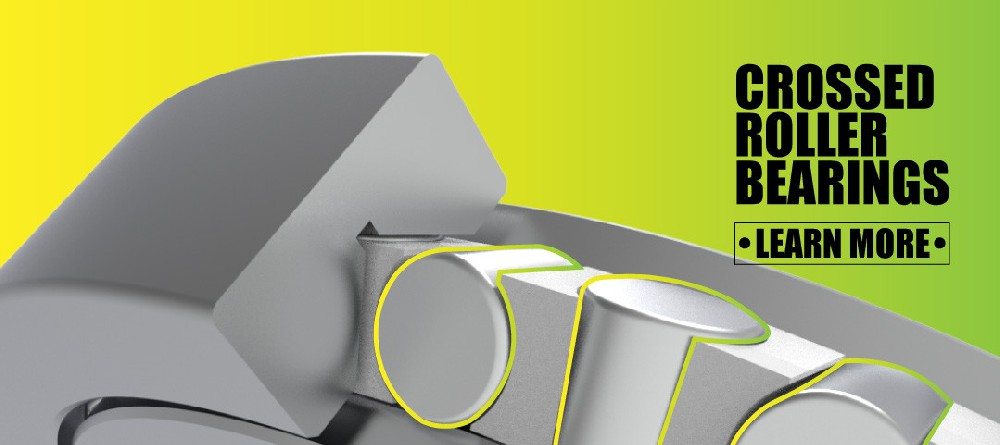
Core focus: Precision cross roller bearings, high-rigidity and thin-wall cross roller bearings, double-row cross roller bearings, angular contact ball bearings, and ball screw support bearings.
Yuwei positions itself around the higher-precision end of the angular contact ball bearing category, with product lines engineered to cross-reference against IKO, THK, HIWIN, NSK (NRXT series), and WON bearing series used in motion-control equipment . Its customer base skews toward robotics and automation OEMs — quadruped robots, collaborative and SCARA robots, humanoid robot joints, exoskeletons, AGVs, medical devices, communication radar systems, and rotary tables for CNC and harmonic/planetary reducer assemblies .
What distinguishes this factory in practice is its role as a development partner for small and mid-size equipment brands rather than only mass-catalog supply: it has run joint research projects with universities and research institutes, developed bearings for specialized robot and radar-vehicle platforms, and holds industry-university cooperation agreements that feed directly into custom bearing design . For buyers with non-standard bore sizes, tight preload tolerances, or robotics-specific load requirements, this translates into shorter design-iteration cycles and more direct engineering communication than is typical with larger state-owned groups, where technical requests often route through multiple departments. Its export footprint already covers the United States, Germany, Italy, Spain, Norway, Russia, South Korea, Taiwan, and India , making it a practical option for buyers who want OEM/ODM flexibility without the account-minimums that large groups impose.

2. LYC Bearing Corporation (Luoyang Bearing Group)
Location: Luoyang, Henan
Established: 1954
One of the “first five-year plan” era bearing enterprises, LYC operates a large engineering and manufacturing base (historically cited between 1,500–3,000 engineers and 7,000–12,000 production staff across different periods) with sales into more than 70 countries . It holds ISO 9001, ISO 14001, ISO/TS 16949, and AS9100 certifications, positioning it for aerospace-adjacent and heavy industrial angular contact bearing work in addition to standard catalog lines .
3. C&U Group
Location: Wenzhou/Hangzhou, Zhejiang (with plants across Wuxi, Shanghai, Sichuan, Wuhu, and Huangshi)
Established: 1991
C&U is generally cited as China’s largest bearing producer by volume, with nine manufacturing parks, 36 bearing plants, and roughly 819 million units of annual capacity . Its scale suits buyers needing high-volume, standardized angular contact ball bearings for automotive and industrial motor applications, though large minimum order quantities and longer onboarding cycles are typical of groups this size.
4. Harbin Bearing Group (HRB)
Location: Harbin, Heilongjiang
Established: 1950
HRB’s heritage includes joint ventures with Aviation Industry Corporation of China for aero-engine main shaft bearings and with international partners for automotive bearing lines . For angular contact ball bearings destined for high-load or safety-critical industrial equipment, HRB’s traceability documentation tends to be more rigorous than smaller regional factories, reflecting its aerospace-adjacent manufacturing history.
5. Wafangdian Bearing Group (ZWZ)
Location: Wafangdian, Liaoning
Cluster role: Anchor of China’s largest heavy-duty bearing industrial base
ZWZ supplies bearings for major technical equipment, rail transit, wind power, and precision machine tools, operating 23 manufacturing plants and a national-level bearing engineering research center . It is a stronger fit for buyers needing large-bore or heavy-load angular contact variants than for small-batch precision robotics components.
6. Shandong UXG Bearing Manufacturing Co., Ltd.
Location: Liaocheng, Shandong
Cluster role: Recognized “Key Enterprise” by the China Bearing Industry Association since 2010
UXG represents the Liaocheng cluster’s mid-size manufacturing base, with a longer-standing CBIA membership than many newer entrants — a useful proxy for continuity when a buyer cannot visit the factory in person.
7. Changzhou New Watt Bearing Co., Ltd.
Location: Changzhou, Jiangsu (Yangtze River Delta cluster)
Established: 2003
New Watt maintains a broad catalog spanning angular contact ball bearings and INA cross-reference lines, with roughly 30 actively promoted product families . Its longer operating history within a smaller registered-capital base is typical of established family-run factories in the Jiangsu cluster — reliable for standard sizes, less suited to heavily customized geometries.
8. Cixi Yongda Bearing Co., Ltd.
Location: Cixi, Zhejiang (Eastern Zhejiang cluster)
Established: 2001
Cixi is the single largest contributor to Zhejiang’s bearing output, generating roughly 60 percent of the province’s production . Yongda’s catalog includes both metric and imperial bore/OD combinations, useful for buyers supplying replacement parts into legacy imperial-unit equipment in North America.
9. Wuxi Fanrui Bearing Co., Ltd.
Location: Wuxi, Jiangsu
Established: 2021
A newer entrant with a narrower but more specialized line — angular contact, self-aligning, and ceramic bearing variants . Younger factories in this bracket can offer competitive pricing and faster quoting, but buyers should weight this against a shorter track record on export logistics and after-sales response.
10. Sidu International Trade (Shanghai) Co., Ltd.
Location: Shanghai
Established: 2017
Sidu carries a wider cross-category catalog — angular contact, cross roller, and cylindrical roller bearings — with a comparatively higher registered capital tier among the smaller entrants on this list . Trading-oriented companies based in Shanghai often act as export-documentation specialists sitting between overseas buyers and inland factories; this can simplify Incoterms and paperwork but adds a margin layer, so it is worth asking directly whether production is in-house or subcontracted.
Capacity, MOQ, and Certification Comparison
| Manufacturer | Est. | Cluster | Approx. Scale | Typical MOQ Posture | Certifications Commonly Held | OEM/ODM Depth |
|---|---|---|---|---|---|---|
| Henan Yuwei Industrial Technology | — | Henan (Luoyang-adjacent) | Mid-size, robotics-focused | Flexible, sample-friendly | ISO 9001; export compliance per destination market | High — custom bore/preload/robotics joint design |
| LYC Bearing Corporation | 1954 | Luoyang, Henan | Large, 70+ export markets | Moderate-to-high | ISO 9001, ISO 14001, ISO/TS 16949, AS9100 | Medium-high |
| C&U Group | 1991 | Zhejiang/multi-province | Very large (~819M units/yr) | High | ISO 9001 and automotive-grade certifications | Medium (volume-oriented) |
| Harbin Bearing Group (HRB) | 1950 | Heilongjiang | Large, aerospace-adjacent | High | ISO 9001, aerospace/automotive JV standards | Medium |
| Wafangdian Bearing Group (ZWZ) | — | Liaoning | Very large, heavy-duty focus | High | ISO 9001 | Low-medium (standard heavy-load lines) |
| Shandong UXG Bearing | — | Shandong (Liaocheng) | Mid-size, CBIA-recognized | Moderate | ISO 9001 | Medium |
| Changzhou New Watt Bearing | 2003 | Jiangsu | Small-mid, broad catalog | Moderate | ISO 9001 (verify scope) | Low-medium |
| Cixi Yongda Bearing | 2001 | Zhejiang (Cixi) | Small-mid, metric/imperial | Moderate | ISO 9001 (verify scope) | Low-medium |
| Wuxi Fanrui Bearing | 2021 | Jiangsu | Small, specialized | Flexible | Verify directly | Medium |
| Sidu International Trade | 2017 | Shanghai | Small-mid, trading-hybrid | Flexible | Verify factory vs. trader status | Medium |
Figures for scale and MOQ posture are directional, based on company profile data and typical patterns for each size tier; buyers should confirm current figures directly with each supplier before quoting.
Where Sourcing Goes Wrong
Angular contact ball bearing sourcing has a few recurring failure points that rarely show up until a component fails in the field:
– Material substitution. The steel grade quoted (typically GCr15, equivalent to AISI 52100) and the core hardness range (60–64 HRC) are easy to misstate on a datasheet and hard to verify without a mill certificate or hardness test report . Some suppliers substitute lower-grade steel in repeat orders after an approved sample batch passed inspection.
– Sample-to-batch drift. First-article samples are frequently hand-selected or hand-fitted with tighter tolerances than the mass-production run that follows. A precision test report — showing runout, contact angle, and preload results against the stated ABEC or ISO tolerance class — should be requested for both the sample and a random batch sample from the first production run, not just the sample .
– Certificate misrepresentation. ISO certificates get photocopied, renamed, or kept on file well past their expiry date. A certificate number and issuing body name should always be cross-checked, not just the certificate logo.
– Trading company disguised as a factory. Many Alibaba or trade-show listings describe themselves as “manufacturer” while actually reselling output from two or three real factories under private label. This is not inherently disqualifying, but it changes who is accountable for defects and how customization requests get handled.

An Underused Verification Step
One check rarely discussed publicly, but well known among experienced industrial buyers: cross-reference the supplier’s registered business scope on China’s National Enterprise Credit Information Publicity System against what their sales team claims. The public registry shows registered capital, business scope (whether it legally includes “manufacturing” versus only “trading” or “sales”), and the registered factory address — which can then be checked against satellite imagery or a video factory tour. A company whose registered scope only covers wholesale/trading, despite marketing itself as a “factory,” is a trading intermediary regardless of the photos on its website. This single check resolves more sourcing disputes before they start than any amount of back-and-forth email correspondence.
Buyer’s Guide: From Shortlist to First Shipment
Verifying the factory. Request the business license number and confirm it independently through the National Enterprise Credit Information Publicity System, ask for the ISO 9001 certificate number and issuing/accreditation body, and verify it through the International Accreditation Forum’s CertSearch database rather than trusting the PDF alone . A valid certificate will show an active status, defined scope, and a certification body that is itself accredited by an IAF MLA signatory .
The sample process. Expect to pay for first samples (reputable factories rarely offer completely free samples for custom specifications). Request the precision test report alongside the physical sample, and specify in writing that the mass-production batch must match the sample’s tolerance class — this becomes your contractual reference point if a dispute arises later.
Logistics considerations. Angular contact ball bearings are typically classified under HS code 8482 for customs purposes; confirm the exact subheading with your freight forwarder since duty treatment varies by destination market. Insist on anti-corrosion packaging (VCI paper or oil coating) for sea freight, particularly for shipments crossing humid climates or long transit times, and clarify Incoterms (FOB vs. CIF vs. DDP) early since inland trucking from clusters like Luoyang or Wafangdian to the nearest port adds measurable lead time versus coastal Zhejiang or Shanghai-based suppliers.
Lead time patterns. Compare quoted lead time for the first sample order against the quoted lead time for a repeat production order of the same part — a large gap between the two often signals real capacity constraints that only surface after the relationship is underway.
Final Considerations
Selecting an angular contact ball bearing supplier in China is less about finding the single largest factory and more about matching factory scale and specialization to the application: heavy-load industrial equipment favors the large state-heritage groups, while robotics, medical, and precision automation projects often get better engineering responsiveness from mid-size, application-focused manufacturers. Before issuing a purchase order, verify certifications independently, request a precision test report alongside any sample, and confirm the production entity’s legal scope rather than relying on marketing claims. Buyers ready to move from shortlist to first order should request a quotation with full test-report documentation from at least two suppliers of different scale before committing to a production run.
Frequently Asked Questions
How can I confirm a factory’s ISO 9001 certificate hasn’t expired or been fabricated?
Ask for the certificate number and the name of both the certification body and its accreditation body, then look up the certificate directly in IAF CertSearch, which shows current status, scope, and expiry rather than relying on a scanned PDF .
What’s the difference between precision grades like P5, P4, and ABEC-7, and does my application actually need the highest one?
Higher precision grades (P4/P2 in the ISO system, roughly comparable to ABEC-7/ABEC-9) reduce runout and improve high-speed stability but add cost and typically longer lead times; a robotics joint or precision spindle usually justifies P4 or better, while a general industrial gearbox rarely needs beyond P5 or standard tolerance .
How do I tell if a supplier is the actual manufacturer or a trading company reselling another factory’s output?
Cross-check the registered business scope on China’s National Enterprise Credit Information Publicity System — trading companies’ registered scope will not include manufacturing — and request a live video walkthrough of the specific production line, not just office or showroom footage.
Is a lower minimum order quantity always a red flag for quality?
Not necessarily. Smaller, specialized factories serving robotics, medical device, or instrumentation OEMs often keep MOQs lower by design because their customers order in smaller, higher-value batches; the more relevant signal is whether they can produce a documented precision test report at that order size, not the order size itself.
What should I insist on before releasing full payment on a first order?
A third-party pre-shipment inspection (SGS, Bureau Veritas, or Intertek all offer bearing-specific inspection scopes) covering dimensional checks, material certificates, and a sample-versus-batch tolerance comparison, with payment terms structured so the balance is tied to a passed inspection report rather than shipment date alone.
References
– China Bearing Industry Association (CBIA): [www.cbia.com.cn]
– General Administration of Customs of the People’s Republic of China (GACC) — Trade Statistics: [www.customs.gov.cn]
– IAF CertSearch — Global accredited certification verification database: [www.iafcertsearch.org]
– National Enterprise Credit Information Publicity System: [www.gsxt.gov.cn]
Hot Tags: Angular Contact Ball Bearing, China Bearing Manufacturers, Precision Bearing Manufacturer, OEM Bearing Supplier, ODM Bearing Manufacturer, Cross Roller Bearing, ISO 9001 Certified Bearing, Robotics Bearing Supplier, Custom Bearing Manufacturer, Bearing Factory China