Content Menu
● What Does a Slewing Bearing Do on an Excavator?
● Main Types of Excavator Slewing Bearings
● Key Data Needed Before Selecting a Swing Bearing
>> Interface and installation requirements
● Excavator Slewing Bearing Selection Checklist
● Why Lubrication and Bolt Control Determine Service Life
>> Recommended maintenance practices
● Early Warning Signs of Excavator Swing Bearing Failure
● Engineering Support for Custom Excavator Slewing Bearings
● Request an Excavator Slewing Bearing Solution
● FAQ
>> What is the difference between a slewing bearing and a swing bearing?
>> How do I identify the correct excavator slewing bearing?
>> Can a slewing bearing be repaired?
>> What causes premature swing bearing failure?
>> How often should an excavator swing bearing be lubricated?
>> What should I do if I find metal particles in slewing bearing grease?
An excavator slewing bearing—also called a swing bearing, swing circle, or slewing ring—is the structural and rotational connection between the undercarriage and upper structure. It must carry radial force, axial load, overturning moment, shock loading, and repeated swing cycles while maintaining controlled rotation in dust, water, vibration, and heavy-duty jobsite conditions.
For excavator OEMs, rebuilders, and equipment-service companies, selecting the correct slewing bearing is not simply a matter of matching diameter and bolt holes. The bearing must fit the machine’s real load spectrum, attachment configuration, gear arrangement, lubrication method, installation tolerances, and expected service environment.

What Does a Slewing Bearing Do on an Excavator?
The excavator slewing bearing supports the entire upper structure, including the cab, counterweight, engine, boom, arm, bucket, hydraulic system, and working attachment. It allows the upper structure to rotate relative to the track frame during digging, loading, lifting, trenching, and material handling.
A typical excavator swing bearing consists of:
– An inner ring and outer ring with mounting holes
– One or more raceways
– Rolling elements, such as balls or rollers
– Spacers or cages, depending on the design
– Seals to retain grease and reduce contaminant entry
– An internal or external gear, depending on the machine layout
The swing drive pinion meshes with the bearing gear. When the hydraulic swing motor transfers torque through the gearbox, the pinion drives the slewing ring and rotates the upper structure.
This component is exposed to much more than rotational force. During off-center digging, lifting at reach, operating on uneven ground, or stopping a loaded attachment, the bearing experiences combined loads. Tilting moment is often one of the most critical selection factors because it can concentrate load in a limited raceway zone.
Main Types of Excavator Slewing Bearings
The right slewing bearing structure depends on excavator size, operating duty, available installation space, load direction, stiffness requirement, and cost target.
| Bearing type | Core advantage | Typical suitability |
|---|---|---|
| Four-point contact ball slewing bearing | Compact structure and multi-direction load capacity | Small to medium excavators and general construction equipment |
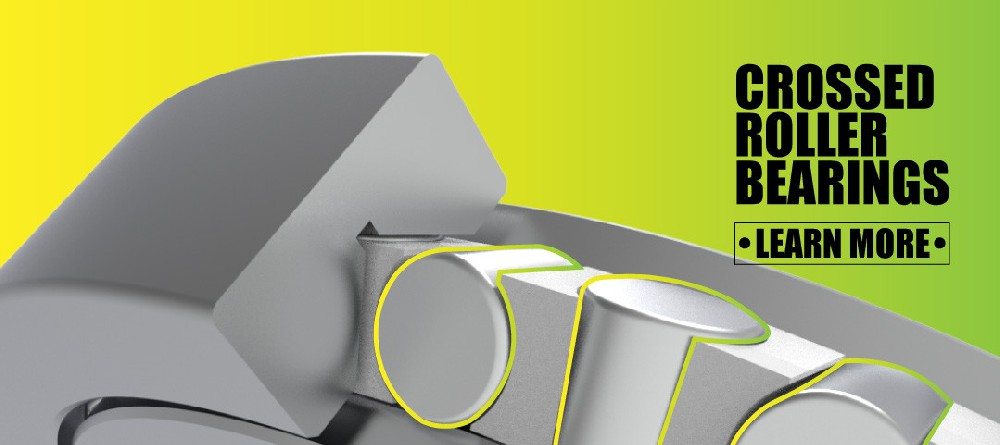
| Cross roller slewing bearing | High stiffness, high rotational accuracy, strong moment-load capacity | Precision equipment, specialized machines, compact high-rigidity applications |
| Double-row ball slewing bearing | Higher load capacity than many single-row ball designs | Medium-duty and heavy-duty machinery |
| Three-row roller slewing bearing | Excellent capacity for separate radial, axial, and moment loads | Large excavators, mining machines, cranes, and high-load duty cycles |
| Ball-roller combination design | Balances load capacity and structural requirements | Specialized equipment where the load profile requires tailored engineering |
Four-point contact ball designs are widely used where compactness and cost efficiency matter. Cross roller structures use cylindrical rollers arranged in alternating directions, enabling high rigidity and good resistance to radial, axial, and overturning loads. For extremely demanding machines, three-row roller arrangements can distribute load across dedicated raceways.
The best choice is not always the largest or most complex design. A bearing that is oversized, incorrectly preloaded, or poorly integrated can create installation difficulty, excessive cost, and inconsistent operating behavior. The correct answer comes from the application data.

Key Data Needed Before Selecting a Swing Bearing
A professional slewing bearing quotation should begin with engineering information, not only a part number. If an original reference is unavailable, the supplier should assess the application systematically.
Load and motion conditions
Provide the maximum and normal operating conditions, including:
– Excavator model and operating weight
– Upper-structure weight and center of gravity
– Boom, arm, bucket, breaker, grapple, shear, or other attachment details
– Maximum radial load, axial load, and overturning moment
– Swing speed and start-stop frequency
– Expected operating hours and duty cycle
– Dynamic shock conditions during digging, lifting, demolition, or rock handling
– Operating position, slope limits, and ground conditions
Bearing life calculations are commonly based on rolling-contact fatigue concepts, while real service life is also heavily influenced by contamination, lubrication, mounting accuracy, bolt preload, and actual loading conditions. ISO 281 describes bearing rating life in terms of the revolutions completed before the first evidence of fatigue develops in a ring or rolling element.
Interface and installation requirements
The supplier should also confirm:
– Inner diameter, outer diameter, and total height
– Bolt-circle diameter, bolt size, quantity, grade, and hole style
– Internal gear, external gear, or gearless configuration
– Gear module, pressure angle, tooth count, and backlash requirements
– Mounting surface flatness and parallelism
– Seal design and grease nipple locations
– Corrosion protection and operating temperature range
– Drawing revision and interchangeability requirements
A bearing that fits dimensionally may still be unsuitable mechanically. For example, two slewing rings with a similar outside diameter can have different raceway capacity, gear geometry, bolt patterns, and allowable tilting moment.
Excavator Slewing Bearing Selection Checklist
Before approving production, use the following practical checklist.
1. Confirm the exact machine model, serial range, and original bearing drawing or sample.
2. Verify whether the gear is internal or external, and check the gear module, tooth count, and pinion compatibility.
3. Identify the maximum load cases, particularly long-reach digging, side loading, lifting, hydraulic hammer work, and sudden swing braking.
4. Determine whether the excavator works in severe environments such as mining, demolition, coastal sites, high humidity, abrasive dust, or low temperatures.
5. Confirm mounting-hole geometry, bolt specification, mounting-face flatness, and ring orientation.
6. Specify grease type, relubrication method, lubrication points, and maintenance access.
7. Agree on inspection requirements, including runout, rotational torque, gear quality, hardness, material certificates, and dimensional reports.
8. Request packaging suitable for export transport and long-term storage, especially for ocean freight and humid destinations.
Why Lubrication and Bolt Control Determine Service Life
Many slewing bearing problems are not caused by a defective bearing design. They begin with insufficient lubrication, grease contamination, improper bolt tightening, uneven mounting surfaces, or operation beyond the machine’s intended load condition.
Slewing bearings typically operate at low speed and under high load. This makes the grease film, raceway cleanliness, and seal condition essential. SKF recommends relubricating slewing bearings and highlights key operating factors including speed and permissible operating temperature. Liebherr’s installation and maintenance guidance also emphasizes using suitable lubricating grease for slewing bearings.
Recommended maintenance practices
– Lubricate the raceway according to the machine manufacturer’s schedule and increase frequency in dusty, wet, or shock-load conditions.
– Rotate the upper structure slowly during greasing so lubricant reaches the working raceway zone more evenly.
– Purge old grease carefully where the sealing design permits, helping remove contaminated lubricant.
– Inspect seals for damage, hardening, leakage, or gaps that could allow water and abrasive particles into the bearing.
– Check mounting bolts with the specified torque procedure and recheck after initial operating hours where required.
– Inspect ring gear and pinion contact pattern, tooth wear, and backlash.
– Record lubrication dates, operating hours, observed play, grease condition, and corrective actions.
For construction equipment with low-speed and intermittent rotation, one published slewing-ring maintenance guide suggests lubrication about every 50 operating hours for excavators, although the equipment manufacturer’s documented interval must always take priority.

Early Warning Signs of Excavator Swing Bearing Failure
A swing bearing often provides warning signs before severe damage occurs. Operators and maintenance teams should treat these signals as a reason for inspection rather than continuing to operate until a major failure develops.
| Warning sign | Possible issue | Recommended response |
|---|---|---|
| Grinding, clicking, popping, or rumbling during swing | Raceway wear, rolling-element damage, contamination, or poor lubrication | Stop and inspect the swing system |
| Upper structure rocking or vertical movement | Excessive internal clearance, mounting issue, or raceway damage | Measure play using the OEM method |
| Uneven resistance during rotation | Localized wear, contamination, poor gear mesh, or lubrication shortage | Inspect raceway, gear, and lubricant |
| Metallic particles in purged grease | Internal wear or surface damage | Conduct immediate technical evaluation |
| Damaged seals or excessive grease leakage | Contamination risk and lubricant loss | Replace seals and assess bearing condition |
| Loose or damaged mounting bolts | Reduced clamping force and possible ring movement | Follow the correct bolt inspection procedure |
Visible rocking under load, abnormal noise, rough swing movement, and metallic contamination in grease are commonly recognized warning signs in excavator swing-system inspections. A controlled measurement with a dial indicator can help determine whether clearance exceeds the machine manufacturer’s allowable limit.
Do not diagnose a slewing bearing solely by noise. Swing motor, gearbox, hydraulic control, structural frame, pinion, and mounting bolts can produce similar symptoms. A complete inspection should isolate the source before replacement is ordered.
Engineering Support for Custom Excavator Slewing Bearings
Henan Yuwei Industrial Technology Co., Ltd. develops and manufactures precision bearing solutions for demanding rotational applications. Our technical capabilities include precision cross roller bearings, high-rigidity cross roller bearings, thin-section cross roller bearings, double-row cross roller bearings, high-precision angular contact ball bearings, high-speed angular contact ball bearings, and long-life angular contact ball bearing series.
Our experience with robotics, radar equipment, precision measuring instruments, CNC machine tools, industrial rotary tables, hollow rotary platforms, direct-drive motors, harmonic reducers, and planetary reducers supports a disciplined approach to bearing design, machining accuracy, load analysis, and quality control.
For excavator and construction-equipment customers, we can support projects involving:
– Custom slewing bearing dimensions and mounting interfaces
– Cross roller, four-point contact, double-row, and high-load bearing structures
– Internal or external gear configurations
– Optimized raceway and rolling-element selection
– Drawing-based production and sample-based reverse engineering
– Special sealing, corrosion protection, and lubrication arrangements
– Technical discussion for OEM development, replacement parts, and specialized machinery
Our engineering team works with customers to clarify the operating environment before proposing a solution. This is especially valuable when the excavator uses non-standard attachments, works under severe impact loading, requires a compact bearing envelope, or needs replacement bearing compatibility for an existing design.
Request an Excavator Slewing Bearing Solution
If you need an excavator slewing bearing, send us your bearing drawing, part number, sample photos, machine model, dimensions, gear information, and expected quantity. Our team can review the application and provide a suitable technical proposal for standard, replacement, or custom-manufactured swing bearing requirements.
Contact Henan Yuwei Industrial Technology Co., Ltd. to discuss your excavator slewing ring project and receive a tailored quotation.
FAQ
What is the difference between a slewing bearing and a swing bearing?
They usually refer to the same component in excavator applications. “Slewing bearing,” “swing bearing,” “slew ring,” and “swing circle” are common names for the large rotational bearing between the excavator upper structure and undercarriage.
How do I identify the correct excavator slewing bearing?
Start with the original part number, machine model, serial number, bearing drawing, inner diameter, outer diameter, height, bolt-hole pattern, gear data, and clear photos. For custom applications, provide the load, attachment, speed, and operating environment.
Can a slewing bearing be repaired?
The answer depends on the damage type, bearing design, availability of repair facilities, and total replacement cost. Severe raceway damage, cracked rings, major gear damage, or excessive internal clearance often requires replacement. A technical inspection should determine whether repair is safe and economical.
What causes premature swing bearing failure?
Common causes include insufficient or unsuitable grease, contamination from damaged seals, overloading, severe impact, incorrect bolt preload, poor mounting-surface flatness, incorrect gear mesh, and operation after early warning signs appear.
How often should an excavator swing bearing be lubricated?
Follow the excavator manufacturer’s maintenance manual. The interval may need to be shortened in dusty, wet, high-load, or high-frequency swing conditions. A published maintenance guide suggests approximately every 50 operating hours for excavators in typical low-speed intermittent rotation, but this is not a substitute for OEM requirements.
What should I do if I find metal particles in slewing bearing grease?
Treat it as a serious warning sign. Stop the machine where safe, preserve a grease sample, inspect seals and mounting bolts, assess swing smoothness, and arrange a qualified inspection. Continuing to work can increase damage to raceways, rolling elements, gears, and surrounding components.
References
1. [LKPB Bearing — Slewing Bearings for Excavators: Enabling Powerful and Precise Movements]
2. [Liebherr — General Instructions for Slewing Bearing Installation, Lubrication and Maintenance]
3. [SKF — Slewing Bearings Product Information]
4. [ISO 281-1:1977 — Dynamic Load Ratings and Rating Life]
5. [SIRCA — Slewing Rings Bearing Lubrication and Maintenance]
6. [FieldFix — Heavy Equipment Swing Bearing Maintenance Guide]
7. [TB Polishing Pads — Excavator Slewing Bearing Check]
Hot Tags: Excavator Slewing Bearing, Excavator Swing Bearing, Slewing Ring Bearing, Excavator Slewing Ring, Swing Circle Bearing, Excavator Turntable Bearing, Heavy Equipment Slewing Bearing, Custom Slewing Bearing Manufacturer, Excavator Swing Bearing Replacement, Slewing Bearing Supplier