The 70 series is designed to handle combined loads—meaning it manages both radial and axial forces simultaneously. Because these bearings are often used in “super-precision” environments (like P4 or P2 tolerance grades), the way they are protected from the environment is vital.
The “Dilemma” of sealed vs open 70 series bearings is a trade-off between protection and performance. An open bearing offers the highest possible speeds but is vulnerable to dirt. A sealed bearing offers “set it and forget it” convenience but may run hotter at extreme RPMs. Understanding your specific application’s speed, environment, and lubrication method is the only way to solve this dilemma.
Understanding Open 70 Series Bearings
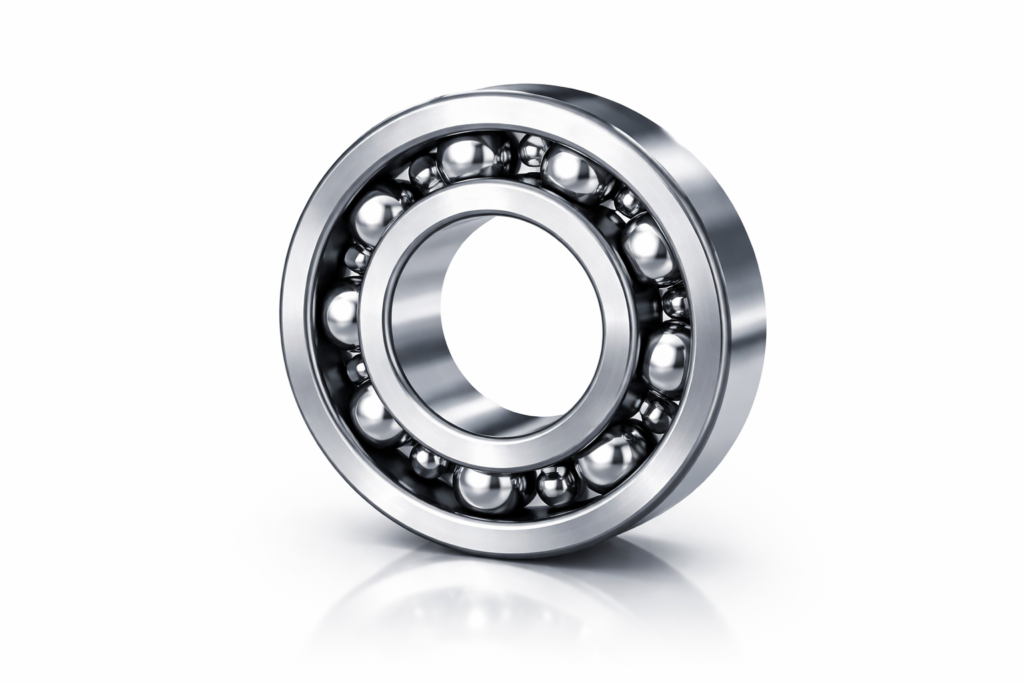
An open 70 series bearing has no integrated covers on its sides. You can see the internal balls, the cage (retainer), and the raceways. This design is not “unfinished”; rather, it is intentionally open to allow for external interaction.
-
Best For: Controlled Environments
Open bearings are typically used in enclosed systems where the environment is already clean. For example, inside a gearbox or a spindle housing where oil is constantly circulated.
-
The Advantages (Pros)
-
Highest Speed Limits: Without the friction of a rubber seal touching the inner ring, open bearings can reach the maximum limiting speed of the design.
-
Superior Cooling: Because they are open, heat can escape the bearing more easily. When used with an oil-mist lubrication system, the moving air/oil helps carry heat away from the balls and raceways.
-
Easy Inspection: Maintenance teams can visually inspect the condition of the lubricant and the cage without removing any shields.
-
-
The Disadvantages (Cons)
-
Zero Contamination Protection: Even a tiny grain of dust can act as an abrasive, leading to pitting on the raceways.
-
Lubrication Dependency: An open bearing cannot hold its own grease for long. It must be part of a larger lubrication circuit or be manually greased frequently.
-
Understanding Sealed 70 Series Bearings
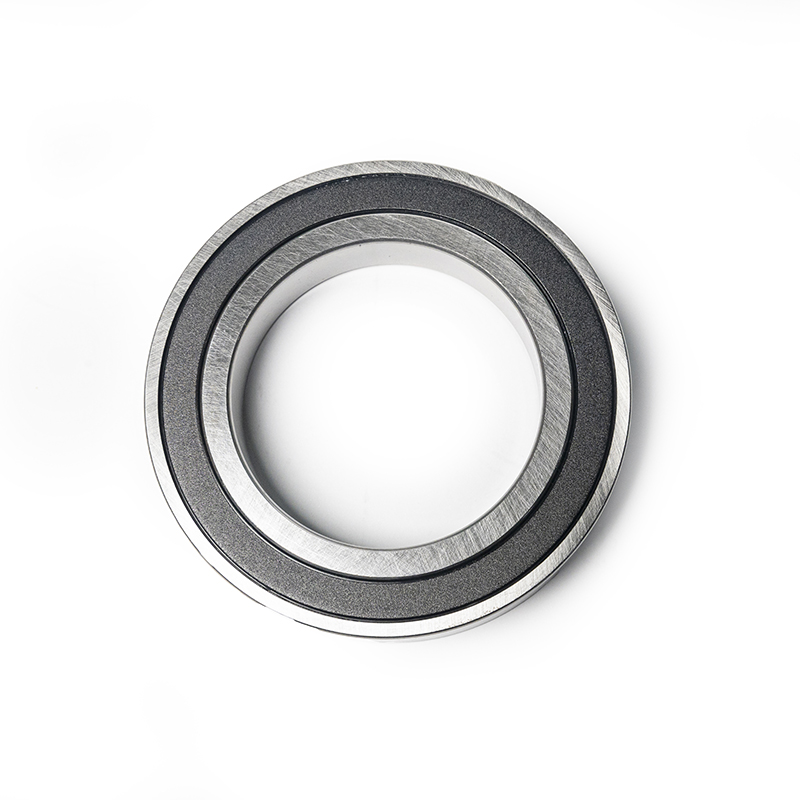
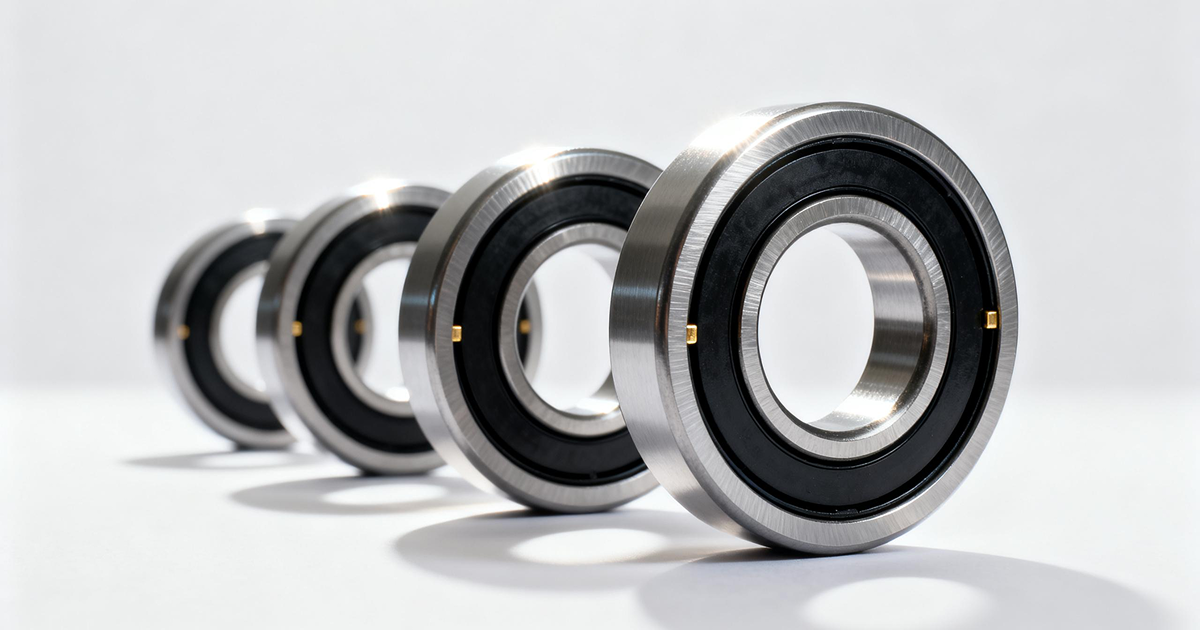
A sealed 70 series bearing comes from the factory with integrated protection. Usually, these are identified by suffixes like 2RS (two rubber seals) or ZZ (two metal shields). These bearings are “Lubricated for Life.”
-
Best For: Harsh or Maintenance-Light Environments
If your machine operates in an area with metal chips, coolant spray, or fine dust, a sealed bearing acts as its own bodyguard.
-
The Advantages (Pros)
-
Contamination Shielding: The contact seals (usually made of Nitrile rubber) physically block debris from entering the internal rolling elements.
-
Simplified Maintenance: These bearings are pre-filled with the correct volume and type of high-speed grease. You don’t need to worry about over-greasing or under-greasing during the bearing’s life.
-
Easier Handling: During installation, there is less risk of dropping dirt into the bearing because the seals keep the internals protected.
-
-
The Disadvantages (Cons)
-
Frictional Heat: Because the seal rubs against the inner ring, it creates friction. This raises the operating temperature.
-
Speed Restrictions: Due to the heat mentioned above, sealed bearings have a lower RPM ceiling than open bearings.
-
Grease Life is Bearing Life: Once the grease inside the seal degrades or dries out, the bearing must be replaced, as you cannot easily clean or re-lubricate it.
-
Key Comparison Factors: Sealed vs Open 70 Series Bearings
To choose the right bearing, you must compare them across these four technical pillars:
1. Lubrication Management
-
Open Bearings: Often rely on oil-air lubrication or an oil bath. This is more expensive to set up but highly effective for 24/7 industrial operations.
-
Sealed Bearings: Use grease lubrication. The seals ensure the grease stays exactly where it’s needed—on the raceways—even when the bearing is mounted vertically.
2. Speed and Heat
In the 70 series, heat is the enemy of precision. Open bearings stay cooler because there is no seal-to-metal contact. Sealed bearings must stay within their “thermal speed limit.” If you run a sealed bearing at the speed meant for an open bearing, the rubber seal may melt or the grease may liquefy and leak out (a process called grease washout).
3. Operating Environment
-
Open: Use only in “clean rooms” or fully sealed housings.
-
Sealed: Use in woodworking, metal machining, or outdoor power transmission where particulate matter is present.
4. Cost of Ownership
While sealed bearings might cost slightly more upfront, they often save money on labor because they don’t require a lubrication system. However, for high-value CNC spindles, the cost of replacing an open bearing is lower than the cost of the downtime caused by a failed sealed bearing.
Common Problems: What Happens if You Choose Wrong?
When debating sealed vs open 70 series bearings, choosing the wrong one often leads to these two failure modes:
-
Scenario A: The Contamination Failure
If you install an open 70 series bearing in a CNC router without a perfect air-purge system, fine wood dust or metal shavings will enter the bearing. This causes indentations on the raceway. Soon, the bearing will begin to hum (vibration) and eventually seize, potentially damaging the spindle shaft.
-
Scenario B: The Overheating Failure
If you replace an open spindle bearing with a sealed version but continue to run the machine at 20,000 RPM, the seals will create massive friction. The heat will cause the internal preload to increase as the metal expands. Within hours, the bearing could “blue” (discolor from heat) and fail catastrophically.
Decision Matrix: How to Choose
Use this checklist to decide which configuration fits your project:
| Feature | Open 70 Series | Sealed 70 Series |
| Maintenance | High (Requires external oil/grease) | Low (Pre-lubricated) |
| Friction | Minimal | Moderate (due to seals) |
| Contamination | Vulnerable | Protected |
| Max RPM | 100% of Design Speed | 60-80% of Design Speed |
| Ideal Use | High-speed Spindles | General Industrial / Electric Motors |
Conclusion
When weighing sealed vs open 70 series bearings, remember that the 70 series is a high-performance component that requires a specific environment to thrive. Open bearings are the champions of speed and temperature control, provided you can keep them clean and lubricated. Sealed bearings are the workhorses of reliability, offering protection in “dirty” environments and removing the need for complex maintenance schedules.
Before buying, always check the ISO precision grade (like P4) and the contact angle (commonly 15° or 25°). Once those specs are set, use the environment and speed requirements of your machine to make the final call. Making the right choice today ensures your machinery runs smoothly, quietly, and efficiently for years to come.