Content Menu
● What Is a Crossed Roller Bearing?
● What Affects Cross Roller Bearing Price?
>> Bearing Size and Ring Geometry
>> Precision Grade and Rotational Accuracy
>> Load Capacity and Moment Load
>> Preload and Rigidity Requirements
>> Materials, Heat Treatment, and Surface Protection
>> Cage, Separator, and Seal Configuration
>> Customization and Documentation
● Why Two Similar Quotations Can Differ Greatly
● A Practical Way to Request a Cross Roller Bearing Quote
>> Step 1: Provide the Existing Model or Drawing
>> Step 2: Define the Working Loads
>> Step 3: Clarify Accuracy and Rigidity Targets
>> Step 4: Describe the Operating Environment
>> Step 5: Confirm Validation and Delivery Needs
● Crossed Roller Bearing Cost by Application
>> Robotics and Humanoid Robots
>> CNC Rotary Tables and Machine Tools
>> Medical, Measurement, and Radar Equipment
● Expert View: Avoid the “Equivalent Model” Trap
● Choose a Bearing Partner, Not Just a Unit Price
>> What is the average cross roller bearing price?
>> Why are high-precision crossed roller bearings more expensive?
>> Does a higher preload always mean better performance?
>> Can a Chinese manufacturer replace IKO, THK, or HIWIN cross roller bearings?
>> What information is needed for a custom cross roller bearing?
>> Which applications need sealed cross roller bearings?
>> How can I reduce cross roller bearing cost without reducing reliability?
The cross roller bearing price is not determined by size alone. For robotics, machine tools, medical devices, radar systems, and precision rotary equipment, the real cost comes from the combination of accuracy, rigidity, load capacity, material, preload, sealing, mounting design, and validation requirements.
At Henan Yuwei Industrial Technology Co., Ltd., we work with customers who often begin with one question: “How much is this crossed roller bearing?” Our engineering answer is always the same: a meaningful quotation starts with the operating conditions. A lower purchase price can become expensive if the bearing causes positioning error, insufficient stiffness, unstable torque, premature wear, or production downtime.
This guide explains how to evaluate crossed roller bearing costs, compare supplier quotations fairly, and specify the right bearing for your application.

What Is a Crossed Roller Bearing?
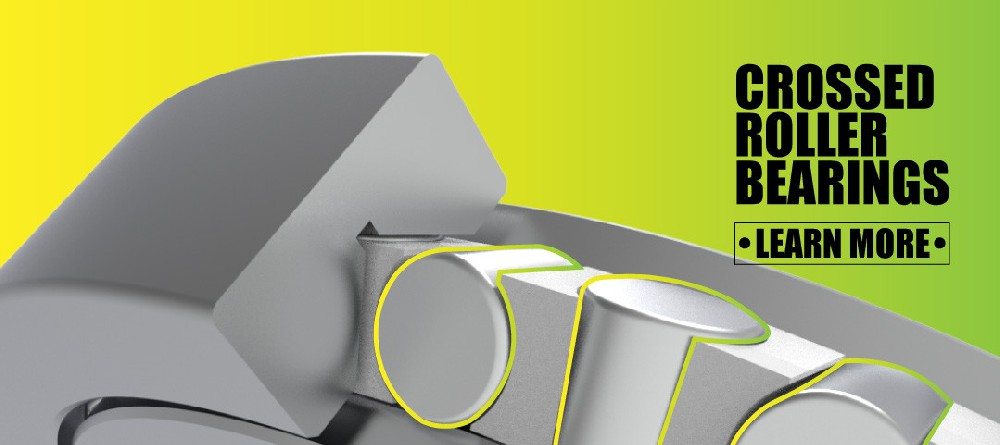
A crossed roller bearing is a compact rotary bearing in which cylindrical rollers are arranged alternately at 90 degrees between the inner and outer rings. This arrangement allows one bearing to support radial load, axial load in both directions, and overturning moment at the same time.
Compared with a conventional bearing arrangement that may require separate radial and thrust bearings, a crossed roller bearing can simplify the structure while delivering high rigidity and rotational accuracy.
It is commonly used in:
– Industrial robot joints and robot arms
– Humanoid, quadruped, service, and collaborative robots
– SCARA robots and AGV steering or rotating assemblies
– CNC machine-tool rotary tables
– Direct-drive torque motor systems
– Hollow rotary platforms
– Medical imaging and surgical equipment
– Radar and communication equipment
– Precision measuring instruments
– Harmonic drives and planetary gear reducers
The design is particularly valuable when equipment must remain compact, rigid, accurate, and stable under combined loads.

What Affects Cross Roller Bearing Price?
A reliable quotation should reflect the full technical requirement—not simply the outer diameter or a competitor’s part number. The following factors have the greatest influence on crossed roller bearing cost.
Bearing Size and Ring Geometry
Larger bearings generally require more raw material, longer machining time, more difficult heat treatment control, and greater grinding capacity. However, two bearings with the same diameter can still differ significantly in cost.
The price can change based on:
– Inner diameter, outer diameter, and width
– Raceway geometry
– Roller diameter and roller quantity
– Ring thickness
– Integrated or separable ring construction
– Mounting-hole pattern
– Presence of mounting bolts or plugs
– Thin-section or double-row design
A thin-wall crossed roller bearing may use less material than a conventional large bearing, but it can cost more because maintaining geometry and rigidity in a thinner ring requires careful machining and inspection.
Precision Grade and Rotational Accuracy
Precision is often the most important cost driver in a high-end application. The tighter the allowable runout, dimensional tolerance, and rotation variation, the more processing and inspection are needed.
Higher precision typically involves:
– Finer raceway grinding
– More controlled assembly
– Tighter roller classification
– Greater measurement time
– Advanced runout inspection
– More rigorous final-quality documentation
For a standard industrial rotating mechanism, an ordinary precision level may be sufficient. For a robot joint, precision turntable, medical scanner, or measurement system, the required accuracy may be much higher.
The key principle is simple: do not buy a higher accuracy class than the system needs, but do not under-specify precision where positioning performance matters.
Load Capacity and Moment Load
Crossed roller bearings are selected not only for radial and axial forces, but also for moment load. A robot wrist, vertical rotary table, radar platform, or cantilevered arm can place a substantial overturning moment on the bearing.
The required capacity depends on:
– Radial load
– Axial load in both directions
– Overturning moment
– Shock loading
– Duty cycle
– Acceleration and deceleration
– Operating position
– Required service life
A bearing designed for heavier combined loads may need larger rollers, a wider bearing section, stronger rings, or a different internal structure. These upgrades increase the initial cost but can greatly reduce the risk of deformation, uneven rolling contact, and early failure.
Preload and Rigidity Requirements
Preload is the internal load applied before the bearing sees external working loads. It reduces or eliminates internal clearance, improving rigidity and positioning stability.
However, preload must be selected carefully.
| Preload level | Main benefit | Main trade-off | Typical use |
|---|---|---|---|
| Light preload | Smooth, low-resistance rotation | Lower rigidity | Measuring devices, optical systems |
| Medium preload | Balanced rigidity and running torque | Moderate heat and torque increase | Robot joints, CNC rotary systems |
| Heavy preload | Maximum structural stiffness | Higher torque, friction, and heat | Heavy-duty machine-tool tables |
A bearing with high preload is not automatically better. Excessive preload can increase starting torque, raise operating temperature, reduce lubricant life, and shorten bearing life. The correct target is the preload that supports the application’s required rigidity without imposing unnecessary friction.
Materials, Heat Treatment, and Surface Protection
Material selection affects corrosion resistance, hardness, fatigue resistance, operating environment, and cost. Standard bearing steel remains a practical solution for many precision applications, while stainless steel or special materials may be needed for humid, corrosive, clean-room, medical, or outdoor environments.
Cost may increase for:
– Stainless steel rings or rollers
– Special heat-treatment requirements
– Anti-corrosion coatings
– Black oxide treatment
– Enhanced surface finishing
– High-temperature materials
– Specialized lubricants
The most suitable material depends on the working environment. For example, a bearing in an indoor industrial robot may not need the same corrosion protection as one installed in exposed equipment, offshore systems, or washdown environments.
Cage, Separator, and Seal Configuration
The internal roller arrangement influences load capacity, speed, friction, and service life.
A full-complement design can provide high load capacity because it contains more rolling elements. A caged or separator-equipped design may provide smoother rotation and be better suited to certain speed or lubrication conditions.
Sealing is another important price variable. Seals help protect the raceway from dust, debris, moisture, and lubricant loss. In contaminated environments, a sealed bearing may cost more initially but can deliver substantially better total-life value.
Ask the supplier whether the quoted bearing includes:
– Open or sealed construction
– Integrated seals or external sealing provisions
– Cage, separator, or full-complement rollers
– Initial grease type
– Relubrication requirement
– Expected operating-speed range
Customization and Documentation
Standard catalogue bearings usually offer the lowest unit cost. Non-standard bearings require engineering, drawings, tooling adjustments, production planning, and additional validation.
Common custom requirements include:
– Non-standard bore, outer diameter, or width
– Special mounting-hole pattern
– Custom ring structure
– Special preload
– Sealed construction
– Alternative material
– Special lubricant
– Higher accuracy requirement
– Laser marking and customer part numbers
– Inspection reports
– OEM packaging
For a prototype project, a custom design may have a higher unit price because development work is spread across a small quantity. Once the design is stable and volumes increase, the per-unit cost can become more competitive.
Why Two Similar Quotations Can Differ Greatly
When two suppliers quote the same nominal bearing size, the difference may not be due to markup alone. The products may have different internal specifications.
Before comparing quotations, check the following items side by side:
| Comparison point | Why it matters |
|---|---|
| Exact model and dimensions | Similar names may refer to different structures |
| Accuracy grade | Runout and dimensional tolerance affect system precision |
| Radial, axial, and moment ratings | Prevents under-sizing |
| Clearance or preload class | Directly affects stiffness and running torque |
| Ring design | Integrated and separable rings have different installation behavior |
| Material and heat treatment | Influences durability and corrosion resistance |
| Seal arrangement | Affects contamination resistance and maintenance |
| Lubrication condition | Impacts torque, speed, and bearing life |
| Inspection standard | Confirms whether specifications are verified |
| Delivery scope | Check bolts, plugs, packaging, and documentation |
The best purchasing decision is not the lowest number on a quotation sheet. It is the bearing that achieves the required performance at the lowest total operating cost.
A Practical Way to Request a Cross Roller Bearing Quote
A complete inquiry helps the supplier recommend the correct series and provide a more accurate price quickly.
Step 1: Provide the Existing Model or Drawing
If you are replacing an existing bearing, send:
– Original model number
– Brand reference, if applicable
– Bearing drawing or dimensional drawing
– Photos of the bearing and mounting structure
– Required quantity
A reference model can accelerate selection, but the final design should still be checked against actual operating requirements.
Step 2: Define the Working Loads
Provide the expected:
– Radial load
– Axial load
– Moment load
– Maximum shock load
– Shaft or housing rotation arrangement
– Mounting orientation
If exact calculations are unavailable, share the machine drawing, payload, arm length, operating angle, and acceleration profile. Engineering teams can then help estimate the relevant forces.
Step 3: Clarify Accuracy and Rigidity Targets
For high-precision equipment, specify the required:
– Radial runout
– Axial runout
– Rotational accuracy
– Positioning repeatability
– Allowable deflection
– Starting torque range
– Preload requirement
This avoids paying for ultra-high precision where it is not necessary—or receiving a standard bearing that does not meet the final machine requirement.
Step 4: Describe the Operating Environment
Environmental conditions affect the recommended material, sealing, lubricant, and corrosion protection.
Important details include:
– Operating temperature
– Dust or coolant exposure
– Humidity and corrosive media
– Indoor or outdoor installation
– Clean-room requirements
– Speed and duty cycle
– Expected maintenance interval
Step 5: Confirm Validation and Delivery Needs
For critical projects, request the documentation needed before production begins.
This may include:
– Dimensional inspection report
– Radial and axial runout report
– Material information
– Bearing load-rating data
– Grease specification
– Product drawing approval
– Sample validation before batch production
Crossed Roller Bearing Cost by Application
The right bearing specification varies widely by equipment type.
Robotics and Humanoid Robots
Robot joints need compact structure, low backlash, high stiffness, and repeatable positioning. For humanoid robots, quadruped robots, collaborative robots, and service robots, every gram and millimeter can matter.
The bearing must balance:
– Joint rigidity
– Smooth rotation
– Torque efficiency
– Payload capacity
– Compact installation
– Long-term repeatability
A bearing selected only for static load may not perform well under frequent starts, stops, reversals, and dynamic moment loads.
CNC Rotary Tables and Machine Tools
Machine tools require high stiffness because cutting forces can create deflection and vibration. In this case, bearing selection should consider not only load rating, but also preload, mounting stiffness, lubrication, and heat behavior.
A high-rigidity crossed roller bearing can support stable machining performance when the machine structure, drive system, and installation accuracy are properly controlled.
Medical, Measurement, and Radar Equipment
For medical equipment, communication radar, optical platforms, and precision instruments, smooth motion and low runout can be as important as load capacity.
These applications may require:
– Low torque variation
– Controlled preload
– High rotational accuracy
– Stable long-term performance
– Low noise
– Application-specific sealing or material selection

Expert View: Avoid the “Equivalent Model” Trap
A bearing described as an “equivalent replacement” should not be judged by dimensions alone. A true replacement must be evaluated across multiple parameters.
Before approving an alternative to an established model, confirm:
1. Mounting dimensions match the machine interface.
2. Load ratings meet or exceed the actual application requirement.
3. Accuracy and preload match the original performance target.
4. Ring structure and mounting method are compatible with the assembly.
5. Lubrication and sealing fit the operating environment.
6. Inspection records support the supplier’s stated specification.
This process is especially important for robot reducers, direct-drive rotary stages, radar mechanisms, and CNC equipment, where a small mismatch can affect the entire system.
Choose a Bearing Partner, Not Just a Unit Price
Henan Yuwei Industrial Technology Co., Ltd. develops and manufactures precision crossed cylindrical roller bearings, high-rigidity crossed roller bearings, thin-wall crossed roller bearings, double-row crossed roller bearings, high-precision angular contact ball bearings, high-speed angular contact ball bearings, and long-life angular contact ball bearings.
Our products support demanding applications in robotics, automation, precision manufacturing, medical equipment, radar systems, rotary platforms, DD motors, harmonic reducers, and planetary reducers.
We work with universities and research institutions on technology cooperation, specialized robot-bearing development, radar-vehicle bearing projects, and research programs. This engineering focus helps us support customers not only with standard bearing supply, but also with application-oriented selection and non-standard customization.
Send us your bearing model, drawing, load requirements, accuracy target, and quantity. Our technical team will help you identify a practical cross roller bearing solution and provide a quotation matched to your application.
Frequently Asked Questions
What is the average cross roller bearing price?
Price varies substantially by size, precision, preload, material, sealing, and order quantity. Small standard models are generally less expensive, while large, high-precision, preloaded, or customized bearings for robotics and machine tools can cost significantly more. Requesting a quotation based on complete operating conditions is the most reliable approach.
Why are high-precision crossed roller bearings more expensive?
They require tighter machining tolerances, more accurate grinding, controlled roller selection, careful assembly, and additional inspection. These processes improve rotational accuracy and rigidity but add manufacturing cost.
Does a higher preload always mean better performance?
No. Higher preload increases rigidity, but it also raises friction, torque, and heat. The correct preload depends on the required stiffness, speed, lubrication, temperature, and service-life target.
Can a Chinese manufacturer replace IKO, THK, or HIWIN cross roller bearings?
In many applications, an alternative can be developed when dimensions, load ratings, accuracy, preload, mounting structure, and operating conditions are properly verified. Do not rely on the reference model number alone; validate the complete specification.
What information is needed for a custom cross roller bearing?
Provide a drawing or installation dimensions, radial/axial/moment loads, speed, required accuracy, preload or clearance target, operating environment, material needs, lubrication requirements, and annual quantity.
Which applications need sealed cross roller bearings?
Sealed designs are especially useful where dust, coolant, moisture, or debris may enter the bearing. Typical examples include industrial automation, machine tools, outdoor equipment, and certain logistics or mobile systems.
How can I reduce cross roller bearing cost without reducing reliability?
Use the precision grade, preload, material, seal design, and documentation level that the application actually requires. Standardizing dimensions, confirming the specification early, and ordering stable production quantities can also reduce total procurement cost.
References
1. [NSK — N Series Crossed Roller Bearings]
2. [Schaeffler — Crossed Roller Bearings for High-Precision Applications]
3. [Timken — Crossed Roller Precision Bearings]
4. [HIWIN — Crossed Roller Bearings Catalogue]
5. [IKO — Crossed Roller Bearings Catalogue]
6. [MISUMI — Cross Roller Bearing Product and Application Information]
7. [Original article: Cross Roller Bearing Price Guide: What Affects the Cost?]
Hot Tags: Cross Roller Bearing Price, Crossed Roller Bearing, Precision Cross Roller Bearing, Cross Roller Bearing Manufacturer, Custom Cross Roller Bearing, High Rigidity Cross Roller Bearing, Robot Joint Bearing, Industrial Robot Bearing, CNC Rotary Table Bearing, Cross Roller Bearing Supplier