Content Menu
● Why Bearing Ball Sizes Matter in Precision Bearings
● How Ball Diameter Affects Bearing Performance
● Bearing Ball Size and Contact Angle
● Choosing Bearing Ball Sizes for High-Speed Applications
>> Rotational Speed and DN Value
>> Lubrication Is Part of the Design
● When Larger Bearing Balls Are Beneficial
● Crossed Roller Bearings for Combined Loads and High Rigidity
● Crossed Roller Bearings vs. Angular Contact Ball Bearings
● A Practical Selection Process for Precision Bearings
>> Step 1: Define the Real Load Condition
>> Step 2: Set Measurable Precision Targets
>> Step 3: Review the Mounting Structure
>> Step 4: Match Lubrication and Protection
>> Step 5: Validate Life Beyond the Catalog
● Expert Checklist Before Ordering Precision Bearings
● Work With a Precision Bearing Manufacturer
>> What are bearing ball sizes?
>> Do larger bearing balls always provide better performance?
>> Which bearing is better for high-speed applications?
>> When should I use a crossed roller bearing?
>> Why is preload important in angular contact ball bearings?
>> What information should I provide when requesting a bearing quotation?
>> Can poor mounting reduce the life of a precision bearing?
Selecting the correct bearing ball sizes for precision bearings is not simply a matter of choosing the largest possible ball or the highest catalog load rating. In high-accuracy motion systems, ball size affects load capacity, speed capability, stiffness, friction, temperature rise, lubrication behavior, vibration, and service life.
For equipment such as CNC machine tools, robot joints, direct-drive motors, medical devices, precision measuring instruments, radar platforms, reducers, and high-speed rotary assemblies, the bearing must be matched to the complete operating condition. The right bearing geometry can support stable motion for years. The wrong choice can create heat, noise, premature wear, poor positioning repeatability, or unexpected downtime.
This guide explains how bearing ball sizes influence precision bearing performance, how to choose an appropriate angular contact ball bearing configuration, and when a crossed roller bearing may be a more suitable solution for combined loads and high rigidity.

Why Bearing Ball Sizes Matter in Precision Bearings
Bearing balls are the rolling elements that transfer load between the inner ring and outer ring. Their diameter, quantity, material quality, grade, and contact geometry directly influence how the bearing performs in real machinery.
In general, larger balls can carry greater loads because they provide a larger contact area between the rolling elements and raceways. However, larger balls also increase centrifugal force at high speed, which can raise friction and temperature. Smaller balls can reduce centrifugal effects and may improve high-speed performance, but they may have lower individual load capacity.
For this reason, the best bearing ball size depends on the machine’s actual requirements rather than one isolated factor.
A precision bearing design should balance:
– Radial load capacity
– Axial load capacity
– Rotational speed
– Required stiffness
– Preload level
– Permissible temperature rise
– Lubrication method
– Vibration and noise limits
– Expected operating life
– Available installation space
A bearing that performs well in a low-speed rotary table may not be suitable for a high-speed spindle. Likewise, a bearing designed for high rotational speed may not provide enough rigidity for a robot joint carrying a large overturning moment.
How Ball Diameter Affects Bearing Performance
The relationship between bearing ball size and performance is more complex than “larger is stronger.” Engineers should understand the trade-offs before finalizing a bearing specification.
22222
A larger ball generally increases the contact patch between the ball and raceway. This can improve load-carrying ability and reduce contact stress under a given load. However, as speed increases, the mass of the ball becomes more important. Higher centrifugal force can increase contact pressure, friction, and heat.
That is why high-speed angular contact ball bearings often use carefully optimized ball diameter, ball count, contact angle, cage design, preload, and lubrication. The goal is not simply to maximize load rating. The goal is to achieve stable rotation at the required speed while maintaining precision and durability.
Bearing Ball Size and Contact Angle
For angular contact ball bearings, ball diameter works together with the contact angle. The contact angle is the angle between the line connecting the ball contact points and a plane perpendicular to the bearing axis.
A larger contact angle generally improves axial load-carrying capability. A smaller contact angle may be more suitable when radial load and high-speed performance are the main priorities.
Common selection principles include:
– A smaller contact angle can support higher rotational speed and more favorable radial-load performance.
– A larger contact angle can provide stronger axial support and greater axial stiffness.
– A matched bearing pair can support axial loads in both directions.
– A preloaded arrangement can increase system rigidity and reduce axial play.
– Excessive preload can create unnecessary heat, torque, and early fatigue.
For example, a machine-tool spindle may require high-speed angular contact ball bearings with controlled preload, optimized ball size, and specialized lubrication. A precision actuator may prioritize stiffness and positioning stability over extremely high RPM. The bearing arrangement must reflect the machine’s real duty cycle.
Choosing Bearing Ball Sizes for High-Speed Applications
High rotational speed introduces several challenges. Even a well-made bearing can fail early if ball size, lubrication, preload, cage design, and cooling conditions are poorly matched.
At high speed, rolling elements experience centrifugal force. This can increase contact stress between the balls and raceways. It can also lead to higher friction, lubricant shear, heat generation, and cage stress.
When selecting bearing ball sizes for high-speed precision bearings, consider the following factors.

Rotational Speed and DN Value
Bearing speed is often evaluated using a speed factor based on bore diameter and rotational speed. A larger bore running at high RPM creates a demanding condition, even if the external load is moderate.
High-speed applications require attention to:
– Shaft diameter
– Operating RPM
– Acceleration and deceleration rate
– Duty cycle
– Lubricant viscosity
– Cooling method
– Preload level
– Cage material and design
– Balance quality of rotating parts
A high-speed bearing should not be selected only by its nominal speed rating. The actual application may involve rapid starts, frequent reversals, thermal gradients, vibration, or intermittent overloads that affect performance.
Lubrication Is Part of the Design
Lubrication strongly influences bearing temperature, torque, wear, and service life. A lubricant that is too viscous can create excess churning losses at high speed. A lubricant that is too light may not maintain sufficient film thickness under load.
For high-speed precision bearing systems, engineers should evaluate:
– Grease type and base-oil viscosity
– Oil-air or oil-mist lubrication options
– Lubricant cleanliness
– Relubrication interval
– Operating temperature
– Seal design
– Exposure to coolant, dust, or moisture
A bearing that is technically capable of high speed can still overheat if it receives excessive grease or an unsuitable lubricant.
Preload Must Be Controlled
Preload removes internal clearance and improves stiffness. It is useful in precision spindles, servo motors, machine tools, and positioning systems. However, too much preload increases friction and heat.
The correct preload should be based on:
1. Required rotational stiffness.
2. Maximum operating speed.
3. Expected thermal expansion.
4. External axial and radial loads.
5. Bearing arrangement.
6. Lubrication method.
7. Required service life.
A controlled preload strategy is often more important than selecting a larger bearing ball diameter.
When Larger Bearing Balls Are Beneficial
Larger bearing balls can be advantageous in applications where load capacity, stiffness, and durability are more important than maximum rotational speed.
Typical examples include:
– Heavy-duty rotary tables
– Industrial turntables
– Radar platforms
– Planetary reducer assemblies
– Harmonic reducer systems
– Construction and handling equipment
– High-load machine axes
– Automation equipment with impact loads
– Large robotic joints
– Precision equipment with substantial overturning moments
In these applications, the bearing may need to resist radial force, axial force, and moment load simultaneously. The system may operate at moderate speed but require stable positioning and minimal deformation.
However, ball bearings are not always the ideal choice for heavy combined loads. Where a compact bearing must carry radial load, axial loads in both directions, and overturning moment at the same time, a crossed roller bearing may provide a more direct structural solution.
Crossed Roller Bearings for Combined Loads and High Rigidity
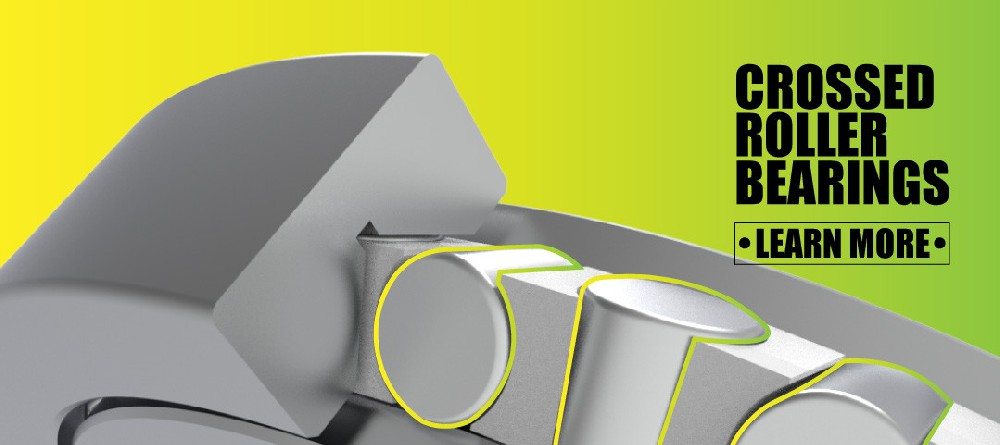
A crossed roller bearing uses cylindrical rollers arranged alternately at 90 degrees. This arrangement allows the bearing to carry radial loads, axial loads in both directions, and overturning moments within one compact bearing unit.
This is especially useful when the rotating structure has a large offset load or requires high rigidity in limited installation space.
Compared with a conventional ball bearing arrangement, a crossed roller bearing can offer:
– High rotational rigidity
– Compact structure
– Multi-directional load capability
– Accurate rotational guidance
– Reduced assembly complexity
– Strong resistance to overturning moments
– Suitable support for robot joints and rotary axes
Crossed roller bearings are widely used in industrial robots, collaborative robots, SCARA robots, humanoid robots, medical robots, AGVs, radar equipment, CNC machine tools, hollow rotary platforms, direct-drive motors, harmonic reducers, planetary reducers, and precision measuring instruments.
Henan Yuwei Industrial Technology Co., Ltd. develops and manufactures precision crossed roller bearings and high-precision angular contact ball bearings for demanding motion systems. The product range includes precision crossed cylindrical roller bearings, high-rigidity crossed roller bearings, thin-section crossed roller bearings, double-row crossed roller bearings, high-speed angular contact ball bearings, and long-life angular contact ball bearings. The company also works with universities and research institutions on technical development, research projects, specialized robot bearing applications, and other advanced motion-system requirements.

Crossed Roller Bearings vs. Angular Contact Ball Bearings
Neither bearing type is universally better. The right choice depends on the structure, load direction, operating speed, accuracy requirement, and available mounting space.
11111
A robot wrist joint carrying an end effector is often exposed to changing radial, axial, and overturning loads. In this case, a high-rigidity crossed roller bearing can provide strong support in a compact design.
A high-speed electric motor or CNC spindle usually requires low friction, stable thermal behavior, and precise shaft guidance. In that case, a high-precision angular contact ball bearing arrangement may be the more suitable choice.
A Practical Selection Process for Precision Bearings
The most reliable way to select bearing ball sizes or a complete precision bearing arrangement is to begin with real operating data. Avoid selecting only by model number, outside diameter, or basic load rating.
Step 1: Define the Real Load Condition
Collect both normal and peak operating values for:
– Radial load
– Axial load
– Overturning moment
– Rotational speed
– Acceleration and deceleration
– Duty cycle
– Shock load
– Emergency-stop conditions
– Installation orientation
A robot arm does not experience the same load at every position. The moment load changes as the arm moves, accelerates, decelerates, and carries different payloads. A realistic load profile is more useful than a static payload value alone.
Step 2: Set Measurable Precision Targets
Define what the equipment needs to achieve.
Key targets may include:
– Radial runout
– Axial runout
– Rotational torque
– Positioning repeatability
– Angular deflection under load
– Vibration level
– Noise level
– Allowable backlash
– Temperature rise
This transforms a general request for a “high-precision bearing” into a technical requirement that can be evaluated and verified.
Step 3: Review the Mounting Structure
The housing, shaft, mounting flange, fasteners, and bearing rings operate as one system. A high-quality bearing cannot deliver its intended accuracy if it is mounted on an insufficiently rigid or poorly machined structure.
Before installation, inspect:
1. Mounting surface flatness.
2. Shaft and housing geometry.
3. Surface cleanliness.
4. Bolt-hole accuracy.
5. Bolt grade and tightening method.
6. Housing rigidity.
7. Alignment between mating components.
8. Seal and lubrication access.
Uneven support can distort the bearing rings and cause uneven load distribution. This can increase torque, reduce rotational accuracy, and shorten service life.
Step 4: Match Lubrication and Protection
The operating environment should guide lubricant and sealing selection.
A high-speed spindle, a medical device, an outdoor radar platform, and a robot joint in a dusty factory may each require a different lubrication and protection strategy.
Consider:
– Grease or oil lubrication
– Temperature range
– Speed level
– Humidity and water exposure
– Dust and foreign-particle risk
– Corrosion exposure
– Relubrication access
– Seal material compatibility
Step 5: Validate Life Beyond the Catalog
Basic life calculations are useful, but real bearing life also depends on contamination, installation quality, lubrication, preload, alignment, temperature, and shock loading.
Common causes of early bearing failure include:
– Incorrect preload
– Poor mounting-surface flatness
– Inadequate housing stiffness
– Contaminated lubricant
– Insufficient sealing
– Bolt loosening
– Misalignment
– Excessive speed
– Electrical erosion
– Unexpected impact loads
A bearing should be treated as part of the entire motion system, not as an isolated component.
Expert Checklist Before Ordering Precision Bearings
Before requesting a quotation or releasing a final drawing, prepare the following information:
– Bearing model number or target dimensions
– Inner diameter, outer diameter, and width
– Required accuracy grade
– Radial load and axial load
– Maximum overturning moment
– Operating speed and duty cycle
– Required service life
– Installation drawing
– Shaft and housing tolerances
– Lubrication method
– Working temperature
– Environmental conditions
– Required quantity
– Special requirements for material, coating, sealing, preload, or packaging
Providing complete application information early helps the bearing manufacturer recommend a more accurate and cost-effective solution.
Work With a Precision Bearing Manufacturer
The correct bearing ball size, contact angle, preload, and bearing structure can significantly affect machine accuracy, operating temperature, durability, and maintenance cost. For high-speed systems, high-load rotary structures, robotic joints, reducers, radar equipment, and precision motion assemblies, the selection process should begin with the full operating condition.
Henan Yuwei Industrial Technology Co., Ltd. supplies precision bearing solutions for customers in China and international markets, including applications in robotics, machine tools, medical equipment, communication radar, industrial turntables, DD motors, harmonic reducers, and planetary reducers. The company’s precision bearing range supports applications that require stable quality, compact design, high rigidity, and reliable operating performance.
Send your drawing, bearing dimensions, load data, rotational speed, accuracy requirement, installation structure, and annual demand to our engineering team. We can help evaluate whether a high-precision angular contact ball bearing or crossed roller bearing is the better fit for your motion system.
Frequently Asked Questions
What are bearing ball sizes?
Bearing ball sizes refer to the diameter of the balls used as rolling elements inside a ball bearing. Ball diameter affects load capacity, contact stress, friction, speed capability, stiffness, and overall bearing performance.
Do larger bearing balls always provide better performance?
No. Larger balls can improve load capacity, but they can also create higher centrifugal force and heat at high speed. The best ball size depends on load, speed, preload, lubrication, and required precision.
Which bearing is better for high-speed applications?
High-precision angular contact ball bearings are often preferred for high-speed shafts, spindles, motors, and machine-tool applications. Their design can be optimized for speed, preload, friction control, and precise shaft guidance.
When should I use a crossed roller bearing?
Use a crossed roller bearing when one compact bearing must carry radial load, axial loads in both directions, and overturning moment while maintaining high rigidity and rotational accuracy. They are commonly used in robot joints, rotary tables, reducers, and radar platforms.
Why is preload important in angular contact ball bearings?
Preload removes internal clearance and increases stiffness. It can improve positioning accuracy and reduce vibration. However, excessive preload can increase friction, temperature, torque, and wear.
What information should I provide when requesting a bearing quotation?
Provide the bearing dimensions or drawing, radial load, axial load, overturning moment, speed, duty cycle, accuracy target, installation details, lubrication method, operating environment, and required quantity.
Can poor mounting reduce the life of a precision bearing?
Yes. Poor mounting flatness, contamination, uneven bolt tightening, low housing rigidity, and misalignment can distort the bearing rings. This may increase torque, create uneven load distribution, reduce accuracy, and shorten service life.
References
1. [GMN Bearing USA — Bearing Ball Sizes for Precision Bearings]
2. [Henan Yuwei Industrial Technology Co., Ltd. — About Super Precision Bearing Manufacturer]
3. [Henan Yuwei — Crossed Roller Bearings and Angular Contact Ball Bearings for Precision Motion Systems]
4. [ISO 281 — Rolling Bearings: Dynamic Load Ratings and Rating Life]
5. [Schaeffler — Crossed Roller Bearings]
6. [SKF — Angular Contact Ball Bearings]
Hot Tags: Precision Bearings, Angular Contact Ball Bearings, Crossed Roller Bearings, High Precision Bearings, Super Precision Bearings, High Speed Angular Contact Bearings, Robot Joint Bearings, CNC Machine Tool Bearings, Rotary Table Bearings, Precision Bearing Manufacturer