Content Menu
● Ball Bearing vs Roller Bearing: The Core Design Difference
● Load Capacity, Speed, and Stiffness Trade-offs
● Cross Roller Bearings vs Angular Contact Ball Bearings: The Precision Frontier
>> Stiffness Data From the Field
● Real-World Applications: Robotics and Precision Machinery
● A Practical Bearing Selection Framework
● Cost and Total Ownership Perspective
● Work With a Precision Bearing Manufacturer
Choosing between a ball bearing and a roller bearing is rarely a coin toss. It decides how long your machine runs, how much load it can carry, and how precisely it moves. As engineers who design and manufacture precision cross roller bearings and high-precision angular contact ball bearings for robotics, radar systems, and CNC equipment, we compare these two rolling-element families every day. This guide breaks down the real differences between ball bearing and roller bearing designs, backs every claim with engineering data, and adds a field-tested selection framework you will not find in a typical buyer’s guide.

Ball Bearing vs Roller Bearing: The Core Design Difference
The fundamental distinction between a ball bearing and a roller bearing comes down to contact geometry.
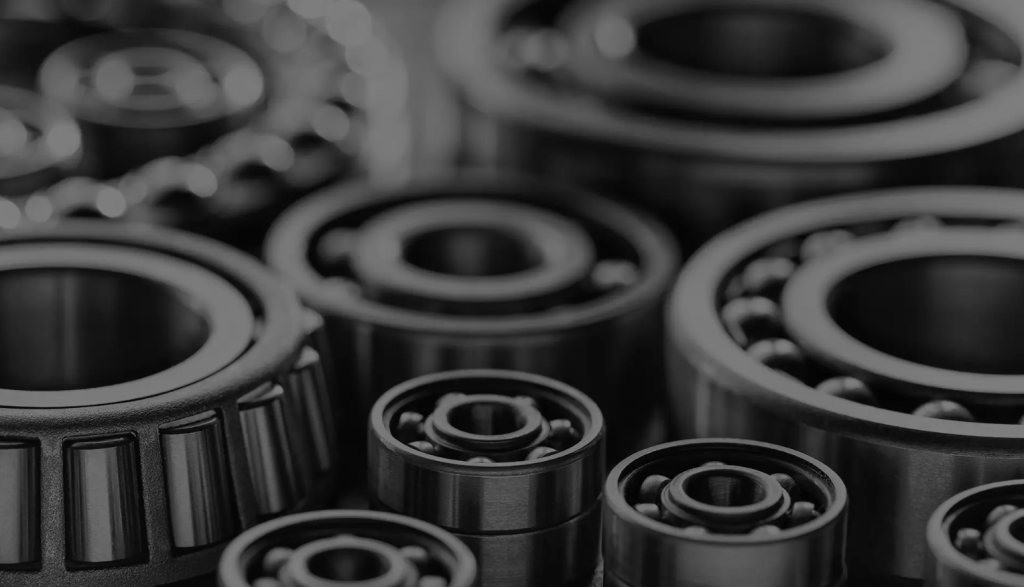
– Ball bearings use spherical balls that touch the raceway at a single point.
– Roller bearings use cylindrical, tapered, needle, or barrel-shaped rollers that touch the raceway along a full line.
Point contact means less material resistance, so ball bearings spin faster with lower friction. Line contact spreads force across a wider surface, so roller bearings absorb heavier loads without deforming. This one geometric difference explains almost every performance gap between the two bearing families.
Quick Comparison Table
| Attribute | Ball Bearing | Roller Bearing |
|---|---|---|
| Contact type | Point contact | Line contact |
| Dynamic load rating | Roughly 0.6–0.7x of a same-size roller bearing | Up to 3x higher at the same envelope size |
| Maximum speed | Higher (example: 30,000 RPM for a 25 mm bore) | Lower (example: 12,000 RPM for the same bore) |
| Friction coefficient | 0.001–0.0015 | 0.002–0.004 |
| Misalignment tolerance | Low (0.04–0.08°) | Moderate to high (up to 0.5°) |
| Best suited for | High-speed, light-to-moderate load motion | Heavy, shock-prone, or combined-load conditions |
Load Capacity, Speed, and Stiffness Trade-offs
Every bearing decision is a trade-off between three variables: how fast it needs to spin, how much weight it must carry, and how rigid the rotation must be.
Speed and friction. Ball bearings consistently outperform roller bearings in high-RPM environments because their point contact generates less heat and drag. This is why ball bearings dominate in electric motor spindles, fans, and dental handpieces.
Load capacity. Roller bearings carry significantly more load in the same physical footprint. A cylindrical roller bearing (NU205, 25 mm bore) can rate around 30 kN dynamically, compared to roughly 19.5 kN for an equivalent deep-groove ball bearing.
Bearing life. Using the standard L10 life formula, L10 = (C/P)^p × 10^6 / (60 × n), a roller bearing under a 5 kN load at 1,800 RPM can reach approximately 71,000 hours of service, nearly double the 34,000 hours typical of a comparable ball bearing under identical conditions. Heavier, steadier loads favor rollers; lighter, faster loads favor balls.
Cross Roller Bearings vs Angular Contact Ball Bearings: The Precision Frontier
Generic comparisons stop at “ball vs roller,” but in precision motion equipment, the real decision is often between a cross roller bearing and an angular contact ball bearing — the two designs we specialize in producing for robotics and precision instrument manufacturers.
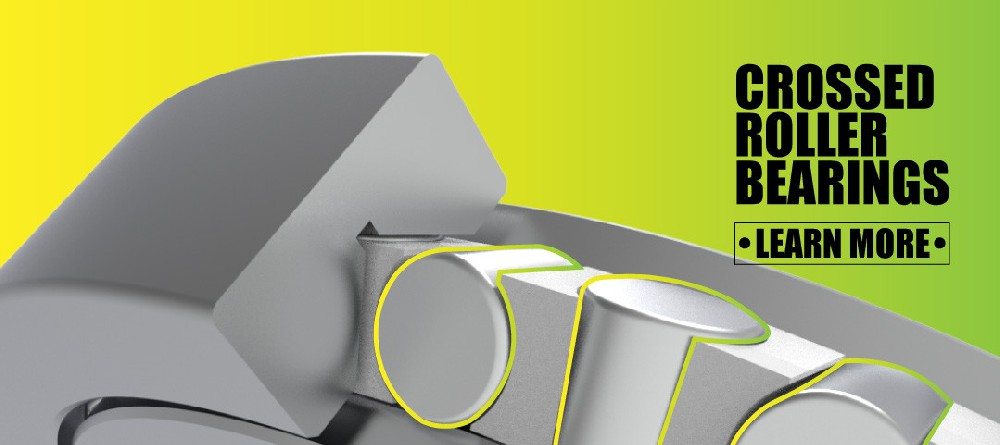
A cross roller bearing arranges cylindrical rollers perpendicular to each other in a single row, riding in a V-shaped groove. One cross roller ring can functionally replace two angular contact ball bearings mounted back-to-back, because it manages radial load, axial load, and moment load simultaneously in one compact unit.
Stiffness Data From the Field
Independent engineering analyses of both bearing families report the following typical performance ranges:
| Stiffness Metric | Cross Roller Bearing | Angular Contact Ball Bearing |
|---|---|---|
| Axial stiffness | 200–800 N/μm | 150–500 N/μm |
| Radial stiffness | 300–1,200 N/μm | 200–700 N/μm |
| Moment stiffness advantage | Up to 50% higher than equivalent angular contact arrangements | Baseline |
| Rigidity multiplier vs ball bearings | Roughly 3–4x greater overall rigidity | — |
The reason is structural: crossed rollers create alternating line contacts in two perpendicular directions, and their internal clearance can be adjusted to a negative clearance, which preloads the bearing and further boosts rigidity and rotational accuracy. This is precisely why cross roller bearings dominate in joints where wobble is not an option, such as robotic wrists and rotary tables.
The trade-off is starting torque. Crossed rollers rotate more “tightly” than ball bearings, and they typically cost two to three times more due to tighter manufacturing tolerances and matched-roller assembly. Angular contact ball bearings remain the more economical, flexible choice when moderate stiffness and higher rotational speed matter more than absolute rigidity.

Real-World Applications: Robotics and Precision Machinery
Bearing selection stops being theoretical the moment it hits a production floor. Across the humanoid robotics, medical robotics, and radar equipment sectors we supply, four patterns show up consistently.
1. Humanoid and collaborative robot joints favor thin-wall or double-row cross roller bearings because joint modules demand near-zero backlash in a limited envelope while still supporting the arm’s full moment load.
2. SCARA and industrial robot arms frequently combine high-rigidity cross roller bearings at the base joints (where moment load is highest) with high-speed angular contact ball bearings at the wrist (where rotational speed dominates).
3. AGV and mobile robot drive units lean toward angular contact ball bearings for their lower friction and better tolerance of continuous, high-cycle rotation.
4. Radar and precision measurement platforms rely on thin cross roller bearings and hollow rotary platform bearings to maintain sub-micron positioning accuracy while rotating heavy sensor payloads.
This pattern mirrors a broader industry shift documented across patent and market research: demand for cross roller bearings is expanding fastest in robotics, semiconductor equipment, and medical devices, precisely because these fields prioritize stiffness-to-size ratio over raw rotational speed. Our own product development, carried out jointly with university research partners on specialized robotics and radar-vehicle bearing projects, has been shaped directly by this shift toward compact, high-rigidity rolling elements.

A Practical Bearing Selection Framework
Skip the guesswork. Use this sequence when specifying a bearing for a new design.
1. Define the load direction. Determine whether the application experiences pure radial load, pure thrust (axial) load, or a combined load with moment forces.
2. Estimate load severity and shock exposure. Heavy, shock-prone, or impact-driven applications point toward roller-based designs.
3. Set the target rotational speed. High-RPM requirements (motors, spindles, fans) favor ball bearings; slower, heavier-duty rotation favors rollers.
4. Check the available envelope. If radial space is tight but stiffness still matters, a cross roller bearing or thin-section bearing often outperforms a stacked pair of angular contact bearings in the same footprint.
5. Quantify the precision requirement. Applications needing sub-arcsecond rotational accuracy, such as robotic joints or measurement platforms, should default to cross roller or high-precision angular contact designs.
6. Calculate expected service life. Run the L10 formula against your actual load and speed to confirm the bearing will meet your maintenance interval targets.
7. Confirm with a manufacturer’s engineering team. Catalog numbers are a starting point; final validation against your specific mounting, preload, and lubrication conditions prevents costly redesigns.
Cost and Total Ownership Perspective
Purchase price is only one line in the total cost equation.
– Cross roller bearings cost more upfront but eliminate the need for matched bearing pairs, precision spacers, and complex preload assembly, which reduces installation labor and long-term maintenance.
– Angular contact ball bearings cost less per unit and offer flexible preload tuning, but achieving cross-roller-level stiffness may require doubling up bearings, adding complexity back into the total system cost.
– Roller bearings generally extend service life under heavy, steady loads, which can lower replacement frequency in industrial machinery, gearboxes, and heavy conveyors.
– Ball bearings generally reduce energy loss from friction in high-speed, continuously running equipment, which matters at scale across large fleets of motors or fans.
The right answer depends on your specific duty cycle, not on which bearing type sounds more advanced.
Work With a Precision Bearing Manufacturer
Selecting between a ball bearing and a roller bearing — or between a cross roller bearing and an angular contact ball bearing — is an engineering decision, not a catalog lookup. Henan Yuwei Industrial Technology Co., Ltd. develops precision cross roller bearings, high-rigidity cross roller bearings, thin-wall cross roller bearings, double-row cross roller bearings, and high-precision, high-speed, and long-life angular contact ball bearings for robotics, medical devices, radar systems, CNC machines, and rotary tables. Our engineering team collaborates directly with university research partners and has contributed to national technology programs focused on robotic and radar-vehicle bearing systems. If your next design needs a bearing that holds tolerance under real operating loads, contact our technical team for application-specific selection support and a tailored quotation.
Frequently Asked Questions
1. What is the main difference between a ball bearing and a roller bearing?
A ball bearing uses spherical balls that touch the raceway at a single point, while a roller bearing uses cylindrical or tapered rollers that touch along a line. Line contact gives roller bearings a higher load capacity; point contact gives ball bearings lower friction and higher speed capability.
2. Which bearing type lasts longer, ball or roller?
It depends on the load. Under identical moderate loads, roller bearings often achieve a longer L10 calculated life because their higher dynamic load rating reduces stress per rolling element. Under light, high-speed conditions, ball bearings frequently outlast rollers because they generate less heat and friction.
3. Can a cross roller bearing really replace two angular contact ball bearings?
Yes. A single cross roller bearing combines the radial, axial, and moment load capacity of a back-to-back angular contact ball bearing pair in one compact ring, while also allowing negative clearance for higher rigidity.
4. Why do robotics manufacturers prefer cross roller bearings for joints?
Robotic joints need minimal backlash and high moment stiffness in a small space. Cross roller bearings deliver up to 50% higher moment stiffness than equivalent angular contact arrangements while fitting into thinner, lighter joint housings.
5. Are roller bearings always the better choice for heavy machinery?
Not always. While roller bearings handle heavier radial loads, applications needing pure thrust capacity, high rotational speed, or tight misalignment tolerance may still perform better with angular contact ball bearings, especially in combined-load conditions.
6. How much more expensive are cross roller bearings compared to standard ball bearings?
Cross roller bearings typically cost two to three times more than comparable ball bearing arrangements due to tighter manufacturing tolerances, roller matching, and more complex assembly, but they often lower total system cost by removing the need for extra bearings and preload hardware.
References
1. [Cross-Roller Bearings vs Angular Contact Bearings: Stiffness Comparison – PatSnap Eureka]
2. [Compare from Six Aspects – Crossed Roller vs Ball Bearing – RIGBRS Bearing]
3. [Roller Bearings vs. Ball Bearings: What’s the Difference? – PIB Sales]
4. [Comparison of Crossed Roller Bearings With Other 5 Types of Roller Bearings – LKPB Bearing]
Hot Tags: Ball Bearing Vs Roller Bearing, Cross Roller Bearing, Angular Contact Ball Bearing, Precision Bearing Manufacturer, Robotic Joint Bearing, High Precision Angular Contact Bearing, Thin Wall Cross Roller Bearing, Bearing Selection Guide, Industrial Robot Bearing, High Rigidity Cross Roller Bearing