Content Menu
● Why Supply Chain Resilience Now Defines Bearing Sourcing
● 7 Ways Precision Bearing Manufacturers Are Improving Supply Chain Efficiency
>> 1. Vertical Integration to Shorten Lead Times
>> 2. Data-Driven Inventory and Demand Forecasting
>> 3. Application-Specific R&D Partnerships
>> 4. Engineering Support Embedded in the Ordering Process
>> 5. Full Traceability and Quality Documentation
>> 6. Flexible Customization Without Long Retooling Cycles
>> 7. Multi-Region Logistics and Local Technical Support
● The 2026 Component Shortage and What It Means for Bearing Buyers
● Case Study: Cross Roller Bearings Inside Humanoid Robot Joints
● Practical Checklist: Evaluating a Bearing Supplier’s Supply Chain Strength
● Traditional Distribution vs. Direct Manufacturer Partnership
● What This Means for Robotics and Precision Equipment Builders
Robotics builders, machine tool integrators, and precision equipment manufacturers are under constant pressure to shorten lead times without sacrificing accuracy. A precision cross roller bearing or high-precision angular contact ball bearing that arrives late — or arrives out of tolerance — can stall an entire production line. This is why supply chain efficiency has become just as important as raw technical specification when OEMs choose a bearing partner.
The old model, where buyers relied on generic distributors holding standard catalog stock, is being replaced by a tighter, more technical relationship between manufacturer and end user. Below is a practical look at how modern precision bearing manufacturers are rebuilding supply chains around speed, traceability, and engineering support — and what buyers should expect from a supplier in 2026.

Why Supply Chain Resilience Now Defines Bearing Sourcing
The bearing industry is growing fast, and growth is concentrated exactly where reliability matters most. The global bearing market was valued at roughly 143.2 billion USD in 2025 and is projected to reach 301.3 billion USD by 2033, expanding at a compound annual growth rate near 9.8%, with Asia Pacific already commanding more than 41% of global revenue. Angular contact ball bearings alone are forecast to nearly double, moving from about 4.15 billion USD in 2024 to 6.0 billion USD by 2035, largely on the back of automation and robotics demand.
Robotics is the clearest driver. Industrial robot installations passed 542,000 units in 2024, more than double the figure from a decade earlier, and the humanoid robot segment is expected to jump from roughly 6.2 billion USD in 2026 to over 165 billion USD by 2034. Every one of those machines needs joints, actuators, and rotary axes supported by bearings that hold micron-level accuracy for years. When demand accelerates this quickly, a fragile supply chain becomes the single biggest risk to an OEM’s own production schedule.
7 Ways Precision Bearing Manufacturers Are Improving Supply Chain Efficiency
1. Vertical Integration to Shorten Lead Times
Manufacturers that control forging, heat treatment, grinding, and final assembly in-house avoid the multi-vendor handoffs that create delay and inconsistency. Vertical integration also means tighter control over raceway finish and roller geometry, which is critical for cross roller bearings used in robot joints where positional accuracy must stay within ±0.01 mm over long duty cycles.
2. Data-Driven Inventory and Demand Forecasting
Predictive analytics now allow bearing producers to anticipate order spikes tied to robotics production ramps rather than reacting after the fact. Real-time tracking of raw steel, cage components, and finished stock reduces both stockouts and excess holding costs — a balance that matters most for non-standard or thin-section bearings that cannot simply be pulled from a generic shelf.
3. Application-Specific R&D Partnerships
Leading manufacturers no longer just sell parts; they co-develop them. Long-term collaboration with universities, research institutes, and national technology programs allows bearing engineers to design specialized bearings for humanoid robots, radar vehicles, AGVs, and medical robotics before a design even reaches mass production. This shortens the qualification cycle for new robotic platforms because the bearing has already been validated against the application’s real load and speed profile.
4. Engineering Support Embedded in the Ordering Process
A supply chain is only as fast as its slowest decision point, and for precision bearings that is usually technical selection. Manufacturers that place applications engineers directly in the quoting process — reviewing load direction, preload requirements, and mounting tolerances — cut the back-and-forth that typically delays first-article approval by weeks.
5. Full Traceability and Quality Documentation
Every batch of precision rings, rollers, and balls now carries traceable heat-treatment and grinding records. This matters enormously for angular contact ball bearings destined for high-speed spindles or servo motors, where a single undocumented deviation can force a full batch recall. Traceability turns quality assurance from a bottleneck into a supply chain advantage, since problems can be isolated to a specific lot instead of an entire shipment.
6. Flexible Customization Without Long Retooling Cycles
Robotics and precision-equipment designs change faster than traditional bearing catalogs. Manufacturers that maintain modular tooling for thin-wall, double-row, or high-rigidity cross roller bearings can turn around custom dimensions, seals, or preload classes without the 12-16 week retooling delays common at legacy producers.
7. Multi-Region Logistics and Local Technical Support
Exporting to more than 20 countries requires more than a single warehouse. Distributed logistics hubs, paired with regional technical contacts, let manufacturers respond to urgent replacement requests in days rather than weeks — particularly important for customers running continuous industrial or medical equipment where downtime is expensive.

The 2026 Component Shortage and What It Means for Bearing Buyers
Precision bearings do not exist in isolation from the broader electronics and industrial component ecosystem. In 2026, lead times for critical semiconductor categories such as power management ICs and microcontrollers have stretched to 26 to 55-plus weeks, and these same delays are rippling into servo motors, encoders, and the reducers that bearings are paired with. A robotics OEM waiting on a motor controller cannot afford to also wait on a bearing.
This is why bearing manufacturers with buffer stock of critical raw steel, and manufacturing capacity that isn’t fully booked months in advance, have become more valuable to buyers than those simply offering the lowest unit price. Suppliers who can quote a firm delivery date — and hold it — are increasingly the deciding factor in vendor selection, ahead of marginal price differences.
Case Study: Cross Roller Bearings Inside Humanoid Robot Joints
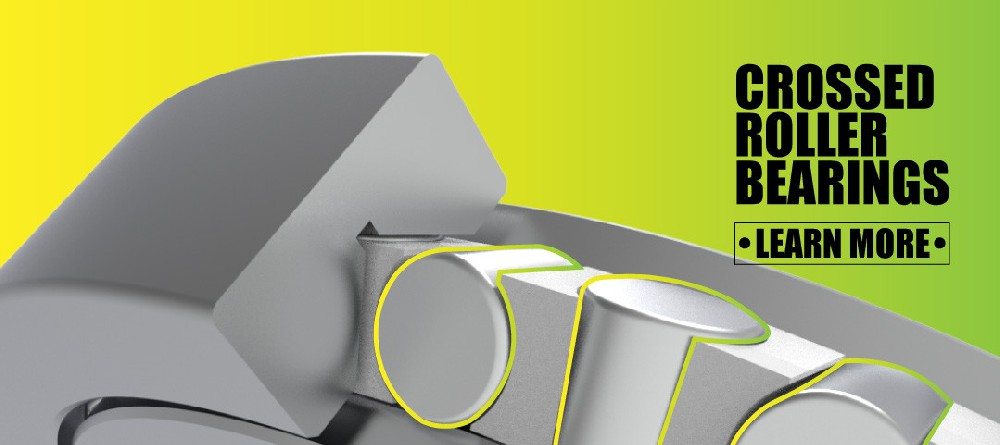
Humanoid and quadruped robot developers illustrate the sharpest supply chain test case in the industry today. A single robotic joint typically requires a compact, high-rigidity cross roller bearing capable of carrying radial, axial, and moment loads simultaneously in one race — eliminating the need for stacked bearing arrangements and saving valuable space inside the joint housing.
Engineering reports on this application note that achieving sub-micron repeatability and thermal drift below 10 ppm/°C demands tight coordination between raceway grinding precision and cage design, refined through iterative testing rather than a one-time specification sheet. For a manufacturer, this means production runs cannot simply scale up overnight — they depend on an established quality system and a stock of validated raw materials, which is exactly what a resilient supply chain is built to provide.

Practical Checklist: Evaluating a Bearing Supplier’s Supply Chain Strength
Before signing a long-term supply agreement, engineering and procurement teams should verify the following:
1. Production depth — Does the supplier forge, heat-treat, and grind in-house, or outsource critical steps?
2. Documented lead times — Can they provide historical on-time delivery rates, not just quoted lead times?
3. Non-standard capability — Do they offer custom cross roller, thin-section, or double-row designs without excessive retooling costs?
4. Traceability — Is batch-level heat treatment and inspection data available on request?
5. R&D track record — Have they co-developed bearings for robotics, medical devices, or precision instruments with research partners?
6. Regional support — Is there a technical contact reachable in your time zone for urgent issues?
Traditional Distribution vs. Direct Manufacturer Partnership
| Factor | Traditional Distributor Model | Direct Manufacturer Partnership |
|---|---|---|
| Lead time control | Limited to available stock | Production scheduling visibility |
| Customization | Slow, often outsourced | In-house tooling, faster turnaround |
| Technical support | General catalog advice | Application-specific engineering |
| Traceability | Batch data often unavailable | Full heat-treatment and grinding records |
| Pricing on non-standard parts | Marked up through multiple layers | Direct factory pricing |
| Best suited for | Standard, off-the-shelf bearings | Robotics, medical, and custom precision needs |
What This Means for Robotics and Precision Equipment Builders
Bearings sit at a strange intersection in engineering: they are a commodity in name but a precision instrument in practice. As robotics, AGVs, rotary tables, and harmonic reducers scale into higher volumes, the manufacturers able to combine deep technical partnerships, transparent quality documentation, and flexible, fast-turn custom production will increasingly separate themselves from suppliers still operating on a distributor-first model.
For engineering teams evaluating a bearing partner for a robot joint, DD motor, or precision rotary platform, the right question is no longer just “what’s your price on this bore size” — it’s “can you prove your delivery, your traceability, and your engineering support hold up under real production volume.” If you’re sourcing precision cross roller bearings or high-precision angular contact ball bearings for a robotics, industrial automation, or precision instrument project, reach out to a manufacturer with a proven production and R&D track record to review your load, speed, and tolerance requirements before you finalize your design.
Frequently Asked Questions
1. What makes a cross roller bearing different from a standard ball bearing in robotic applications?
A cross roller bearing arranges cylindrical rollers at right angles within a single raceway, allowing it to carry radial, axial, and moment loads simultaneously. This lets robot joints use one compact bearing instead of stacking multiple standard bearings, saving space and improving rigidity.
2. How long is a typical lead time for custom precision bearings in 2026?
Lead times vary by design complexity, but manufacturers with in-house tooling for thin-wall or double-row cross roller bearings can often turn around custom orders faster than producers relying on outsourced retooling, especially when raw steel and cage stock are held in advance.
3. Why are angular contact ball bearings important for high-speed applications?
Angular contact ball bearings support combined radial and axial loads at a defined contact angle, which makes them well suited to high-speed spindles, servo motors, and precision rotary equipment where stiffness and low friction torque both matter.
4. What supply chain risks should robotics companies watch for in bearings sourcing?
The main risks are supplier over-booking of production capacity, lack of raw material buffer stock, and limited traceability on custom or non-standard parts. These issues tend to surface fastest during periods of high robotics demand, similar to current component lead-time pressures across electronics.
5. Can bearing manufacturers support university or institute-led robotics research projects?
Yes. Manufacturers with established research collaborations can co-develop specialized bearings for prototype robots, radar vehicles, or medical devices, often validating designs against real load and speed data before a project moves into full production.
6. How do I know if a bearing supplier’s quality system is reliable?
Ask for batch-level traceability, including heat-treatment records and dimensional inspection data. A supplier that can produce this documentation on request typically has a more mature and audit-ready quality system than one offering only a general certificate.
References
– Grand View Research, “Bearing Market Size, Share & Trends Analysis Report, 2026-2033” — [grandviewresearch.com]
– Fortune Business Insights, “Bearings Market Size, Share & Industry Analysis, 2026-2034” — [fortunebusinessinsights.com]
– Patsnap Eureka, “Cross-Roller Bearings for Robot Arms: Achieving Positional Accuracy” — [eureka.patsnap.com]
– CCTY Bearing Group, “How Cross Roller Bearings Maximize Precision & Performance” — [cctygroup.com]
– International Federation of Robotics, “World Robotics 2025” press briefing — [ifr.org]
– Precedence Research / Market.us, Humanoid Robot Market Size and Forecast (2026-2034) — [market.us]
– GlobX, “Electronic Component Lead Times 2026: Full Guide” — [globx.com]
– LKPB Bearing, “5 Ways Bearing Distributors Are Enhancing Supply Chain Efficiency”— [lkpbearing.com]
Hot Tags: Precision Bearing Manufacturers, Cross Roller Bearings, Angular Contact Ball Bearings, Supply Chain Efficiency, Robotics Bearings, Humanoid Robot Bearings, Custom Precision Bearings, Bearing Supplier, Industrial OEM Bearings, High Precision Bearings